A Chicago alderman’s recent comments criticizing U.S. Immigration and Customs Enforcement (ICE) have sparked public discussion about federal immigration strategies and local authority. The remarks come amid heightened attention to recent enforcement operations in the city.
Story Highlights
- A Chicago alderman has publicly commented, criticizing ICE, escalating ongoing tensions.
- ICE’s “Operation Midway Blitz” in September 2025 involved aggressive tactics.
- Conflicts between federal and local authorities are intensifying due to sanctuary city policies.
- Public and political opposition to ICE’s perceived excessive force is growing.
ICE’s Tactics Under Scrutiny
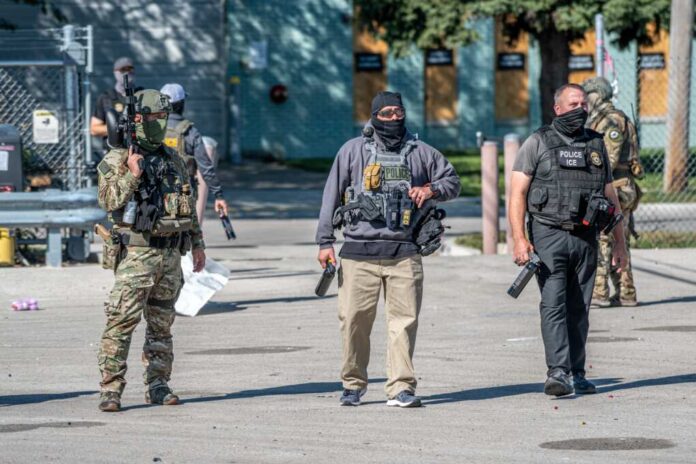
In September 2025, ICE initiated “Operation Midway Blitz” in Chicago. This operation has been described by some as involving high-profile hits and a visible federal presence, with reports of helicopters and grenades. These tactics have led to concerns among local officials and residents, with some characterizing them as excessive and prompting calls for accountability.
The operation has reportedly resulted in multiple incidents, including a civilian shooting and the detention of protesters and bystanders. Critics have raised concerns about potential civil rights violations and operations conducted without proper warrants. These events have exacerbated tensions between federal authorities and Chicago’s local government, which maintains sanctuary city policies.
Federal vs. Local Authority Conflict
The ongoing dispute between ICE and Chicago officials underscores the broader challenges of immigration enforcement in cities with sanctuary policies. Chicago’s leadership, including Mayor Brandon Johnson and Governor JB Pritzker, has expressed opposition to federal immigration enforcement actions, advocating for immigrant rights and community protection. Federal operations have been viewed by some as an attempt to circumvent local authority and enforce immigration laws through intimidation.
Local leaders, such as Ald. Jessie Fuentes and Ald. Byron Sigcho-Lopez, have actively challenged the agency’s operations. The reported handcuffing of Ald. Fuentes during an encounter with ICE agents has been cited as an example of the broader conflict between federal enforcement and local governance.
Community Impact and Public Response
The tactics employed by ICE have reportedly strained federal-local relations and have had social and political consequences. Immigrant communities in Chicago have reported increased fear and anxiety, leading to a rise in protests and political organizing. The public response to ICE’s operations has intensified calls for policy changes and legal challenges aimed at protecting civil rights and upholding sanctuary policies.
Local community organizations, including ARISE Chicago and the Illinois Coalition for Immigrant and Refugee Rights, are reportedly providing support to affected residents and mobilizing efforts to challenge ICE’s actions through legal and advocacy channels. The situation in Chicago is being observed as a case study in the national discussion surrounding immigration policy and the role of sanctuary cities.
As legal and political discussions continue, the events in Chicago highlight the complexities of federal immigration enforcement and the efforts of local communities to advocate for their rights. The outcomes of these conflicts could have implications for immigration policy across the United States.
WAtch the report: Chicago aldermen clash after controversial social media posts spark legal action | Paris on Politics
Sources:
Chicago Alderman: ICE Is ‘Worst Gang in Chicago’
https://www.newsbreak.com/news/4297138852291-chicago-alderman-ice-is-worst-gang-in-chicago
Ex-Chicago Police Officer Criticizes City’s Stand-Down Order on ICE Agents
Aldermen Speak Out Against Militarized Enforcement in Humboldt Park
ICE Operations and Arrests in Pilsen Draw Criticism
Ald. Jessie Fuentes Arrested by ICE Agents at Humboldt Park Hospital