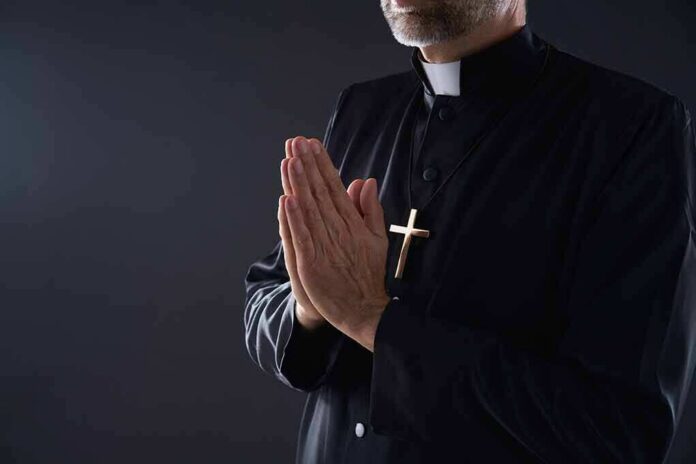
A British school chaplain who was treated like a potential extremist for a sermon on freedom of belief has finally been cleared and allowed back into ministry after seven years of legal and church battles.
Story Snapshot
- School chaplain Rev. Dr. Bernard Randall reached a confidential legal settlement with the Christian school that fired him after a sermon on gender and belief.
- Government and church reviews found no evidence that his sermon caused harm or posed a terrorism or safeguarding risk.
- The Church of England has lifted its safeguarding “blacklisting,” clearing Randall to preach and work in education again.
- The case shows how modern “safeguarding” and extremism systems can silence controversial views long before any proof of real danger.
Chaplain Fired And Referred As Possible Extremist
Rev. Dr. Bernard Randall was serving as chaplain at Trent College, a fee-paying Christian school in England, when he preached a 2019 sermon about gender identity and freedom of belief. In the sermon, he told students they did not have to accept new LGBTQ teaching if it conflicted with their conscience, and that they should think critically while still treating everyone with respect. After the sermon, the school dismissed him, later calling the move redundancy, and reported him to Prevent, the United Kingdom’s anti-extremism program.
The referral sent Randall’s name into a national system meant to flag risks of terrorism or radicalisation, even though officials later found no evidence he was a threat. Alongside the Prevent referral, he was also sent to other bodies that can bar people from working with children, and the local Church of England diocese treated him as a safeguarding risk who should not preach. For an ordinary chaplain, this meant he suddenly faced the power of multiple government and church systems that looked at him as dangerous before any harm was shown.
Years Of Legal Battles End In Settlement And Clearing
Randall challenged his dismissal and the way he had been labelled in the employment courts, at first losing his unfair dismissal case when a judge accepted the school’s redundancy explanation and said the Prevent referral was justified from a safeguarding point of view. Later, however, a higher judge overturned that tribunal ruling as “unsafe” because of signs of anti-Christian bias on the panel and ordered a full retrial. Before that new hearing took place, Trent College agreed to a confidential legal settlement that ended the employment case and included an order that the school pay £20,000 in costs.
Separate Church of England processes were also moving slowly in the background. The Diocese of Derby had refused him permission to preach and treated him as “not safe to receive,” effectively blacklisting him from normal ministry. After pressure and external scrutiny, church authorities ordered an independent safeguarding review through the Diocese of London. That review concluded that the concern or allegation against Randall was unsubstantiated and that there were no ongoing safeguarding concerns about him. Officials said they could not establish, on the balance of probabilities, that his sermon had caused harm, and they cleared him once he completed mandatory safeguarding training.
Safeguarding Blacklist Lifted, But Bigger Questions Remain
With the independent review done and the employment case settled, Randall is now formally free to preach again in the Church of England and to work in education for the first time in seven years. The legal and church decisions together mean that the systems which once flagged him as a risk now say there is no evidence he harmed students, no terrorism concern, and no safeguarding danger. Yet his ability to serve still depends on the Bishop of Derby granting formal Permission to Officiate, a reminder that real-life power sits with institutions even after a person is “cleared.”
After a seven-year, high-profile battle, Rev. Dr Bernard Randall has secured a legal settlement with Trent College and succeeded in overturning the Church of England’s (CofE) safeguarding blacklisting of him for preaching a sermon on freedom of belief and gender identity.…
— ZA465 (@StoneAlun) July 22, 2026
The story fits a larger pattern that worries people across the political spectrum. In the United Kingdom and in the United States, schools and churches often route controversial speech into safeguarding or extremism systems first and ask questions later. These systems are built to act early, not to prove guilt, so they can wreck reputations and careers even when later reviews find no harm. For both conservatives and liberals who already feel institutions are run by unaccountable elites, Randall’s ordeal looks like one more case where powerful bodies punish a man for expressing traditional beliefs while hiding behind process and confidential settlements instead of owning clear responsibility.
Sources:
facebook.com, churchtimes.co.uk, britanniadaily.com, billygraham.org, youtube.com, christianconcern.com, laynemcdonald.com, foxnews.com, bbc.com, newsweek.com