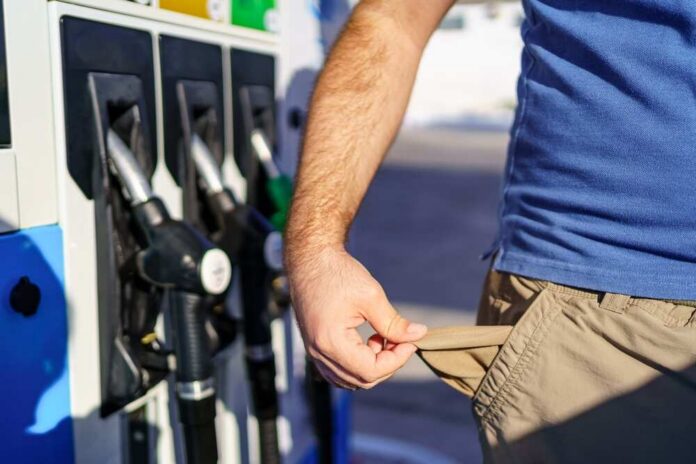
Record tax refunds promised by President Trump are being swallowed whole by skyrocketing gas prices, turning what should have been a financial win for hardworking Americans into yet another hidden tax that punishes families at the pump.
Story Snapshot
- Average 2026 tax refunds hit $3,676, up 10.6% from 2025, thanks to Trump’s One Big Beautiful Bill Act
- Gas prices surged from under $3 to $3.72 per gallon in three weeks, erasing tax relief gains
- Stanford analysis shows households will spend $740 extra on gas versus $748 in tax savings
- Low-income families hit hardest as fuel costs rise faster than wages, squeezing budgets
Trump’s Tax Cuts Deliver Real Relief
President Trump’s One Big Beautiful Bill Act, passed in July 2025, delivered substantial tax relief to American families through retroactive cuts. The legislation raised the SALT deduction cap to $40,000, enhanced the child tax credit to $2,200, and provided a $6,000 senior deduction. These measures yielded $129 billion in income tax reductions for 2025, resulting in refunds averaging $3,676 by early March 2026—a significant 10.6% increase from the previous year’s $3,324. Treasury Secretary Scott Bessent rightfully called this a “record-setting refund season,” reflecting the administration’s commitment to putting money back in taxpayers’ pockets.
Geopolitical Chaos Drives Gas Price Surge
The promised financial relief faces an unexpected threat from external forces beyond our borders. Iran’s disruptive actions in the Middle East, including potential closure of the Strait of Hormuz, triggered oil market chaos that sent gas prices soaring in February 2026. Prices jumped from $2.91 to $3.72 per gallon in under three weeks—an alarming spike that demonstrates how foreign adversaries and unstable regimes can directly attack American prosperity. Raymond James strategist Tavis McCourt’s analysis reveals the stark math: every $10 increase in oil prices adds 25 cents per gallon at the pump, and the $20-per-barrel surge translates into $150 billion in additional consumer fuel spending.
Tax Relief Redirected to Energy Costs
Financial analysts warn that American families will see their hard-earned refunds vanish into gas tanks rather than household budgets. Gabriel Shahin, CEO of Falcon Wealth Planning, notes that refunds are being “redirected to energy costs,” completely nullifying the economic boost intended by tax relief. Stanford Institute for Economic Policy Research data shows the near-perfect offset: households face $740 in extra gas spending compared to $748 in average tax relief—leaving just $8 in net benefit. For typical drivers, this translates to an additional $13 per fill-up or $52 monthly, money that could have paid bills, reduced debt, or built savings.
Working Families Bear the Brunt
Low-income Americans suffer the most severe impact from this invisible tax at the pump. Gas costs represent a larger share of modest household budgets, and wage growth fails to keep pace with energy inflation. While the administration delivered on promised tax cuts—benefiting itemizers in high-tax states, families, and seniors—the purchasing power gains evaporate for working-class commuters who must drive to work. This situation exposes how global instability and energy dependence undermine domestic policy victories. The $150 billion fuel spending surge effectively neutralizes the $129 billion in tax savings, proving that American energy independence remains crucial to protecting family finances from foreign manipulation and market volatility.
Trump touted bigger tax refunds this year, but Americans will likely spend them on gas!!
— Dr. Mike (@DrMike73248055) March 23, 2026
The contrast between the administration’s fiscal achievements and the geopolitical reality facing Americans highlights an uncomfortable truth: even effective conservative tax policy cannot fully shield families from external economic threats. The Trump tax cuts are real, documented, and substantial. Yet oil market disruptions tied to Middle Eastern conflicts demonstrate why energy security and foreign policy stability matter as much as domestic economic legislation. Americans deserve both lower taxes and affordable energy—two pillars of prosperity that must work together to ensure financial relief reaches kitchen tables rather than disappearing into gas tanks.
Sources:
Analysts say rising gas prices are swallowing your 2026 tax refund – TheStreet
Trump promises bigger tax refunds – Mezha