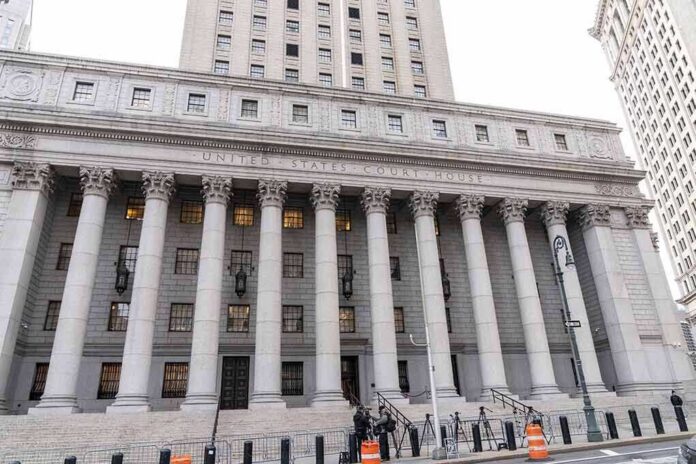
The Justice Department won a first-of-its-kind deportation using a secret-evidence court Congress created 30 years ago but never used until now.
Story Snapshot
- Justice Department invoked the Alien Terrorist Removal Court for its first case and secured a deportation.
- Government said classified information showed the Afghan woman was an “alien terrorist”.
- Defense lawyers argued the court’s secrecy violates due process and the Constitution.
- Case spotlights a long-running fight over using secret evidence in immigration and national security matters.
What The Government Did And Why It Matters
The Justice Department activated the Alien Terrorist Removal Court to remove Nazira Haji Zada, a 47-year-old lawful permanent resident from Fort Worth, Texas, marking the court’s first use since Congress created it in 1996. Officials said the special process was needed because key evidence is classified. The department later announced it obtained an order and carried out her deportation, calling it the first removal through this court. This step tests how far the government can go when it relies on secrets to act.
Federal filings said the Attorney General holds classified information showing Haji Zada is an “alien terrorist,” a legal category that triggers removal if proven in the court’s process. The government alleged she supported family plans tied to an Election Day shooting plot connected to the Islamic State, citing material it says cannot be disclosed without risking national security. Prosecutors chose this tribunal after describing regular immigration courts as too limited for the sensitive evidence the case requires.
How The Alien Terrorist Removal Court Works
Congress built the Alien Terrorist Removal Court to let judges review classified evidence in immigration removal cases that involve suspected terrorism. The law permits the government to present secret materials and requires an unclassified summary for the noncitizen that is “sufficient” to prepare a defense, but the normal rules of evidence do not apply. The court aims to balance national security with due process, yet much of its work happens outside public view, by design.
Because the court had not been used for three decades, basic procedures are being tested in real time. Public reporting shows the judge held a rare open hearing while many filings stayed sealed. That mix—some public, much sealed—mirrors older immigration cases where courts allowed classified information in limited ways, but also warned that secrecy cannot swallow fairness under the Fifth Amendment to the Constitution. This case is now a modern stress test of those boundaries.
Defense Objections And Due Process Concerns
Haji Zada’s federal public defender said the process violates due process and called it unconstitutional, arguing the defense could not see or test the government’s classified claims. Counsel said the unclassified summary was only two paragraphs long and did not allow a real chance to respond, noting one paragraph described only relatives’ prior convictions, not her conduct. The defense asked the court to dismiss the case or force broader disclosure before key hearings.
The Justice Department says it's secured a first-of-its-kind deportation of an Afghan woman through the secretive Alien Terrorist Removal Court https://t.co/bvDmcRW351 pic.twitter.com/or58NRwnMa
— CNN Breaking News (@cnnbrk) September 11, 2026
Lawyers also argued that the court lowers the standard of proof and acts as a “runaround” of bringing a criminal case, where the rights are stronger and the evidence rules are tighter. These arguments echo a deeper debate that has run for decades. Legal scholars and past courts have recognized that immigration cases may use classified evidence, but only within limits that still give a fair chance to answer the government’s claims. Whether this court met that mark will shape future uses of the process.
Why Both Sides Of The Aisle Should Care
Americans who worry about terrorism want the government to act fast, protect sources, and prevent harm. Americans who worry about government power want open courts, equal rules, and proof they can see and challenge. This case forces both values to meet. The government says it defended national security and followed a law Congress passed. The defense says secrecy overreached and undercut core rights. Many citizens will see a familiar pattern: security tools growing while trust in institutions stays weak.
What Comes Next And The Stakes
The first removal order sets a precedent for more cases if officials believe this court works. If future judges demand stronger unclassified summaries or more defense access, the process could shift toward greater transparency. If secrecy dominates, critics will press Congress and higher courts to set tighter guardrails. Either way, a dormant statute now has real-world force, and both safety and liberty arguments will keep colliding in this little-known corner of the justice system.
Sources:
cbsnews.com, justice.gov, apnews.com, news.bloomberglaw.com, atrc.uscourts.gov, nytimes.com, washingtonpost.com, scholarship.law.bu.edu