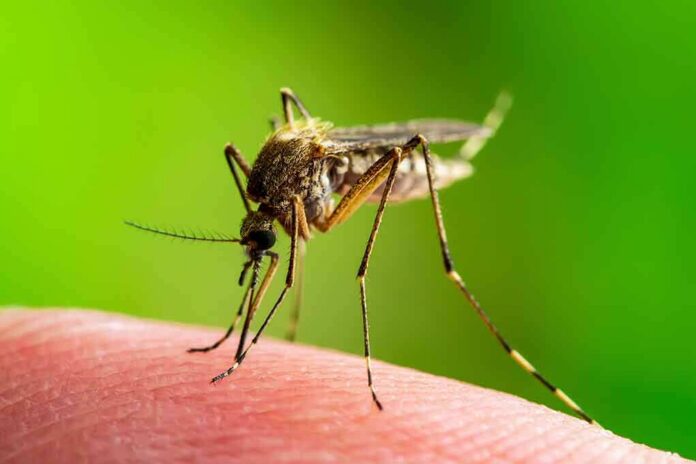
For the first time, officials found Aedes aegypti mosquitoes breeding in the UK, then moved fast to stamp them out.
Story Snapshot
- UK Health Security Agency (UKHSA) detected Aedes aegypti breeding at east London homes and began rapid control.
- Officials say the public-health risk is very low after larvae were destroyed and trapping was increased.
- This is the first confirmed UK breeding event and follows past one-off findings near transport hubs.
- Surveillance follows a national plan designed for rare incursions at points of entry, not widespread spread.
What UKHSA Found And How They Responded
United Kingdom Health Security Agency (UKHSA) teams found invasive Aedes aegypti mosquitoes and larvae at residential properties in east London. Officials said they began enhanced surveillance and trapping right away, destroyed larvae on site, and set up controls to stop any spread. UKHSA described this as the first confirmed breeding detection of this species in the United Kingdom. The agency framed the current risk to the wider public as very low based on the swift response and early stage of detection.
UKHSA guidance explains how these responses work. When an invasive mosquito is detected, health protection teams trigger the cross-government contingency plan. They add more traps, survey nearby sites, remove breeding sources like standing water, and apply targeted treatments. The plan aims to catch rare introductions before they can settle. UKHSA has used this playbook before at ports, freight areas, and service stations when other non-native Aedes species appeared in small numbers.
Why This Detection Matters But Risk Remains Low
Aedes aegypti can spread dengue, Zika, and chikungunya in places where the virus is present. The species thrives in small containers and near homes, which raises concern when it shows up. UKHSA reported this east London cluster early, contained the breeding sites, and said the broader risk is low now. One-off introductions have been seen elsewhere in Europe and the United Kingdom without lasting establishment when officials act fast and keep up checks after the first find.
Recent United Kingdom history shows a pattern of rare incursions linked to travel and trade. From 2016 onward, the country found invasive Aedes mosquitoes at a truck stop in Kent and later around London, but follow-up did not show established populations. Surveillance from 2020 to 2022 saw no non-native mosquito detections, underscoring how uncommon these events are. Aedes aegypti eggs were later detected near Heathrow in 2023, again near transport links, and were managed as introductions.
How Surveillance Works And What Comes Next
United Kingdom surveillance began in 2010 and uses traps at high-risk spots like ports, freight sites, and service areas. When eggs or larvae are found, labs confirm the species and incident teams expand the search area. The national contingency plan sets actions by risk level. Detection without establishment triggers local control, extra trapping, and public advice on removing standing water around homes and gardens to cut breeding sites.
Aedes aegypti, a mosquito spreading dengue, chikungunya, and Zika, has been found in London, according to UKHSA's Mosquito Watch. This highlights the need for arbovirus surveillance as global temperatures rise. Submit to our arboviruses collection: https://t.co/0wWpV19Jxc
— Microbiology Society (@MicrobioSoc) September 4, 2026
For residents, simple steps help. People can empty buckets, plant saucers, and paddling pools after use. They can clear gutters and cover water butts. These actions reduce the small pools where Aedes lay eggs. UKHSA says the current risk is low. Still, continued trapping over the coming weeks will show whether the response cleared the introduction or if more action is needed. That is the point of “enhanced surveillance” after any rare detection.
Big Picture: Travel, Trade, And A System Built For Incursions
Global travel and trade move goods quickly and can also move insects. That is why United Kingdom detections tend to cluster near airports, ports, and freight storage. The European Centre for Disease Prevention and Control notes that northern European Aedes aegypti finds often tie to ships and do not lead to stable populations. United Kingdom plans reflect that reality: prepare for rare entries, act fast, and prevent a foothold through local control and follow-up checks.
Many readers across politics worry that large systems miss early warnings. This case shows a system designed for quick action on a concrete threat. UKHSA reported the find, used a written plan, and began controls within days. The agency’s message is clear: the detection is serious but managed, and the wider risk remains low. The next key fact will come from traps and surveys in the area, which will confirm whether the introduction has been fully contained.
Sources:
newscientist.com, gov.uk, ukhsa.blog.gov.uk, ecdc.europa.eu, assets.publishing.service.gov.uk, academic.oup.com