
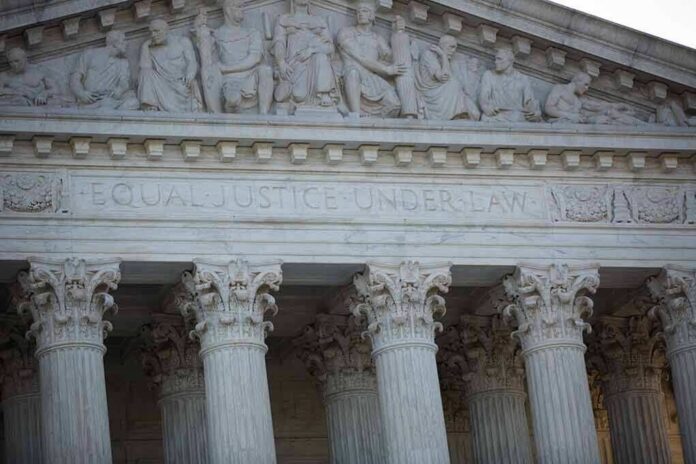
The Supreme Court’s emergency order lets the administration reconnect federal databases to check voter citizenship while the legal fight continues.
Story Snapshot
- The Supreme Court allowed temporary use of the revamped SAVE system during the appeal.
- The administration says SAVE only verifies status for states and does not cancel voters.
- Lower courts said the expansion likely violated privacy laws and could mislabel citizens.
- States choose whether to use SAVE, so results and safeguards may vary by state.
What The Court Allowed And What It Did Not Decide
The Supreme Court granted temporary relief that lets the administration operate the expanded Systematic Alien Verification for Entitlements, known as SAVE, while appeals proceed. The order is not a final ruling on legality. It gives time for arguments on privacy and authority. Earlier, a district judge and the D.C. Circuit said the program likely broke federal privacy laws. Those rulings remain key signals as the case moves forward.
The administration argues SAVE offers a faster, more reliable way to confirm citizenship or immigration status for state election officials. Federal lawyers say SAVE only returns a status response and does not remove anyone from the rolls. They also say the redesign allows bulk checks and use of Social Security data to speed matching before elections. States decide whether to use SAVE, which supports the view that it is an optional aid, not a mandate.
How SAVE Works And Why It Sparks A Privacy Clash
United States Citizenship and Immigration Services says SAVE is a service that lets approved agencies verify U.S. citizenship or immigration status. Agencies can submit single records or large batches. Critics argue the expanded system now links more sensitive records and increases the risk of exposing Social Security numbers and status data at scale. A federal district judge said agencies “haphazardly combined and repurposed” private data and “trampled” privacy rights, echoing the risk to lawful voters.
Appeals court judges warned the program could produce false negatives that flag real citizens as noncitizens. Local reviews have also found errors. Travis County, Texas officials reported that at least ten percent, and perhaps up to twenty-one percent, of ninety-seven flagged voters were actually U.S. citizens. A past privacy assessment and reporting described risks from typos, transposed numbers, and incomplete files, all of which can cause bad matches.
The Stakes For Election Integrity And Voter Confidence
Supporters say matching voter rolls against federal files can catch rare noncitizen registrations and improve public trust. They argue a federal tool, used well, helps under-resourced states manage large rolls and respond quickly in tight timelines. They stress that SAVE does not itself purge voters and that states retain control over any action after a flag. That point matters to those who fear heavy federal hands in state-run elections.
Supreme Court lets Trump administration use revamped federal voter eligibility database for now:
'States’ use of the SAVE program is voluntary. The immediate impact on the upcoming midterms is likely limited because existing law blocks most states from systematically purging…— Blue Paul (@gobacktosanity) September 25, 2026
Opponents warn that bulk queries can mislabel citizens, especially naturalized Americans, and chill turnout. They say the government has not shown tested accuracy rates for mass matching or clear safeguards for notice and appeal. Lower courts agreed the expansion likely violated privacy law by sharing sensitive data beyond legal limits. Many voters on both left and right see the pattern: big systems grow, errors creep in, and no one in government takes the blame.
What To Watch Next
Courts will review core questions: what laws allow this repurposed use, what data can be shared, and what due-process steps states must follow before acting on a flag. Key evidence would include tested error rates for bulk checks, state logs on how flags were resolved, and a full privacy-impact map. Because states opt in, outcomes will vary. That uneven map can fuel dueling narratives about success or harm as the election nears.
Sources:
cbsnews.com, 3newsnow.com, semissourian.com, reuters.com, washingtonexaminer.com, washingtontimes.com, cnn.com, politico.com, news.bloomberglaw.com