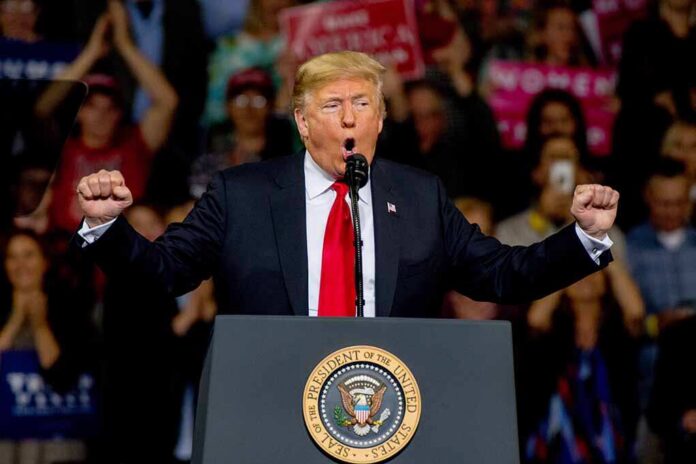
A sitting Republican congresswoman aired a paid ad telling President Trump his immigration enforcement “has gone too far,” warning of a backlash from Hispanic voters.
Story Snapshot
- Rep. Maria Elvira Salazar urged Trump to rein in enforcement tactics in a new campaign ad.
- She said many Hispanic voters who backed Trump in 2024 now “feel betrayed”.
- The ad cited July detentions where half reportedly had no criminal convictions or charges.
- CNN found Republicans mentioned Trump in only 12 TV ads from Sept. 1–15, under 1% of GOP TV spend.
Salazar’s Public Break Over Immigration Enforcement
Rep. Maria Elvira Salazar, who represents a South Florida district, released a campaign ad on September 17 that addressed President Trump directly. She said some immigration enforcement efforts “have gone too far,” and she cautioned him to be careful about what advisers tell him. She framed the message as a warning about November. She said many Hispanic voters who helped elect Trump in 2024 “feel betrayed today,” and that this shift could cost Republicans in tight races.
The ad included a specific claim about enforcement outcomes. Salazar said that in July, authorities detained 50,000 people, and half did not have criminal convictions or pending charges. That line underscored her argument that tactics are sweeping in non-criminals and families, a sensitive point in Miami’s diverse communities. Reuters called the spot a sign that an issue central to Trump’s rise may now work against Republicans in key areas heading into the midterms.
How Unusual Is This Inside-the-Party Rebuke?
Politico described Salazar’s video as a “rare” pushback from within the party against the White House’s aggressive immigration agenda. Her campaign put real money behind the message, airing it on Miami television and online in South Florida, showing it was not a one-off comment but planned outreach to voters in her district. The Hill reported that Trump still backed Salazar after the video, signaling this was a policy disagreement, not a total split. That support may ease backlash from core Republican voters.
While Salazar’s move was high profile, broad proof of a party-wide break remains limited. Much of the evidence beyond her case points to ad strategy, not open criticism. A CNN analysis of AdImpact data found Republicans aired only 12 television ads that even mentioned Trump from September 1 to September 15. That accounted for about $1 million and less than one percent of Republican television ad spending in that window. Avoiding Trump’s name on air suggests tactical distancing in paid media.
Why Campaigns Downplay Polarizing Figures
Campaigns often adjust messages to fit local voters. In swing or diverse districts, candidates try to keep base voters while not alienating moderates or independents. That is why a candidate can criticize a specific policy and still seek national support. The pattern fits long-running “raincoat” politics in midterms: candidates manage national headwinds rather than embrace them. The CNN ad tally points to that pattern this fall more than to a deep ideological rupture.
For many readers, this will feel familiar and frustrating. Voters on the right resent soft policies, high costs, and chaos at the border. Voters on the left resent harsh enforcement, wealth gaps, and cuts to social support. Both sides see leaders chasing power over solutions. Salazar’s ad taps that shared worry: heavy-handed actions can punish families who work hard and obey the law, while still failing to stop crime. When results do not match promises, trust erodes across the board.
What This Means for the Midterms and Beyond
In Florida’s 27th District and similar seats, the path to victory may run through Hispanic and moderate voters who want firm but fair enforcement. Salazar’s bet is clear: show independence on process while staying aligned on broader goals like border control and safety. If others in the party copy this approach, expect fewer Trump references on television and more issue-centered pitches on crime, prices, and schools. That allows room to court swing voters without lighting up base anger.
This swing state Republican keeps distancing himself from Trump. It may not save him in the midterms #DonaldTrump #Republicans #FBIhttps://t.co/66GFTqEH7z pic.twitter.com/f24u6qIrMj
— Randyluv (@Randyluv5) September 19, 2026
Limits remain in the current record. Public reporting centers on Salazar’s ad and the small number of Trump mentions in Republican ads. It does not show a coordinated plan across many campaigns. Still, her message—and Trump’s decision to keep backing her—marks a notable shift line: criticize methods, not the mission. In a season where many Americans believe elites protect themselves first, voters will judge who fixes problems without breaking families or the rule of law.
Sources:
yahoo.com, reuters.com, washingtonpost.com, townhall.com