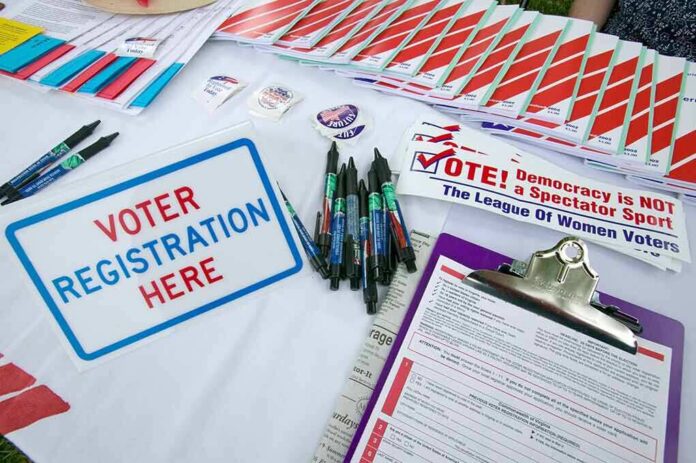
Two wealthy donors just became the biggest bankrollers against California’s voter ID measure, injecting $2.5 million to sway a high-stakes vote.
Story Highlights
- Netflix co-founder Reed Hastings and his wife Patty Quillin gave $2.5 million to defeat Proposition 39.
- Official filings show $1.5 million from Quillin and $1 million from Hastings to No on 39 committees.
- Proposition 39 would require voters to provide added identifying information each time they vote.
- The couple’s donations underscore how a few elites can drive California ballot fights.
Who Gave, How Much, and to Whom
California campaign finance records list Patty Quillin’s $1.5 million on August 31, 2026, and Reed Hastings’s $1 million on September 3, 2026, to committees opposing Proposition 39. These are named, reported gifts tied to established No on 39 groups, not anonymous transfers. Politico reported the two main opposition committees were sharing resources from the couple. The San Francisco Chronicle also confirmed the donation amounts and dates in its coverage of the heated initiative.
California’s Secretary of State voter guide and the Fair Political Practices Commission disclosures identify the committees and amounts, making the contributions easy to verify. Press outlets repeated the figures and timing, matching the state’s data. This clarity matters in a state where independent expenditures and pass-through groups can blur lines. Here, the paper trail is plain: two donors, two large checks, one policy goal—defeating a voter ID mandate on the November ballot.
What Proposition 39 Would Do
The Legislative Analyst’s Office says a yes vote on Proposition 39 would require voters to provide additional identifying information each time they cast a ballot. That includes presenting government-issued identification at the polls and adding partial identification numbers on mail ballots, according to ballot materials. A no vote would keep current rules, which rely on signature checks to confirm identity. The proposal has become one of the most watched measures on California’s crowded ballot.
Supporters argue the measure would deter fraud and raise confidence in results. They frame it as a simple step to confirm eligibility and reassure voters who worry about election security. Critics say extra identification hurdles risk blocking eligible voters who lack easy access to documents or face confusion over new steps. The measure’s cost to governments could reach tens to hundreds of millions each year, depending on future choices by state and local officials, the analyst says.
Why the Money Matters Now
Large checks can shape what voters see and hear in the campaign’s final weeks. In California, a few donors often dominate ballot fights by funding ad buys, mailers, and field work that most small donors cannot match. That spending power can raise a real concern shared by people on the left and right: decisions that touch voting rules are being steered by the wealthiest, not by everyday citizens. The Chronicle’s reporting shows Proposition 39 has drawn intense interest and money on both sides.
Netflix co-founder Reed Hastings donated $1 million and his wife Patty Quillin donated $1.5 million to defeat California Proposition 39.
Prop 39 would require voters to show government-issued ID when voting in person and to write the last four digits of a government ID number on… pic.twitter.com/kukYb4q1Ev
— Girl patriot 🙏 🇺🇸 🦅 (@Girlpatriot1974) September 18, 2026
The evidence does not tell us why Hastings and Quillin oppose the measure. The filings show cash and committees, not a public statement of their reasoning. That gap leaves room for both camps to assign motives. Still, the documented facts are clear: the couple are top funders for the No side, and the measure would add new identification steps for every voter. Voters must sort the security claims against access concerns, then decide which risk weighs more.
Sources:
dailywire.com, politico.com, sfchronicle.com, theamericanleader.org, insidepoliticalmoney.com, ivn.us