After a night search off Nantucket, the U.S. Coast Guard says it found debris from a missing medical jet while crews race to find six people who never made it to Boston.
Story Snapshot
- U.S. Coast Guard confirms a debris field tied to the missing air ambulance off Nantucket.
- The Gulfstream G100 lost contact with air traffic control on a Bermuda-to-Boston flight early Saturday.
- Federal Aviation Administration issued a search-and-rescue alert around 1:20 a.m. Eastern time.
- Search teams are focused on finding possible survivors as daylight and weather allow.
What Authorities Confirmed About the Missing Flight
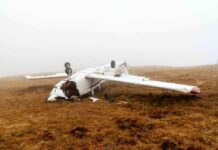
The U.S. Coast Guard said a medical transport jet with six people on board vanished early Saturday on a flight from Bermuda to Boston. Air traffic controllers lost contact with the Gulfstream G100 near Nantucket, triggering a rapid search off Massachusetts. By Saturday night, crews located a debris field that the Coast Guard confirmed was from the missing aircraft. The search has centered south of Nantucket, with cutters and aircraft working grid patterns to find survivors.
The Federal Aviation Administration issued a search and rescue alert notice at about 1:20 a.m. Eastern time after the aircraft failed to check in and land as planned. That alert moved assets into place for an overwater search where time matters and the area is vast. Local outlets reported Coast Guard aircraft breaking from grid sweeps to investigate spot sightings, then resuming patterns as conditions changed through the day.
How the Search-and-Rescue Effort Proceeds at Sea
Search leaders start with the last known position and expand from there based on currents, winds, and likely drift. The National Search and Rescue Plan explains how teams estimate where wreckage or people might move after an incident and assign air and surface units to cover those zones. The plan stresses quick alerts, tight coordination, and repeated passes to raise the odds of finding survivors in challenging seas and light.
Night operations add risk and slow the pace, so crews balance safety and urgency. Overwater aviation searches often work from sparse data at first, then update when debris, beacons, or confirmed sightings refine the target area. Past Government Accountability Office work details how ocean searches strain tracking tools and why recoverable data and locator signals can make or break the mission. Those tools often define whether authorities find a precise crash site or only scattered debris.
Why Medevac Flights Face Extra Risk and What Comes Next
Medical evacuation flights run at odd hours, under time pressure, and sometimes in poor weather. Investigators have linked higher accident rates in some medevac operations to dark conditions, quick turnarounds, and a strong push to complete the mission. A Transport Safety Board analysis of night medevac cases highlighted the dangers of deteriorating weather and task pressure for crews. These themes often shape how investigators review training, dispatch, and equipment after a crash.
4 AM Bottom-of-the-Hour News
Caught in the crossfire. A little girl playing in a West Baltimore park during a youth football game.when shots rang out. Baltimore Mayor Brandon Scott.: “A 12 year old gone because two men are. That's what we're talking about tonight. ”
Those two… pic.twitter.com/eIJUskP4Ve— Worldwide News Network (@WorldwideNNX) October 4, 2026
Investigators will examine air traffic control records, maintenance logs, and any recovered parts to learn what failed and how. The Coast Guard will keep searching for as long as conditions and evidence support chances of rescue. Families and the public want clear answers fast, but solid answers take time at sea. For now, officials stress one goal above all: find survivors and bring them home. Formal cause findings will follow from recovered wreckage and aviation investigation steps.
Sources:
cbc.ca, thespec.com, abcnews.com, aviationlawgroup.com, tsb.gc.ca, dco.uscg.mil, nbcboston.com