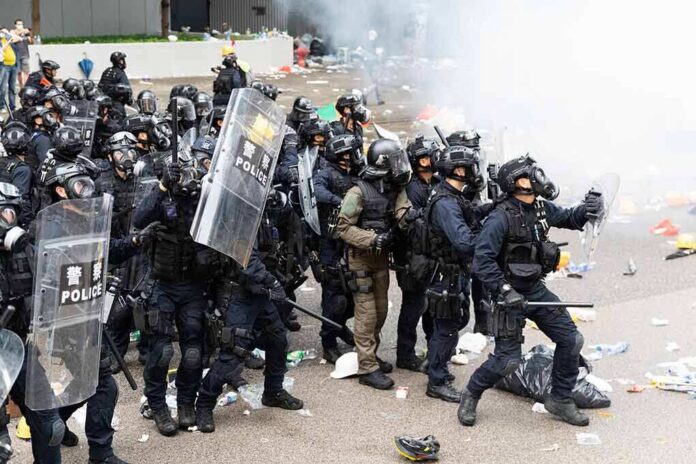
French students shut hundreds of schools to protest crumbling classrooms and missing teachers, while arrests and street clashes mount.
Story Snapshot
- Students cite overcrowding, teacher shortages, and run-down buildings as the trigger.
- France’s Education Ministry counted disruption at more than 330 high schools.
- Parent leaders and unions point to canceled classes and unsanitary conditions.
- Street violence and mass arrests risk burying the core school-funding dispute.
What Sparked School Shutdowns And Street Clashes
Reports from multiple cities say students walked out over overcrowded classes, teacher shortages, and crumbling facilities. Reuters described closures or partial closures at roughly 400 to 500 schools and noted anger about “dilapidated buildings” and frequent staff gaps. Students and teachers also raised health concerns tied to unsanitary facilities and a lack of nurses and social workers. Those basic conditions, not high politics, formed the stated reason for the blockades and marches reported across France.
The Education Ministry acknowledged the disruption. Officials said more than 330 high schools were affected as the movement spread, and reported that just over one in ten teachers and staff took part in strike action that overlapped with the student protests. That acknowledgment matters. It shows this was not a handful of campuses, but a national problem reaching deep into the school system. It also hints at wider strain in public services that many French families say they feel daily.
On-The-Ground Evidence From Schools And Families
Parent and student testimony backs the resource story. At Lycée Le Corbusier, a parent representative said classes in math, humanities, English, and sports were canceled since the start of the school year because teachers were missing. Across several towns, families described unsanitary buildings and chronic shortages of support staff. These are concrete, checkable claims: canceled classes, missing teachers, and broken basics. They point to state capacity issues that are hard to spin away.
Union statements also focused on underfunding, overcrowding, and deteriorating buildings. A planned national demonstration by the pupils’ union cited those themes, while hundreds of schools remained shut or disrupted. That shared message across different groups is notable. It aligns with past French protests where school conditions became a stand-in for deeper worries about budgets, worker shortages, and the reach of government services. When classrooms fail, parents and teens feel it fast.
Violence, Arrests, And The Risk Of Losing The Plot
Clashes with police, injuries, and arrests rose as the week wore on. National coverage documented serious street disorder and attacks, including reports that drew headlines for their severity. These scenes can quickly eclipse the core issue. When fires and arrests lead the news, the public often forgets why the protests began. That dynamic is common in France’s tense protest culture and can let leaders talk about security while avoiding hard choices on schools.
France: More Than 250,000 Join Student Protests as Clashes With Police Escalate
More than 250,000 people have joined nationwide protests in France over education funding, poor school conditions and teacher shortages.
Police fired tear gas as some demonstrations turned violent,…
— frontis (@frontisHQ) October 6, 2026
Competing narratives have also emerged. Some commentators, including President Trump, framed the unrest as the result of “out of control mass migration” and tied it to Islam. That claim runs against the direct grievances cited by students, parents, and unions, which focused on classrooms and staffing, not migration. Readers should separate two things: the images of unrest that spread online, and the stated cause described by those who shut their schools and marched in the streets.
Why This Matters Beyond France
Education system stress is a universal pressure test for government. Teacher vacancies, lost instructional hours, and building decay are not abstract. They decide whether a child learns or waits. France’s ministry figures and on-the-ground reports show real service gaps inside a rich country’s core promise to the next generation. Americans across the spectrum will recognize the pattern: leaders argue on television, while families struggle to get basic services that taxes are supposed to fund.
What To Watch Next
Watch for three signals. First, verify staffing data and how many hours students are losing to vacancies or absences. Second, look for building audits that confirm the scale of repairs and health risks. Third, track whether the government funds targeted fixes or leans on policing to cool the streets. If officials publish clear plans with deadlines and budgets, trust may rise. If not, expect more blockades, more anger, and more fuel for those who say the state is failing.
Sources:
facebook.com, reuters.com, dw.com