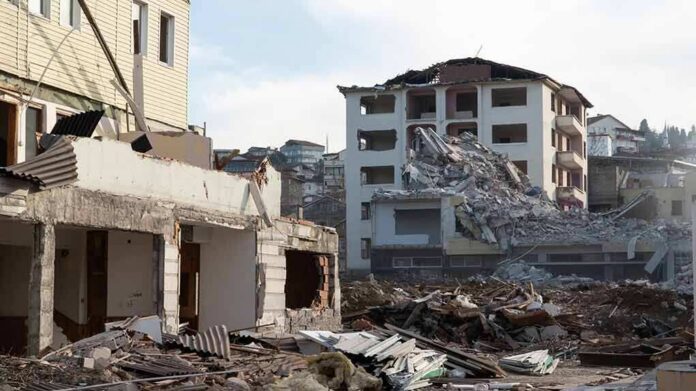
A powerful magnitude 7.0 earthquake struck Tibet’s Nagqu region late Thursday, with Chinese state media reporting casualties and local authorities warning of broad impact.
Story Snapshot
- A 7.0 quake hit Baqen County in Nagqu, Tibet, at 10:33 p.m. local time.
- State media reported casualties; later reports cited dozens dead and hundreds missing.
- China’s network listed a shallow 10-kilometer depth; India’s agency reported 173 kilometers.
- Early figures often change as rescue teams confirm on-the-ground reports.
What Happened and Where
Chinese outlets said a magnitude 7.0 earthquake struck Baqen County in Nagqu, Tibet Autonomous Region, at 10:33 p.m. local time on October 22. Reports cited the China Earthquake Networks Center and placed the epicenter near 32.40° North and 93.79° East, close to several villages and townships. The center revised an initial automatic estimate to a final 7.0 magnitude after review. State media said casualties occurred, but initial details were limited.
International coverage matched the size and timing of the quake and flagged the potential for widespread damage. Later, Anadolu Agency reported that Chinese state media put the death toll at 43, with 519 people missing, while noting that early updates lacked full damage reports. Those figures underscored the scale of concern across a sparsely populated, high-altitude region where rescue access can be hard and slow.
Why Early Numbers Differ
Competing depth estimates added confusion. China’s network listed a shallow focus of about 10 kilometers, which often increases shaking at the surface. India’s National Centre for Seismology listed a much deeper 173 kilometers, which usually reduces surface damage. Depth changes how we read early casualty claims and damage risk. Such gaps are common in the first hours after a large quake as agencies process different data sets and refine solutions.
Early casualty counts also shift as teams reach remote areas and confirm reports. Research on disaster response shows that death and injury figures often change for days as field reports improve. Populations move, records are incomplete, and some reports mix injuries, deaths, and missing persons at first. This pattern can explain why some outlets said “casualties reported” while others saw no confirmed numbers right away.
Rescue Challenges in a Remote Region
Nagqu sits on the Tibetan Plateau, with thin air, long distances, and limited roads. Those facts slow rescue work and raise the odds that numbers come in batches. Nighttime quakes also raise risks, since people are at home and power or communications may fail. Past events in Tibet have shown how hard it is to move teams, clear roads, and reach smaller villages quickly, which delays accurate situation reports and verified counts.
The China Earthquake Networks Center’s revision from an automatic 6.7 to a reviewed 7.0 shows another common step. Automatic systems post fast but can be off on magnitude and depth. Analysts then check more stations and update. For the public, that means early app alerts and headlines may shift. For responders, the refined values shape where they send teams, how they stage supplies, and what kind of building damage they expect.
Why It Matters Beyond Tibet
Large quakes in the Himalayas affect neighbors, trade routes, and aid lanes. When information is thin, families and aid groups struggle to plan. Clear, steady updates matter more than speed. In 2025, a major quake in Tibet led to significant loss of life, reminding officials that terrain and access drive outcomes. Today’s reports again point to the need for transparent, regular briefings and quickly shared maps of blocked roads, power cuts, and medical needs.
What to Watch Next
Watch for unified magnitude and depth values as more stations report, and for a formal breakdown of casualties by location. Look for road status, hospital capacity, and weather windows for airlifts. Expect missing-person numbers to change as contact is restored. These steps will show whether the event remains local to Baqen County or spreads across Nagqu. Clear coordination across agencies will speed relief and reduce confusion as the picture comes into focus.
Sources:
news24.com, news18.com, newvision.co.ug, nampa.org, telegraphindia.com, indiatvnews.com, viveusa.mx