France’s worst night of unrest in years ended with a 143-year-old city hall in flames and more than a thousand arrests, underscoring how fast public anger can tip into chaos.
Story Highlights
- Limoges City Hall burned as protests over living costs and schools turned violent.
- Authorities reported over 1,200 arrests and at least 150 injured police nationwide.
- Officials blamed ultra-left groups; protesters said most marched peacefully.
- Unrest fits a long French pattern mixing grievances with opportunistic violence.
What Happened Across France
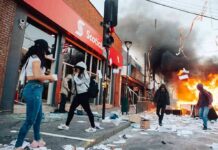
Reuters reported that protests spread nationwide on October 17, with fires, street clashes, and looting in several cities. In Limoges, the 19th-century city hall caught fire, and parts of the landmark collapsed. In Marseille, black-clad groups entered city hall and scrawled anarchist graffiti. In Lyon, the tourist office burned, and shops were ransacked. Officials described one of the most violent nights in recent years, citing risks to public buildings and bystanders.
France’s prime minister said police detained more than 1,200 people and that at least 150 officers were hurt as they tried to stop arson and looting. Government leaders blamed radical far-left groups and criminals for hijacking marches. They argued these groups used large crowds as cover to attack symbols of the state and private property. Police unions also pointed to organized agitators who arrived with gear to fight and to set fires, which raised the level of danger in city centers.
Why People Took to the Streets
Protesters pointed to high living costs, rising fuel prices, and weak public services as the spark for marches. Student groups said schools lack teachers, have poor buildings, and burden teens with stressful admissions rules. The General Confederation of Labour backed calls for higher wages and pensions, lower prices, and protection for public services. A Yellow Vest representative said the groups share goals like better services, more resources, and wages that match costs of basic goods.
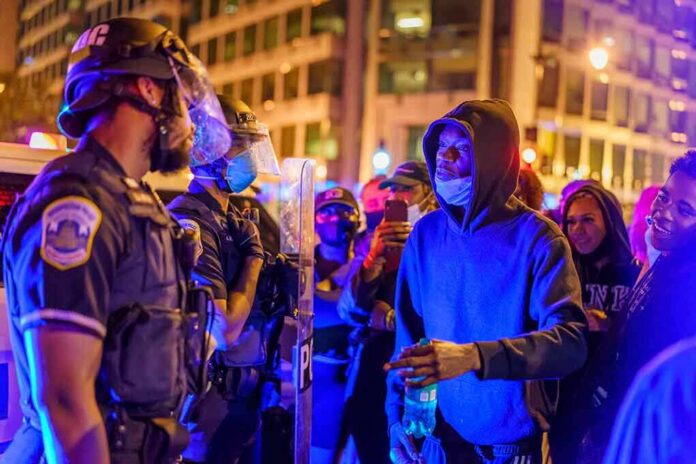
Many marchers said they tried to keep rallies peaceful and blamed the worst violence on troublemakers who sought clashes with police. They described a familiar cycle. Large, mixed crowds gather over shared economic stress. As night falls, small groups break off, mask up, and target buildings and shops. That pattern makes it hard for peaceful organizers to control events. It also lets officials pin the night’s damage on a few groups, not on broad public anger.
Limoges Fire as a Breaking Point
The Limoges City Hall blaze became the symbol of the night. Local officials said the fire “largely” destroyed the historic site and required a big emergency response to contain it. Images of the fallen clock tower spread fast and shocked many across France. The attack on a civic landmark drew sharp condemnations from leaders. It also fueled debate over whether extremists planned violence in advance or whether disorder grew from tense street standoffs.
Nationwide protests over the cost of living, rising fuel prices, and school conditions in France escalated into violent riots and mass looting on October 17–18, 2026, resulting in an estimated 1,800 arrests and hundreds of millions of euros in damage.
Key Statistics and Extent…
— AmericanPatriot (@AmericanPa17288) October 18, 2026
For many citizens, the sight of a civic building burning felt like a sign of deeper failure. People on the left and right often agree that leaders talk past real problems. They see rising prices, clogged services, and distant elites. When a landmark burns, it seems to prove that those in charge lost control and cannot keep order or fix root causes. That shared doubt about government capacity now spans the political spectrum in France and abroad.
How This Fits France’s History
Scholars say France has seen repeated waves of urban unrest since the 1970s. Each cycle includes multiple drivers. A triggering event meets long-frustrated demands, local policing choices, and some criminal opportunism. Politicians tend to stress law and order and name agitators. Activists focus on inequality and broken services. Both dynamics matter. They are not new. The mix helps explain how a pocket of vandalism can emerge from otherwise peaceful marches.
This pattern also explains the split-screen claims after the latest riots. Officials highlight arrests and arson as proof of organized extremist action. Protesters highlight the daytime crowds, the kitchen-table costs, and kids stuck in crumbling schools. Both claims sit within a larger truth. When daily life feels unaffordable and unresponsive, trust breaks down. In that gap, a few can do great harm, and a country can lose a treasured building in one night.
What to Watch Next
Authorities will face pressure to show control and to prevent a repeat. That means faster charges for arson and looting, and visible repairs to damaged sites. Unions and student groups will push for wage relief, lower fuel costs, and better school staffing. The next weeks will test whether leaders can tackle both order and causes at once. If they cannot, France may see the same cycle again, only faster and with higher stakes.
Sources:
pjmedia.com, atlas-news.com, mid-day.com, reuters.com, cnn.com, yahoo.com, independent.co.uk, irishtimes.com, ground.news