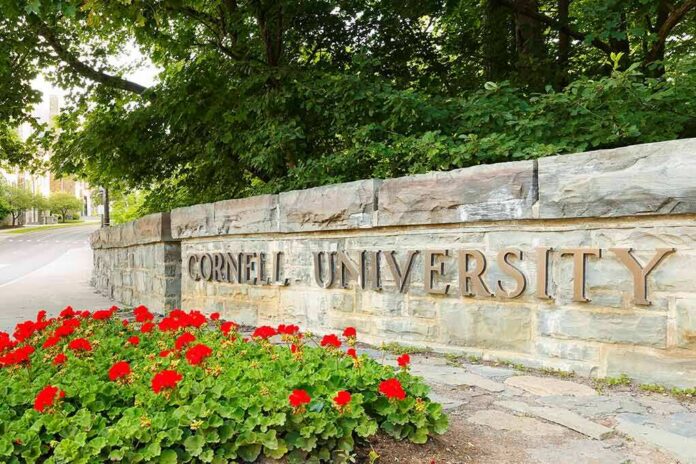
Cornell froze all fraternity-house parties for the school year after a former student’s lawsuit and renewed criminal review put campus safety under a harsh spotlight.
Story Snapshot
- Cornell halted all Interfraternity Council house social events for the 2026–2027 year.
- A former student alleges she was drugged and gang raped at Chi Phi in 2024; prosecutors reopened the case.
- The university says expulsions and suspensions followed earlier conduct hearings, not essays alone.
- Defense lawyers for some accused men deny wrongdoing and dispute her account.
Cornell’s Campus-Wide Suspension And Safety Rationale
Cornell University announced an immediate suspension of all parties and social events in Interfraternity Council houses for the rest of the 2026–2027 academic year. Leaders framed the pause as a preventive step to strengthen safety and support survivors. The university warned that any fraternity hosting an in-house event would face emergency suspension. The policy targets venue-based risk while broader reviews proceed. The action applies campus-wide, not just to the chapter named in the lawsuit.
University officials said the step responds to safety concerns linked to party culture, alcohol, and reports of drugging. The move echoes a trend where schools use blanket rules to curb predictable risks while facts are still under review. Supporters see this as prudent risk control. Critics worry it punishes many for the actions of a few and shifts focus from due process. Cornell says the pause buys time to tighten oversight and expand survivor services.
The Lawsuit, Reopened Probe, And Prior Discipline
A former Cornell student, identified as Jane Doe, filed a civil complaint naming Cornell, the Chi Phi fraternity chapter, and seven men. She alleges she was drugged and sexually assaulted for hours inside the house in 2024. After the suit, prosecutors in New York reopened the case and moved it to a grand jury to assess charges. No criminal charges were previously filed in the matter, which had drawn scrutiny since 2024.
The university says it had already held conduct hearings after the 2024 report and issued expulsions and suspensions, disputing claims that essays were the only penalties. Public statements confirm sanctions but do not list specific students or terms, citing privacy rules. The Chi Phi chapter was banned from campus in the prior period, reflecting institutional discipline separate from any criminal case outcomes.
Defense Denials And The Disputed Record
Attorneys for some accused men reject the allegations and say evidence supports their clients. One lawyer said his client did not engage in sexual activity, did not touch the plaintiff, and did not ingest ketamine. Another defense attorney said messages cited in coverage were crude but not proof of assault. These denials do not end the legal matter but signal a hard fight over facts and consent in any court or disciplinary forum.
An email from #Cornell President Michael Kotlikoff states that all parties and social events in Inter-fraternity Council (IFC) houses are suspended for the rest of the 2026-2027 academic year.
Any fraternity violating this will receive "an immediate emergency suspension."
— Christine Savino (@SavinoChristine) October 13, 2026
Reporters note that an attorney for one accused fraternity member denied wrongdoing and said his client did not participate in sexual activity. That stance underscores a central clash: the plaintiff’s account of drugging and assault against defense claims of no criminal conduct. The grand jury process will test parts of the record. A civil suit follows a lower burden of proof, so outcomes could diverge between the criminal and civil tracks.
Why This Matters Beyond Cornell
Researchers have found that large, alcohol-heavy parties and male-controlled spaces can raise the risk of sexual assault. The debate is not whether every fraternity party causes harm, but whether these settings create predictable danger that warrants strict rules. Data suggest sexual assault exists on campuses with or without Greek life, yet fraternity-linked environments can heighten risk for some students. Schools face pressure to prevent harm without abandoning due process.
Parents and taxpayers see familiar patterns: institutions react after crises, rules harden, and transparency lags. Students want safe social lives and clear standards. Survivors want to be heard and helped. Accused students want fair procedures. When trust in leaders is low, blanket bans can feel like control without accountability. The test for Cornell will be whether this pause leads to targeted fixes that make students safer and rebuild public confidence.
What To Watch Next
Grand jury decisions will shape possible criminal charges. The civil case may reveal new records and testimony under oath. Cornell’s promised safety steps, and any reforms to party oversight, training, and drug testing, will show if the pause drives change. Other schools may copy Cornell’s model or refine it to focus on the highest-risk venues and behaviors. The balance between safety and rights will remain at the center of this case.
Sources:
insiderpaper.com, statements.cornell.edu, cnn.com, cornellsun.com, people.com, cbsnews.com, bbc.com, abc11.com, academic.oup.com