
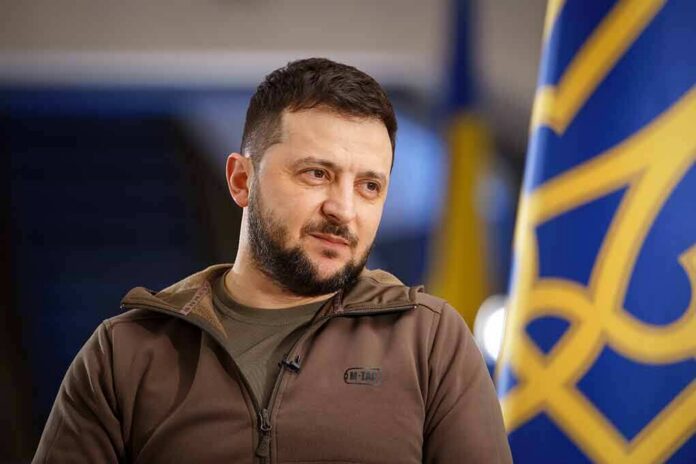
Ukraine’s president praised Melania Trump’s Oleshky cease-fire as a real lifesaver while flatly denying Tucker Carlson’s claim that Kyiv persecutes Christians.
Story Snapshot
- Zelensky said religious groups in Ukraine are free and rejected claims of anti-Christian crackdowns.
- A localized cease-fire in Russian-occupied Oleshky, credited to First Lady Melania Trump, enabled aid and evacuations.
- Critics say Kyiv’s law on Moscow-linked churches risks curbing religious liberty, and UN experts voiced concern.
- Commentary questioned whether the Oleshky truce was humanitarian help or political theater.
Zelensky’s Rebuttal To Persecution Claims
Ukrainian President Volodymyr Zelensky told an American audience that Ukraine does not persecute Christians. He said religious groups are free and meet with the government through a national council. He pushed back on Tucker Carlson’s charge that Kyiv banned a Christian faith and jailed clergy. Zelensky’s stance fits a wartime frame: he argues steps target Russian influence, not belief. His remarks came as debate grew over a law restricting groups tied to Moscow.
Several watchdog voices say the line is not so clear. United Nations-appointed experts warned that dissolving religious bodies on broad “pro-Russian” grounds can violate freedom of religion. They cautioned that vague links to the Moscow Patriarchate, if used too loosely, could chill worship and due process. These experts called for narrow, evidence-based measures, not sweeping bans. Their formal notice raised red flags that Kyiv will need to address with transparent legal safeguards.
What The Oleshky Cease-Fire Achieved
Ukraine and Russia paused fighting in the occupied city of Oleshky under a deal credited to First Lady Melania Trump. The White House said the truce was temporary and local. The goal was to get food, water, and medicine to people trapped by the war, and to open a safe route for evacuees. Independent and faith outlets described the same focus on aid and relief. On the ground, any quiet day meant fewer shells and more lives saved.
Large wars sometimes find progress in small steps. Humanitarian truces can build trust, reduce risk to civilians, and set routines for aid delivery. But they also need clear rules and monitoring to stick. Past cease-fires in other conflicts broke down when sides disagreed on terms or used lulls to reset. This truce’s very tight scope helped keep it real and measurable. Still, without a wider plan, local pauses often fade once guns start again.
Debate Over Motives And Imagery
Commentary questioned whether the Oleshky cease-fire was public relations rather than policy. A columnist argued that stage-managed scenes and cleanup crews hinted at image-making. The writer warned that a short truce in one town could become a model for freezing front lines, locking in Russian gains. This claim was analysis, not a verified fact pattern, and it reflected fear of a political end state rather than the immediate relief mission itself.
Zelensky’s critics, led by Carlson, say churches in Ukraine face attacks by the state. Reporting from Kyiv-based journalists pushed back, finding Carlson’s video used images from unrelated fires and Russian strikes. A lawyer for the Moscow-linked Ukrainian Orthodox Church later admitted those images were not fully accurate. The core policy fight remains: security-based limits on Moscow-linked groups versus the protection of religious freedom in wartime.
Why This Matters Across The Aisle
Americans on the right and left fear that leaders sell theater while people suffer. The Oleshky pause shows a clear, checkable result: civilians received help and could leave. That is the kind of concrete win many voters want. At the same time, the dispute over churches shows how emergency powers can drift. Citizens of all views should insist on narrow laws, open courts, and evidence-based cases, even when the enemy exploits religion networks.
Oleshky evacuees return to Ukraine under Melania’s ceasefire. Starved and exhausted residents of a Russian-occupied city have been returned to Ukraine following a humanitarian truce brokered by Melania Trump.
The evacuees from Oleshky, some draped in Ukrainian flags, stepped off… pic.twitter.com/TtMZ48zFqT
— Steve Ruud (@ruud_steve9838) October 31, 2026
Washington’s role also raises trust questions. A First Lady helped land the truce, not a formal envoy. Some see this as creative diplomacy that cut red tape. Others see it as blurred lines that serve image over institutions. Either way, results must be measured, not assumed. Aid delivered, people evacuated, and rules enforced should be the scorecard. If leaders want public trust, they must show work, welcome monitors, and publish data beyond the photo ops.
Sources:
pjmedia.com, christianpost.com, ksat.com, vaticannews.va, independent.co.uk