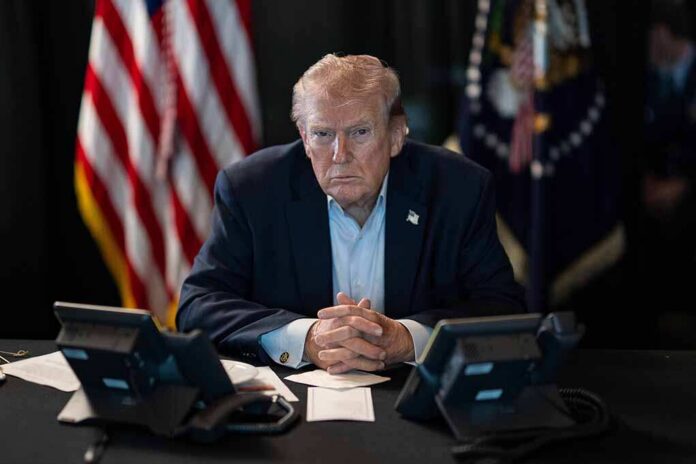
President Trump said the United States now has “permanent control” over Greenland’s security, while Denmark and Greenland stressed their sovereignty and said final approval is still pending.
Story Snapshot
- Trump announced a three-party security deal giving the U.S. permanent security control in Greenland.
- Unnamed officials said the deal grants permanent access, basing, and overflight rights.
- Danish and Greenlandic leaders emphasized sovereignty and said procedures must approve the pact.
- Key terms may extend existing 1951-era access rather than change sovereignty.
What Washington Claimed About the Greenland Deal
President Trump announced that the United States, Denmark, and Greenland agreed to give the United States “permanent control over security” on the island. Trump’s post also suggested broad authority over “other needs,” pointing to a long-term American role. Reuters reported that a United States State Department official said the deal grants permanent access, basing, and overflight rights, and would continue even if Greenland became independent. Reports also said the arrangement would limit adversary investment and block non-allies from building bases.
Reuters and other outlets framed the announcement as a formal three-way agreement. Several described the rights as expansive, including the ability to build or expand facilities as needed. The BBC cited a United States official who said the United States could build additional military structures without new approvals from Denmark or Greenland. Those details, if accurate, would mark a stronger operational posture for the United States in the Arctic, aligning with recent focus on great-power rivalry in the region.
What Copenhagen and Nuuk Said Will—and Will Not—Change
Danish Prime Minister Mette Frederiksen said the deal strengthens shared security in the Arctic and North Atlantic but also recognizes the sovereignty and territorial integrity of the Kingdom of Denmark and the Greenlandic people’s right to self-determination. She said the pact is expected to be signed on the sidelines of the United Nations General Assembly and then must go through necessary parliamentary procedures before it can take effect. Greenland’s leaders echoed the sovereignty language alongside cautious support.
NBC News reported that Frederiksen indicated Greenland remains part of Denmark under the deal, which contrasts with claims that imply a shift in sovereignty. This message tracks with the historical pattern in Greenland policy: Denmark and Greenland accept a significant United States defense role, but they publicly guard political control and local rights. That balance can calm fears at home while keeping the alliance strong. It also shows why leaders avoid words that sound like a transfer of authority.
How This Fits With Decades of U.S. Access in Greenland
The 1951 Defense of Greenland Agreement already gave the United States wide military access, movement, and basing rights while affirming Danish sovereignty. The agreement implements the North Atlantic Treaty and remains in force for the life of the treaty. Analysts and past reports have often noted that the Cold War framework lets the United States scale up activities in designated defense areas when needed. That history suggests the new deal may expand or clarify access without changing who owns Greenland.
JUST IN: President Trump just did the absolute impossible sending shockwaves in the WORLD. He made a HISTORIC landmark Deal with Greenland
“This gives the United States Permanent control over security and all other needs in Greenland”
WE ESSENTIALLY GOT GREENLAND pic.twitter.com/McbrwyPHzR
— ConservativeAnt (@backupconservat) September 19, 2026
Without a released legal text, some claims are hard to verify. Reported terms on permanent basing rights, unilateral construction powers, and investment screens rely on anonymous officials and media summaries. The Danish and Greenlandic insistence on sovereignty and required approvals sets a public limit on how far “permanent control” can reach in practice. Until the document and any annexes appear, the clearest facts are the announced intent and the stated guardrails.
Why It Matters to Americans Across the Aisle
Arctic security shapes shipping lanes, rare earth access, and early warning systems. If the United States can move faster and operate more freely in Greenland, it may deter rivals and protect energy and data routes. Conservatives may see that as a win for deterrence and borders. Liberals may welcome checks on foreign influence but worry about local consent and environmental risks. Both sides share a concern that leaders use sweeping words while the real legal limits stay hidden from the public.
The bigger pattern is familiar: leaders in Washington claim a major step, while allies underline sovereignty and process. That mismatch can fuel distrust at home. People want plain facts, not slogans. A transparent release of the full agreement, side letters, and investment rules would help voters judge costs, risks, and benefits. Clear oversight by Congress and by Danish and Greenlandic bodies would also show that no one is bypassing democratic checks.
Bottom Line and What to Watch Next
Trump says the United States secured permanent control of Greenland’s security posture; Denmark and Greenland say sovereignty holds and parliaments must approve the pact. History suggests the deal likely builds on long-standing rights rather than transfers ownership. Watch for the signed text, details on basing and construction authorities, and how investment screening will work. Those documents will show whether this is a real shift in power or a firmer version of the old framework.
Sources:
cnbc.com, bbc.com, thehill.com, wral.com, apnews.com, politico.com