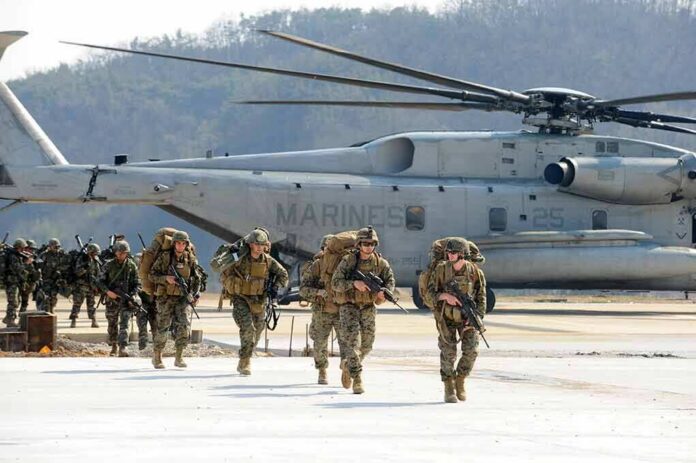
After Japanese police arrested a 20-year-old U.S. Marine in a woman’s killing, commanders slapped a monthlong night curfew and alcohol ban on troops in Okinawa to calm a spiraling crisis.
Story Highlights
- Japanese police arrested Lance Cpl. Devin Jacob Ballard in the killing of Anna Yagi in Naha.
- U.S. commanders in Okinawa ordered a 30-day nighttime curfew and a 48-hour alcohol ban.
- Japan summoned the U.S. ambassador and lodged a strong protest over the case.
- The Marine Corps said it is cooperating with Japanese authorities and called the allegations serious.
Arrest Sparks Swift Military Restrictions in Okinawa
Okinawa prefectural police arrested U.S. Marine Lance Cpl. Devin Jacob Ballard, 20, on suspicion of killing 39-year-old Anna Yagi in a hotel in Naha and taking her wallet and backpack. Reports said Ballard, stationed at Marine Corps Air Station Futenma, denied the allegations as the investigation continued. Within days, U.S. commanders announced a 30-day night curfew for all U.S. personnel on the island and a 48-hour ban on alcohol on and off base to reduce risk and show control after the arrest.
Commanders framed the order as a safety and discipline step while Japanese authorities continued their work. The Marine Corps stated it takes the allegations seriously and pledged to assist local police as needed. Leaders often turn to tight curfews and alcohol limits after major incidents on Okinawa. The goal is to reduce off-base movement at night, prevent more flashpoints, and address anger from residents who live near dense clusters of American bases and nightlife districts.
Japanese Government Pressure and Local Outrage
Japan lodged formal protests after the arrest and summoned the U.S. ambassador in Tokyo. That signal of state-level pressure added urgency for American commanders to show rapid action on discipline and liberty rules. Media also reported rallies and public anger in Okinawa and beyond, echoing past flashpoints tied to crimes by U.S. personnel. Those reactions helped set the stage for a visible, island-wide response that commanders hoped would cool tempers and demonstrate respect for Japanese law and communities.
Officials have not released the full directive text that spells out exemptions or specific enforcement standards. Reporting attributes the alcohol pause and curfew announcement to the III Marine Expeditionary Force leadership, but the detailed approval chain was not included in public materials reviewed to date. The missing paperwork does not change the bottom line for troops on the ground: night movements are restricted for a month, and alcohol was halted for 48 hours, with units expected to brief and enforce the order promptly.
Why Okinawa Keeps Reaching a Boiling Point
Okinawa hosts a major share of U.S. bases in Japan, and that footprint drives long-running friction. Past high-profile crimes and accidents tied to U.S. personnel led to protests and calls for tougher rules, faster accountability, and fewer late-night liberties. Governors and local leaders have urged stronger prevention measures many times over the years, arguing that prior steps did not end repeat offenses or restore trust across the community.
Patterns show a cycle after serious incidents: a public outcry, diplomatic pressure, and quick commands to tighten liberty and alcohol use. These steps can calm near-term tensions, but available reporting does not prove they prevent future misconduct on their own. Commanders use them anyway because they act fast, are easy to enforce, and send a public message that leaders are not ignoring the problem while police and courts work through the case.
Shared Concerns About Accountability and Discipline
Americans across the political spectrum see a familiar theme here. People want clear rules, fair justice, and leaders who act when standards break down. The Marine Corps says it is working with Japanese police, while Japan’s leaders demand action and respect for their legal process. The question many ask is whether top-down curfews and bans are a lasting fix or a short-term signal. The answer depends on follow-through: training, supervision, and real consequences when laws are broken.
"US forces in Japan's southern prefecture of Okinawa have been ordered a 48-hour halt to operations and a month-long nighttime curfew following the arrest of a Marine on suspicion of murder and robbery."https://t.co/fwZauyTofk
— Conrad Hubbard (@conradhubbard) October 7, 2026
For service members and families on Okinawa, the next month means tighter nights and stricter checks. For Okinawans, it means watching whether the rules bring quieter streets and fewer risks. For Washington and Tokyo, it means managing a vital alliance under stress while honoring victims and the justice system. The criminal case is ongoing, and the accused is entitled to due process. The broader discipline test for the force in Japan is already underway.
Sources:
cbsnews.com, independent.co.uk, bbc.com, arabnews.jp, aljazeera.com