Police detentions at a youth-led rally in New Delhi put a massive voter-roll purge under harsher national and global scrutiny.
Story Snapshot
- Police detained protesters rallying against India’s voter-roll changes in Delhi under prohibitory orders.
- Reports say about 130 million names were struck from draft rolls during the revision drive.
- The Election Commission ordered a review and a special drive to re-enroll eligible voters left out.
- Opposition parties and rights groups demand accountability and the election chief’s resignation.
What Triggered The Protests
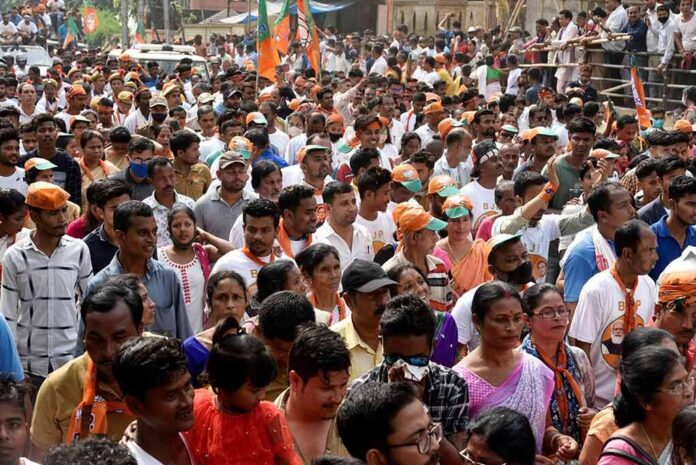
Student groups and young activists organized rallies after large voter-roll deletions became public. Reuters reported that about 130 million people were excluded from the first draft during India’s Special Intensive Revision, with many told to prove eligibility to get back on the rolls. The scale shocked voters across states and fueled claims of unfair targeting of opposition areas. The New York Times said protesters demanded the election chief resign as trust in the process faltered.
Investigative reporting added heat to the moment. Indian Express accounts described objections inside the Election Commission over a change to a voter registration form, which one commissioner called “unauthorised and illegal”. Other coverage flagged central technology that could override local roll decisions and cited odd deletion patterns tied to a “logical discrepancy” algorithm. These details supplied concrete points for protesters who say the system sidelined due process and transparency.
How Authorities Responded
Delhi Police used prohibitory orders around the Jantar Mantar protest zone and detained dozens, later releasing many but charging several for alleged violations, according to Reuters and the Associated Press. Amnesty International criticized the crackdown and noted reports of suspended services during demonstrations in major cities, saying authorities were trampling on peaceful assembly rights. Police said no permission had been granted and that unauthorized gatherings and slogans were banned for public order.
The Election Commission defended the revision effort as a legal cleanup to remove duplicate, deceased, or ineligible entries while keeping eligible voters on the rolls. After backlash, the Commission ordered a review of the process and told states to run a “special drive” to enroll voters who were left out, while maintaining that its actions were lawful and that internal differences were normal deliberations. This stance aims to balance accuracy with access, but skepticism remains strong.
Why This Fight Matters Beyond India
Voter-roll maintenance is routine in many democracies, but scale and speed can create harm. India’s Special Intensive Revision stands out for its size and the human impact reported by media and researchers. One analysis counted nearly 130 million struck from rolls and hundreds of related demonstrations since 2025, signaling a serious trust gap. When millions must prove eligibility after deletions, the burden shifts from the state to the citizen, which invites error and exclusion.
Police detained protesters in New Delhi as youth-led demonstrations continued against India’s voter-roll changes. Around 100 demonstrators reportedly removed security barricades before police intervened, while critics and the Election Commission remain divided over the impact of… pic.twitter.com/iYjrbQwgpA
— Metro 53 (@metro53news) October 3, 2026
Americans watching this story will see a familiar pattern. Leaders promise cleaner rolls and better security; citizens fear wrongful removal and political bias. Both left and right worry that powerful insiders run systems that are hard to audit and easy to abuse. In India, as in the United States, public confidence hinges on clear rules, open data, real appeal paths, and fast fixes when mistakes surface. Without that, people on every side assume the worst—and take to the streets.
Sources:
usnews.com, indianexpress.com, nytimes.com, amnesty.org, reuters.com, thestandard.com.hk, journalofpoliticalscience.com