With one week until President Trump hosts China’s leader, top U.S. and Chinese economic chiefs met in New York to shape deals on artificial intelligence, trade, and critical minerals before the summit.
Story Snapshot
- U.S. Treasury Secretary Scott Bessent met China’s Vice Premier He Lifeng in Manhattan before the Trump–Xi summit.
- Talks included U.S. Trade Representative Jamieson Greer and focused on artificial intelligence, trade, and rare earths.
- The meeting took place at JPMorgan Chase headquarters in New York on Sunday morning.
- The goal was to prepare potential agreements ahead of the September 24 Washington summit.
Who Met, Where, and Why It Matters
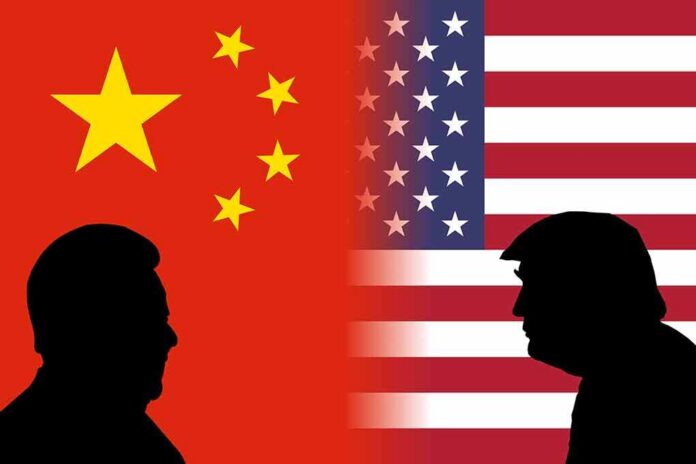
U.S. Treasury Secretary Scott Bessent said he would meet Chinese Vice Premier He Lifeng this weekend to prepare for President Donald Trump’s meeting with Chinese President Xi Jinping next week. Reporters placed the Sunday talks at JPMorgan Chase headquarters in Manhattan, with a 10:30 a.m. Eastern Time start. U.S. Trade Representative Jamieson Greer joined the session. The stated aim was to line up agenda items and possible deals for the September 24 summit in Washington.
Reuters and other outlets said the discussion would cover artificial intelligence, trade, rare earths, and broader economic issues. This mirrors how big-power meetings often work. Senior aides meet first, reduce risk, and set up limited deliverables leaders can announce. That logic can help steady markets and supply chains even if outcomes are narrow. The Sunday meeting fit that mold and signaled both sides want control over sensitive topics before the cameras roll at the summit.
The Agenda: Technology Rules, Trade Frictions, and Critical Minerals
Artificial intelligence governance sits high on the list because new systems shape national security and the economy. U.S. officials have pushed guardrails to stop the transfer of advanced models and chips to strategic rivals. Chinese officials have resisted limits that could slow growth. Trade is next. Tariffs, export controls, and company-level rules have tangled normal commerce. Both sides have used these tools to gain leverage. The talks aimed to clarify possible swaps or pauses before leaders meet.
Rare earth minerals add pressure because they power magnets, electric motors, and weapons systems. The United States still depends on Chinese processing and parts of the supply chain. Past disputes showed how quickly bottlenecks can spread through factories and defense work. Negotiators often seek narrow steps here, like faster customs clearances or specific quota paths, to keep production lines moving. Such steps are small, but they can ease strain for manufacturers and workers on tight schedules.
Timing, Venue, and the Summit Linkage
Holding the talks in New York, and not in Washington or Beijing, gave both sides neutral ground and proximity to global finance. The venue also limited leaks and kept the focus on concrete items. Reporters said the meeting was scheduled for Sunday at JPMorgan Chase headquarters, reinforcing that this was practical prep work, not ceremony. The explicit link to a September 24 leader meeting in Washington underlined urgency. Staff wanted clarity on what could move, what must wait, and what to stage for later tracks.
Greer’s presence indicated trade mechanics were on the table along with finance issues. Aides often map small, trackable items that leaders can announce without touching core red lines. That can include narrow tariff carve-outs, pilot committees for investment screening, or technical working groups on data flows. Such tools are not flashy. Still, they can buy time, reduce shocks for farmers, energy producers, and small businesses, and show progress without a broad bargain neither side is ready to sign.
What This Means for Americans Watching Prices and Jobs
People who feel the system is rigged want proof that talks help them, not just elites. If pre-summit work lowers costs for key inputs, parts, or energy gear, that can ease pressure on shop floors and at the grocery store. If it protects technology that keeps the country safe, it supports core national interests. If it becomes more empty ceremony, it feeds anger that powerful players hold meetings while families face high bills and thin paychecks. Concrete steps are what count, not photo ops.
JUST IN: Treasury Secretary Bessent meets Chinese Vice Premier He Lifeng at JPMorgan headquarters in New York ahead of a Trump-Xi summit, with talks covering trade, AI, and critical minerals, per Reuters. pic.twitter.com/apSuCRc9Ds
— Oddsmaxxer (@oddsmaxxing) September 20, 2026
Both parties accuse the other of hurting workers and small firms. Conservatives blame global deals that shipped jobs overseas and raised energy costs. Liberals blame corporate power and weak safety nets. Many on both sides now agree on one thing: Washington must deliver results that are visible at home. That is why this New York meeting matters. It set the menu for what the Trump–Xi summit might actually deliver, from targeted tariff relief to clearer tech rules that give businesses a fair shot.
What to Watch Next
Watch for a U.S. Treasury or U.S. Trade Representative readout that lists who attended and topics covered. Look for narrow but real deliverables: limited tariff adjustments on non-sensitive goods, steps to keep rare earth supplies flowing, or a framework for artificial intelligence safety talks. Expect guarded language. The pattern in recent years has been modest, specific moves rather than sweeping peace in the economic rivalry. Those modest moves still matter for factories, farmers, and families.