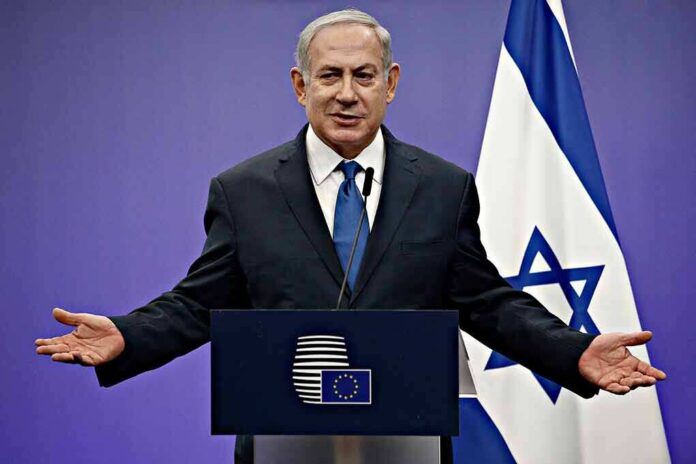
Israel’s prime minister plans to confront New York’s mayor at the United Nations while an international arrest warrant hangs over the visit — and no U.S. authority plans to enforce it.
Story Snapshot
- Prime Minister Benjamin Netanyahu says he will “tell the truth” at the United Nations and denounced New York Mayor Zohran Mamdani ahead of the trip.
- The International Criminal Court issued arrest warrants for Netanyahu tied to the Gaza war, which Israeli officials reject.
- Mamdani urged arrest but later said New York City lacks legal authority to execute the warrant, shifting pressure to federal officials.
- Because the United States is not an International Criminal Court member, any arrest hinges on federal policy, not city action.
What Triggered the Clash Ahead of the United Nations Week
President Trump’s second-term United Nations week is drawing global leaders to New York. Prime Minister Benjamin Netanyahu says he will “tell the truth” about Israel’s actions during a brief stop in the city and has blasted Mayor Zohran Mamdani’s calls for accountability. The exchange follows months of argument over an International Criminal Court warrant tied to the Gaza war, which Israeli officials reject. The fight now centers on who has the power to act if Netanyahu lands in New York.
The mayor once backed arrest talk, then pulled back after a legal review. He said New York City does not have independent authority to carry out the International Criminal Court warrant. He asked the federal government to handle it instead and even to join the court, which the United States has not done. The Associated Press reported his office’s position and noted the city cannot enforce such a warrant, underscoring a gap between global law and local power.
What the International Criminal Court Warrant Does and Does Not Do
The International Criminal Court issued arrest warrants in 2024 for Netanyahu and former defense chief Yoav Gallant over alleged war crimes and crimes against humanity in Gaza. The court alleged the use of starvation as a method of war and the targeting of civilians, claims Israel denies. The warrant is real and active. But the United States is not a member of the court. That means arrest duties apply in member countries, not automatically on U.S. soil.
Wire reports explain the difference between paper authority and real enforcement. Countries that signed the Rome Statute must cooperate with the court’s arrests. Non-members choose their stance case by case. In New York, that choice does not rest with a mayor. It rests with federal authorities who control foreign policy, immunity questions, and federal law enforcement. That is why Mamdani’s stance shifted from local action to federal pressure.
How Politics, Law, and Public Anger Collide in New York
Netanyahu and allies framed Mamdani’s rhetoric as hateful and dangerous, saying it fuels antisemitism. Mamdani said his critique targets policy and alleged war crimes, not Jewish people. This moral and legal fight has become a symbol of deeper distrust in institutions on both left and right. People see leaders trading charges while real problems—security, fairness, and truth—go unresolved.
Israeli Ambassador to the United Nations Danny Danon has called for the arrest of New York City Mayor Zohran Mamdani, sharply escalating an already heated dispute ahead of Israeli Prime Minister Benjamin Netanyahu’s expected visit to New York for the United Nations General… pic.twitter.com/reAvn0MXYj
— Shiri_Sabra (@sabra_the) September 21, 2026
For readers across the spectrum, two facts stand out. First, the warrant exists and carries serious claims. Second, New York City cannot enforce it. That gap invites political theater. It also shows how international law often runs into U.S. constitutional limits. If federal agencies do nothing, nothing happens. If they act, they will set a major precedent. Until then, expect strong words, tight security, and a brief, tense United Nations visit.
Sources:
insiderpaper.com, bbc.com, reuters.com, theguardian.com, jpost.com