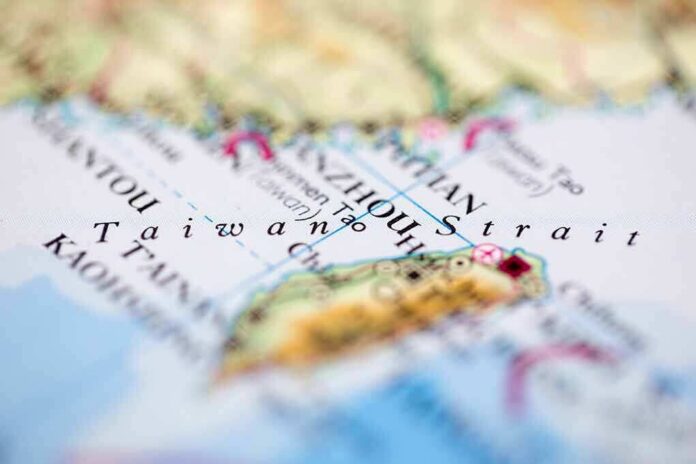
A senior U.S. Army intelligence officer warned that Taiwan’s rugged terrain and narrow western plains would choke any invasion or defense into a fight for logistics, ports, and roads.
Story Highlights
- Taiwan’s mountains and urban sprawl squeeze movement and favor defense-in-depth.
- Few suitable beaches and rough seas limit landing options along Taiwan’s west coast.
- Logistics across the Taiwan Strait is the main vulnerability for any invasion force.
- Urban areas and rice paddies would slow heavy armor and stage a grinding battle.
Officer’s Warning Centers on Terrain and Sustainment Limits
The officer stated that any major fight over Taiwan would hinge less on a dramatic beach landing and more on sustaining combat power ashore. Taiwan’s western corridor holds the likely ground battle space, while central mountains block large maneuver forces from spreading east. Dense cities, rice paddies, and limited road networks would slow mechanized units and create choke points for supply. This picture echoes long-standing studies that frame Taiwan as a logistics and access problem, not a quick dash inland.
Defense research identifies only a small number of usable beaches on the island, with even fewer that can handle large-scale forces. Rough seas, mudflats, and rocky coastlines further narrow choices and raise risk during the crossing and landing phases. Analysts argue that the real test arrives after a foothold is gained. Forces must move ammunition, fuel, and spare parts across a contested strait and into crowded coastal terrain under constant fire and surveillance, a tall order for any attacker.
Why Logistics, Not Landing, Could Decide the Fight
U.S. Navy-linked analysis has stressed that logistics support is a key factor for a cross-strait assault. Ships, ferries, and ports would face mines, missiles, drones, and submarines, while every pier and road junction becomes a target. If resupply falters, combat units ashore stall, lose tempo, and become isolated. That is why several studies describe the Taiwan Strait as a narrow logistics corridor that defenders can turn into an attrition zone at scale with relatively affordable systems.
Once ashore, invaders would face complex ground. Urban belts on the west coast force slow, block-by-block advances that drain manpower and time. If attackers bypass cities, they confront soft ground, water obstacles, and limited cover in the surrounding agricultural areas. Either path prevents rapid breakout and exposes long supply lines to ambush and fires. The same factors give defenders natural advantages, but they also demand careful planning to move reserves and keep units supplied under fire.
Implications for U.S. Policy and Regional Stability
Professional military literature repeatedly maps this problem set: few landing sites, canalized routes inland, and a mountainous interior that punishes overreach. Taiwan’s geography does not make invasion impossible, but it pushes both sides into a slow grind where logistics, port access, and road control decide outcomes. This is why planning often focuses on mines, coastal fires, mobile missiles, and rapid damage repair for ports and airfields rather than large armored maneuvers across the island.
For Americans worried about great-power conflict and federal competence, the message is plain. Geography sets hard limits that no talking point can erase. Clear strategy, resilient supply chains, and accountable spending matter more than slogans. Washington can help by aligning aid and training with the terrain’s demands, hardening logistics, and avoiding waste. Voters on the right and left share this concern: if war comes, mismanaged plans and fragile supply lines—not lack of bravery—could decide it.
Sources:
insidedefense.com, armyupress.army.mil, indsr.org.tw, defensepriorities.org