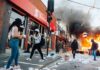
Cuba’s communist leadership is now openly admitting the system is failing—just as fuel runs out and the island’s blackout crisis deepens.
Story Snapshot
- President Miguel Díaz-Canel called for “urgent” and “immediate” economic model changes as Cuba faces intensifying oil shortages and rolling blackouts.
- Cuba’s energy crunch worsened after Venezuela’s support declined and U.S. pressure escalated on oil flows tied to the regime.
- Regime-linked economic structure remains dominated by GAESA, a military conglomerate accused of prioritizing tourism assets over basic needs like food and energy.
- Official figures show steep multi-year GDP decline and high inflation, while independent estimates suggest conditions may be even worse.
Díaz-Canel’s “Urgent Changes” Signal a Regime Under Stress
President Miguel Díaz-Canel’s March 2026 push for “urgent” changes to Cuba’s economic and business model is notable less for what it proposes than for what it admits: the current system is not delivering basics. Cuban officials described shortages and operational breakdowns severe enough to justify immediate restructuring, including more business autonomy, resizing parts of the state, and new approaches to investment. Those points read like a government conceding reality after years of denial.
Cuba’s government has long blamed external forces for internal failures, but the public-facing urgency from the top suggests the crisis is now impossible to paper over. Airlines reportedly reduced or suspended service due to refueling constraints, and tourism—one of the regime’s crucial hard-currency sources—has been hit as fuel scarcity ripples through transportation and hotel operations. The regime’s own language, paired with visible disruptions, is the clearest sign yet that leadership sees a narrowing window to stabilize daily life.
Energy Shortfalls, Venezuela’s Decline, and a Harder U.S. Line
Cuba’s immediate problem is energy, and its long-term problem is dependency. The island produces only a portion of the oil it needs and historically relied on imports tied to political alliances. Research cited in international coverage described how Venezuela’s weakening role reduced Cuba’s energy lifeline, and the 2026 environment further tightened supply. Reports also described U.S. actions aimed at restricting oil shipments connected to Cuba, escalating pressure on the regime’s ability to keep the lights on.
The result has been an extended blackout era that began with major failures in 2024 and continued into 2025–2026. When power becomes unreliable, everything becomes fragile: food storage, water pumping, public transportation, and hospital operations. Inflation and shortages compound the problem, because even when goods exist, many families cannot access them. For Americans watching from the outside, the story is a real-world test case of what centralized planning looks like when it meets aging infrastructure and shrinking external support.
GAESA’s Dominance Raises a Basic Question: Who Gets Scarcity Relief First?
Multiple sources describe GAESA, a military-run conglomerate, as a dominant force inside Cuba’s economy—controlling major segments tied to tourism, retail, and ports. That matters because in a shortage economy, whoever controls the key channels effectively decides where resources go. Reporting has highlighted public resentment that luxury or prestige projects can continue while basic sectors—electricity generation, agriculture, and logistics—lag behind. Even if reforms are announced, that power structure shapes what can actually change.
The Cuban government’s own reform language also points to the core contradiction: leaders want “autonomy” and “investment” while keeping one-party control and state-centric decision-making. Conservatives tend to view that as the predictable trap of authoritarian economics—trying to harvest the productivity of freer markets without allowing the freedom that makes markets work. If GAESA remains the gatekeeper for high-value sectors, the average Cuban’s odds of seeing rapid improvement look limited, regardless of rhetoric from Havana.
Economic Indicators Point Down, and Outmigration Follows
Economic measures cited in the research paint a bleak picture: multi-year GDP contraction, significant inflation, and the collapse of traditional production like sugar compared with historical levels. Several analyses also describe how Cuba’s population has fallen dramatically in recent years due to emigration. That kind of outflow is not a political talking point; it is a human response to a system that cannot provide stability. When working-age citizens leave, the remaining economy becomes even less able to recover.
Human rights reporting also notes that shortages and state controls squeeze ordinary people, especially during periods of instability. That’s why this moment matters: a government can survive bad press, but it struggles to survive empty fuel depots and repeated power failures. If Díaz-Canel is signaling “immediate” change, the conservative takeaway is straightforward—central planning failed again, and now the regime is asking for flexibility only after decades of rigidity imposed on its citizens.
What remains unclear, based on the available reporting, is how far the regime will actually go—or be allowed to go by its own internal power centers—to implement real structural change. The sources describe a system shaped by military economic control, limited transparency, and propaganda incentives that obscure reliable statistics. Still, the most important evidence is the simplest: the regime’s public admissions of urgency, combined with worsening blackouts and fuel scarcity, indicate a crisis that outside “expert debates” can’t explain away.
Sources:
Cuba’s Self-Induced Crisis May Be Its Worst Yet
Cuba’s president pushes for urgent changes to island’s economic and business model
Cuba’s economy and stability are shaken by the Venezuela crisis
Pressure on Havana is mounting: What comes next for Cuba matters
Crisis in the Cuban Economy: Notes for an Evaluation