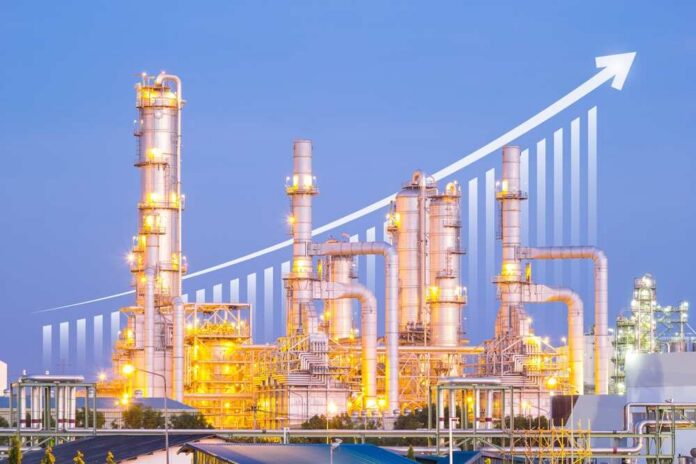
President Trump’s naval blockade of Iranian ports sent oil prices soaring past $100 per barrel, threatening American families with fuel costs that could rival the worst inflation nightmares while government officials gamble with global economic stability.
Story Snapshot
- US naval blockade on Iranian ports began April 14, 2026, driving Brent crude over $100/barrel after failed peace talks
- Gas prices jumped 40% since war began in February, surpassing $4/gallon nationally with analysts predicting $140-150/barrel oil
- Iran vowed retaliation against “piracy,” threatening no Gulf ports remain safe as 20% of global oil supply faces disruption
- Blockade follows collapse of Vice President Vance’s Pakistan negotiations and Trump’s warning to destroy approaching Iranian warships
Blockade Triggers Energy Crisis
The US Navy commenced a partial blockade targeting Iranian port vessels at 10 a.m. EDT on April 14, 2026, immediately stalling Strait of Hormuz shipping and triggering a 7-8.5% oil price surge. Brent crude climbed to $103.31 per barrel while West Texas Intermediate hit $104.68, marking the steepest single-day energy spike since the US-Israel war on Iran erupted in February. President Trump announced the action via Truth Social following Vice President JD Vance’s failed weekend peace talks in Pakistan, declaring his intent to sever Iranian oil revenues from “dark fleet” tanker exports that evade sanctions.
Consumers Face Painful Pump Prices
American drivers now confront fuel costs exceeding $4 per gallon nationally, a 40% increase since fighting began, with Iranian Parliament Speaker Mohammad Bagher Qalibaf taunting US consumers by posting a White House gas station price map on social media. The blockade threatens to push prices far higher, as Onyx Capital analyst Jorge Montepeque warns oil should reach $140-150 per barrel if the 12 million barrels per day flowing through Hormuz faces full interdiction. This energy shock arrives as families already struggle with inflation from years of fiscal mismanagement, transforming a regional conflict into a direct assault on household budgets that neither party’s leadership appears willing to prioritize over geopolitical posturing.
Strategic Chokepoint at Risk
The Strait of Hormuz handles approximately 20% of global oil and liquefied natural gas supplies, making it the world’s most critical energy chokepoint. Iran effectively closed traffic through the strait after February’s US-Israeli strikes damaged Middle East oil infrastructure, imposing fees and restricting flows to fractions of pre-war levels. Saudi Arabia responded by restoring full East-West pipeline capacity and Manifa oil field output on April 12, rerouting exports through Red Sea ports to bypass the Persian Gulf entirely. Yet these alternatives remain strained as global refiners scramble for spot crude while insurance costs skyrocket and shipping delays multiply across supply chains.
Escalation Risks Global Fallout
Former US Ambassador to Saudi Arabia Michael Ratney questioned whether Washington would blockade Chinese-flagged vessels carrying Iranian oil, highlighting tensions between economic pressure and great power conflict. European natural gas futures surged 18% on blockade news as markets absorbed the reality that conventional and proxy warfare now converge at the world’s energy epicenter. Trump’s declaration that approaching Iranian warships would be destroyed signals potential for direct naval combat, while Iran’s vow that “no Gulf ports remain safe” suggests asymmetric retaliation through proxy forces. Stock markets swung wildly as traders weighed supply disruptions against recession fears, exposing how elected officials on both sides prioritize military adventurism over the economic security of ordinary citizens.
Economic Pain Spreads Globally
Countries dependent on Gulf energy supplies have begun shortening workweeks to conserve fuel as the blockade compounds disruptions from months of conflict. The WTI crude premium over Brent reflects surging foreign demand for American oil to replace Middle Eastern supplies, according to strategist Ed Yardeni, potentially benefiting US producers while punishing consumers. Karobaar Capital’s Haris Khurshid noted the blockade tightens markets through shipping delays and insurance premium increases even before full supply cuts materialize. This represents another example of how Washington’s foreign policy decisions, regardless of which party controls power, impose direct costs on working Americans who lack the political connections to shield themselves from energy price shocks or influence the war-making apparatus.
Sources:
Live Updates: U.S. military blockade on Iranian ports in the Strait of Hormuz begins
Oil prices surge after failed US-Iran peace talks and Trump’s blockade
Oil prices surge with gas as US blockade of Hormuz escalates Middle East crisis