Cuba’s communist regime is suddenly talking “dialogue” with Washington—right after Trump tightened the screws and Havana’s economy buckled.
Story Snapshot
- Cuban President Miguel Díaz-Canel confirmed on March 13, 2026, that Cuban officials recently held talks with U.S. representatives to address bilateral disputes.
- The announcement follows intensified U.S. leverage after Nicolás Maduro’s January 2026 capture and the resulting loss of Venezuelan oil that had propped up Cuba’s system.
- President Trump publicly acknowledged talks and tasked Secretary of State Marco Rubio, signaling a tougher, more strategic posture than past engagement models.
- Cuba says it freed 51 prisoners as a “goodwill” step while insisting negotiations must address the U.S. embargo that Havana calls a “blockade.”
Díaz-Canel Confirms Talks as Cuba Searches for Economic Oxygen
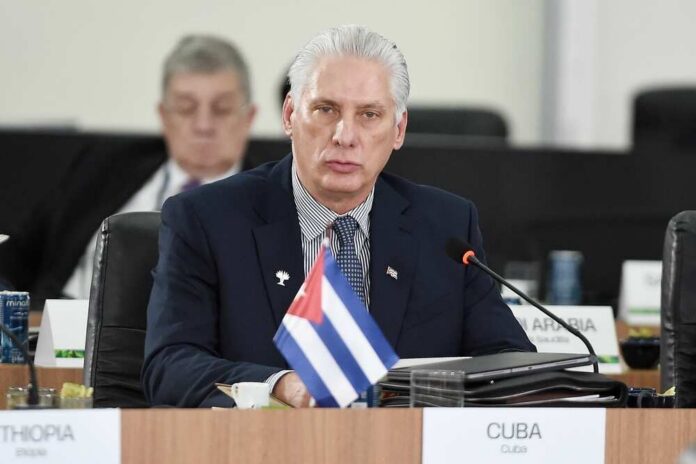
Cuban President Miguel Díaz-Canel told the country on national television that Havana has held recent conversations with U.S. officials aimed at resolving differences “through dialogue.” The Cuban government provided few specifics, describing the contacts as sensitive and handled carefully. Even so, this was a notable shift: a public confirmation from the regime itself rather than hints through intermediaries. The timing underscores how quickly Cuba’s economic pressures are translating into political urgency.
Cuba’s internal strain has been widely reported: fuel shortages, transportation breakdowns, and cascading impacts on basic services. Multiple reports tied the current crunch to a sharp reduction in oil support that historically flowed from Venezuela, leaving the island with fewer options to keep lights on and goods moving. Díaz-Canel also acknowledged that “international factors” shaped the moment, a vague phrase that outside reporting links to shifting regional power dynamics and U.S. pressure.
Trump’s Posture: Negotiations Backed by Real Leverage
President Trump has spoken openly about Cuba’s weak position, describing the island as in deep humanitarian trouble and signaling that Washington is prepared to press hard for outcomes. Trump also confirmed publicly that the United States is talking with Havana and placed Secretary of State Marco Rubio at the center of the effort. That matters: Rubio is a long-time critic of the Cuban system and brings both policy experience and personal ties as the son of Cuban immigrants.
Reporting also described a striking backdrop to this new leverage. In January 2026, Nicolás Maduro was captured in Caracas and flown to New York to face narcoterrorism charges, a development that coincided with a cutoff of Venezuelan oil to Cuba. Whether Havana frames the crisis as a consequence of U.S. actions or regional upheaval, the outcome is the same: the Cuban regime is negotiating from a position of diminished capacity, not strength.
Prisoner Releases and the Pattern of “Goodwill” Gestures
Díaz-Canel referenced prisoner releases as part of the current moment, including 51 recently freed detainees described as a goodwill gesture. Outside commentary in Florida media also pointed to an earlier, larger release of more than 500 prisoners in January 2025 tied to Vatican-facilitated talks, including dissident José Daniel Ferrer, who later relocated to Miami. A University of Miami Cuban studies professor characterized the new releases as a good-faith signal, though details on who qualifies and why remain limited.
What’s Unknown: Agenda, Concessions, and Constitutional Guardrails
Key operational details remain undisclosed, including when the talks occurred, what demands were exchanged, and whether any roadmap exists for sanctions relief, oil waivers, migration arrangements, or prisoner terms. Cuban messaging emphasizes the U.S. embargo as a central issue, while U.S. messaging has emphasized humanitarian conditions and outcomes. For American conservatives, the central question is not “engagement” as an abstract virtue, but whether any deal advances U.S. interests without rewarding repression or undermining accountability.
Why This Matters for Americans Watching from Florida and Beyond
Cuba’s negotiations intersect with issues that hit close to home for many U.S. families, especially in Florida: political prisoners, the credibility of communist promises, and the ripple effects of instability across the region. The available reporting suggests the regime is asking for relief under economic duress, while the Trump administration is approaching talks with pressure as the backdrop rather than apologies. Until terms are public, the most responsible conclusion is narrow: Havana blinked first, but Americans should watch the fine print.
NOW CUBA! Cuban Dictator Díaz-Canel Begins Negotiations with the United States https://t.co/NfFZtr7UZw
— Joe Hoft (@realJoeHoft) March 13, 2026
Any near-term announcement—whether on prisoners, oil, sanctions, or travel—will likely be framed as “humanitarian” by one side and “sovereignty” by the other. The facts so far show a regime under stress, a U.S. administration willing to use leverage, and talks that both sides describe cautiously. Conservatives who lived through years of soft-touch diplomacy will want transparency: what is being traded, what is being verified, and what protects American security interests while supporting genuine freedom for the Cuban people.
Sources:
Cuban president confirms talks with US officials amid Trump pressure
Cuba Claims It’s Negotiating With The U.S.
Cuban president says talks were recently held with the US to resolve differences
Cuban president says talks were recently held with the US to resolve differences