President Trump is about to tell Americans that Iran is being bombed “back to the Stone Age” even as evidence shows Tehran can still strike back and the war keeps grinding on.
Story Snapshot
- Trump’s primetime speech is expected to repeat sweeping claims of near-total victory over Iran’s military.
- U.S. Central Command reports thousands of targets hit, but Iran still fires missiles and drones across the region.
- Experts and fact-checkers say Trump’s “Stone Age” and “obliterated” nuclear claims are exaggerated and unverified.
- The clash between Trump’s message and on-the-ground reality feeds public distrust in both parties and the wider “deep state.”
Trump’s message: decisive victory and “Stone Age” threats
President Trump’s new address will build on past speeches where he says the United States is close to finishing the job against Iran and has already won. In earlier primetime remarks, he claimed Iran’s missile and drone systems were “dramatically curtailed,” and warned that in two to three weeks the United States would bomb Iran “back to the Stone Ages.” He has also said Iran’s navy is “absolutely destroyed” and its air force “gone,” presenting the war as a fast, overwhelming victory.
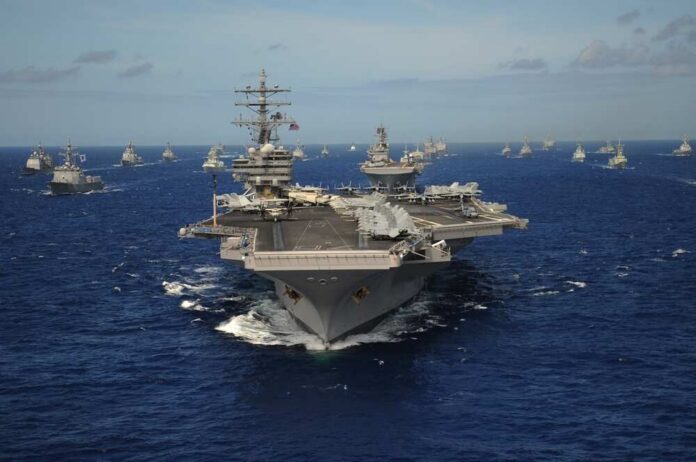
The White House and Pentagon back this story line with huge strike numbers. United States Central Command has reported more than 12,300 targets hit since Operation Epic Fury began, including missile launch sites, naval vessels, command centers, and weapons factories. One Central Command update said air defenses and “hundreds of ballistic missile launchers and drones” were “severely degraded” by joint United States–Israeli strikes. Supporters point to these numbers as proof Trump’s hard-power approach is working and making Americans safer at home.
What the facts show: Iran still fires back and experts push back
Despite these claims, Iran keeps firing missiles and drones at United States bases and allied countries around the Gulf. British forces have reported shooting down Iranian drones over places like Jordan and Bahrain even after Trump said Iran’s air power was shattered. Major outlets note that Iran still has near-bomb-grade nuclear material at its Isfahan facility, raising doubts about Trump’s statement that nuclear sites were “completely and totally obliterated.” These continuing attacks make it hard to square talk of total victory with reality on the ground.
Independent fact-checkers and analysts say several of Trump’s boldest lines go beyond what the evidence supports. The New York Times, citing officials with access to intelligence, found his earlier claim that Iran’s nuclear facilities were “obliterated” overstated, saying strikes had seriously damaged but not destroyed them. The same review said there was “scant evidence” Iran was trying to build a nuclear bomb, challenging his warnings of an imminent nuclear threat. Al Jazeera’s summary of Trump’s Iran speeches notes he repeats four themes—war is necessary, victory is already won, it must continue, and it will soon end—without offering new proof or diplomatic paths.
A long pattern of overpromising—and why Americans are wary
This clash between confident speeches and messy facts fits a wider pattern in United States–Iran clashes. Past administrations also claimed decisive strikes would cripple Iran’s nuclear and missile programs, only for later reports to show damage was serious but temporary. In earlier wars, United States strikes on Fordow and other nuclear sites “obliterated” parts of facilities, but watchdogs later said the program was delayed, not erased. Many Americans hear “mission accomplished” language now and think back to years of similar promises that did not match later reality.
TONIGHT
This is a primetime Address to the Nation from the East Room of the White House (on camera). It was announced by President Trump and the White House earlier this week. @POTUSTime conversions for reference:Eastern Time (ET): 9:00 PM
Central Time (CT): 8:00 PM
Mountain… pic.twitter.com/e6Jveyizl6— 🇺🇸⭐️OUR-VOICES⭐️🇺🇸 (@iswho) July 16, 2026
For older conservatives and liberals alike, this feeds a deeper fear: that Washington’s leaders, generals, and contractors are playing out another distant war while regular people pay the price. Critics note this Iran campaign continues without a formal war declaration, under broad “self-defense” authority that Congress has not seriously reined in. Defense industry voices openly stress how rising military budgets “benefit” United States companies and jobs, leading some to wonder whether strike counts are being used to sell spending as much as to keep Americans safe.
Election claims, foreign war, and a government people no longer trust
Trump is also expected to use this speech to revisit his claims about past election interference and to promote a new “Save America Act,” tying foreign enemies to domestic ones. For many viewers, this will feel like two fronts of the same story: a president blasting Iran abroad while warning that shadowy forces at home are trying to steal power. Supporters say this proves he is willing to confront both foreign threats and corrupt insiders. Critics argue he is inflaming fears instead of fixing real problems.
Across the political spectrum, people see something familiar and troubling. The federal government tells citizens that secret intelligence, classified strikes, and complex election probes are all under control—but it rarely shows clear evidence, admits limits, or accepts blame when things go wrong. In the Iran war, strike numbers are huge but basic questions remain unanswered: How much danger is truly reduced? How long will this last? What is the endgame? The fact that Trump’s own nuclear and “Stone Age” claims are disputed by independent reporting only deepens the sense that America’s leaders are not being fully straight with the public.
Sources:
insiderpaper.com, apnews.com, en.wikipedia.org, nytimes.com, reuters.com, britannica.com, cnn.com, aljazeera.com, pbs.org, youtube.com, bbc.com