China’s “no-limits” partnership with Russia just got another high-level boost—right as Western leaders were pressuring Beijing to pull back.
Story Snapshot
- Xi Jinping and Vladimir Putin held a video call on February 4, 2026, focused on bilateral ties and international issues.
- The call followed security and diplomat meetings in Beijing, including talks between Sergey Shoigu and Wang Yi.
- Putin described the relationship as a stabilizing factor amid global turbulence, while Xi urged a “grand plan” for deeper cooperation.
- Russia-China trade has stayed above $200 billion for three straight years, cushioning Moscow against Western sanctions.
Xi and Putin’s call signals the partnership is holding firm
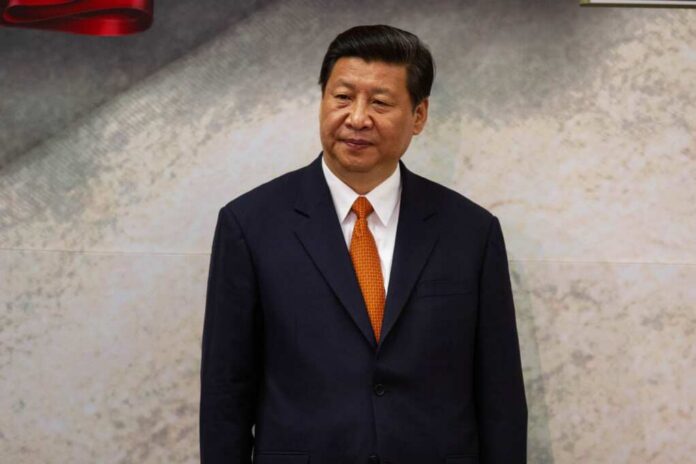
Xi Jinping and Vladimir Putin spoke by videoconference on February 4, 2026, with state media reporting the leaders discussed the state of bilateral relations and wider international affairs. The timing mattered: the call came during a period when Western governments were actively engaging Beijing and urging it to distance itself from Moscow over the Ukraine war. Reporting indicated there were no immediate public details on the full substance of the conversation beyond the leaders’ general themes.
The call also fit a familiar pattern. The Kremlin has highlighted an established tradition of early-year leader-level conversations to take stock of cooperation and plan next steps. Putin noted the date’s symbolic significance in the Chinese calendar, framing the exchange as part of routine, high-level coordination rather than an emergency summit.
Watch:
https://youtu.be/q8JMJHg2iqo?si=p7JJELuaa-JE8vOG
Back-channel groundwork: Shoigu, Wang Yi, and “broad consensus”
Days before the leaders spoke, Russia’s Security Council Secretary Sergey Shoigu traveled to Beijing and met with China’s top foreign policy official Wang Yi. Senior diplomats from both countries then met on February 3 to discuss what was described as the global security situation and reached “broad consensus.” Taken together, the sequence suggests the February 4 call was not ad hoc; it followed preparatory diplomacy designed to align messaging and priorities across security and foreign policy channels.
This context matters because it shows how Beijing and Moscow manage their relationship: leader-level symbolism on top, with staff-level alignment underneath. For U.S. observers—especially after years of globalist assumptions that trade alone moderates adversaries—the Russia-China model is a reminder that strategic rivals can deepen coordination while absorbing economic and reputational costs.
Trade over $200 billion: the economic backbone of Moscow’s resilience
Putin said bilateral trade has remained considerably above $200 billion for three consecutive years, despite what he described as minor adjustments. That figure matters because it reflects how Russia has avoided full economic isolation after the 2022 Ukraine invasion. Western sanctions aimed to restrict Russia’s options, but sustained commerce with China has provided a major outlet for energy and other trade flows, helping Moscow maintain resources and political endurance during a prolonged conflict.
For Americans watching inflation, debt, and supply chain risks at home, this is the kind of geopolitical reality that can drive costs and uncertainty worldwide. A Russia that can keep selling and buying at scale is harder to pressure into concessions, and a China willing to keep trade elevated is signaling strategic autonomy from Western demands.
“Stabilising factor” and a “grand plan”: what leaders said—and what’s missing
Publicly reported statements emphasized big themes. Putin cast the Moscow-Beijing relationship as an important stabilizing factor during growing global turbulence and reaffirmed support for joint efforts tied to sovereignty, security, and prosperity. Xi called for a “grand plan” to further bilateral relations, arguing that ties were moving in the right direction. Both sides also referenced coordination in multilateral settings such as the United Nations, BRICS, and the Shanghai Cooperation Organisation.
At the same time, open questions remain. Reporting noted a lack of immediate details on the conversation’s substance, and a major point of contention persists: Ukraine and some European voices have accused China of providing direct military aid to Russia, while Beijing denies those claims.
Implications for the U.S.: strategic competition without illusions
The February 4 videoconference reinforced that Beijing is attempting to balance engagement with Western leaders while keeping its strategic partnership with Moscow intact. British and Canadian leaders visited Beijing in January, and Germany’s chancellor was expected later in February, underscoring how hard Western governments have been working to influence China’s posture. Yet the Xi-Putin call served as a visible reassurance that China’s baseline approach to Russia has not fundamentally changed.
For a conservative audience focused on U.S. sovereignty and hard-nosed diplomacy, the takeaway is straightforward: America’s rivals coordinate, plan, and message with discipline, and they do it through both economics and institutions. The Trump administration will be dealing with a world where sanctions and summits don’t automatically split adversarial blocs. The strongest factual conclusion from the available reporting is limited but clear—China and Russia are publicly signaling continuity, not separation.
Sources:
China’s Xi and Russia’s Putin Hold Talks by Video
TRT World article
Kremlin: Events – President – News