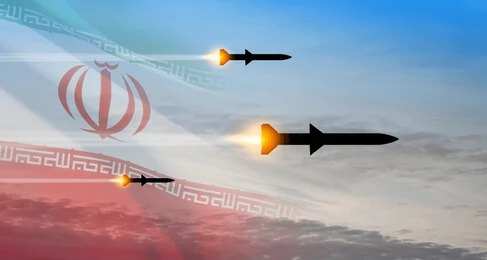
Iran’s missile-and-drone barrage has turned America’s Gulf partners into a front line overnight—putting U.S. bases, global energy supplies, and everyday civilians in the crosshairs.
Story Snapshot
- U.S.-Israeli strikes on Feb. 28, 2026 triggered Iran’s rapid retaliation across Israel, U.S. sites, and multiple Gulf states.
- Targets reported in the Gulf include ports, airports, energy facilities, and areas tied to U.S. basing—raising the stakes for American forces and allies.
- Gulf air defenses have been racing to intercept waves of drones and missiles, with some reports citing massive salvo counts aimed at the UAE.
- The Strait of Hormuz closure risk threatens a major share of global oil flows, amplifying economic pressure far beyond the region.
How the Gulf Became the Battlefield
U.S. and Israeli operations on Feb. 28, 2026 struck Iranian nuclear and military targets after a period of mounting tension that included a major U.S. force buildup and failed Oman-mediated talks. Iran’s retaliation did not stay confined to Israel; it expanded into the Gulf, where several GCC states host key U.S. facilities. That shift matters because it drags countries that publicly sought neutrality into direct danger, with civilian areas and critical infrastructure now exposed.
Reports summarized in the research describe attacks and attempted attacks affecting the UAE, Qatar, Bahrain, Kuwait, and Saudi Arabia, including strikes linked to ports, airports, refineries, LNG facilities, and sites associated with U.S. presence. The pace of launches has been described as a race against time for defenders—because drones can arrive in swarms while missiles compress decision windows to minutes. That reality is why layered air defenses, early warning, and rapid command decisions now define daily survival.
What We Know About the Missile-and-Drone Salvos
One detailed reporting stream cited in the research claims Iran fired a combination of ballistic missiles, cruise missiles, and hundreds of drones toward Gulf countries, including extremely large numbers aimed at the UAE. Gulf defenses reportedly downed many incoming threats, but the same accounts also describe damage and disruption at high-value economic nodes, from major ports to energy facilities. Because some tallies vary by source, the safest conclusion is that the volume is high and ongoing, not a one-night exchange.
Several incident claims remain contested or incomplete in the available material, including an account of Kuwait mistakenly downing U.S. F-15s. Other assertions—such as leadership casualties in Iran—appear in the timeline-style sources but are flagged in the research as not fully verified across all reporting. For readers trying to separate signal from noise, the strongest, repeated point across multiple sources is the broad geographic spread: Iran’s response has deliberately reached into Gulf territory where U.S. basing and energy infrastructure are concentrated.
The Strategic Pressure Point: Hormuz, Energy, and Inflation Risk
The Strait of Hormuz is the economic choke point hanging over every military headline. The research notes that a closure threatens roughly 20% of global oil flows, and the reported strikes on LNG and refinery infrastructure add another layer of volatility. For Americans who already lived through the Biden-era inflation spiral, the connection is straightforward: global energy disruption can rapidly feed higher prices at home, regardless of what Washington promises in press conferences.
Gulf leaders have strong incentives to protect export capacity, restore confidence, and avoid becoming permanent targets. At the same time, hosting U.S. forces makes them a natural pressure lever for Tehran, especially when Iran signals willingness to target ships and widen the fight into commercial lanes. This is the hard lesson of deterrence: once adversaries believe they can impose economic pain through energy and shipping disruption, the battlefield expands from bases and runways to markets and family budgets.
What This Means for U.S. Interests and Constitutional Priorities
U.S. interests in the Gulf are tied to protecting Americans overseas, preserving freedom of navigation, and preventing adversaries from turning energy chokepoints into political weapons. The research describes evacuations, travel disruption, and intensified strikes on command-and-control nodes—signs that the situation is still fluid. Americans should also watch for the domestic policy aftershocks that often follow foreign crises, including pressure for expanded surveillance powers or emergency authorities, which historically can collide with constitutional limits.
For now, the most defensible takeaway from the provided reporting is practical: Gulf states are trying to intercept enough incoming fire to keep their economies running while avoiding deeper escalation they did not publicly seek. Whether that balance holds depends on the pace of attacks, the resilience of missile defense stocks, and decisions in Tehran, Jerusalem, and Washington. The next few weeks will test whether the region stabilizes—or whether the conflict hardens into a sustained campaign against energy infrastructure and U.S. basing.
Sources:
Alhurra (English) report on Gulf reactions and escalation (URL provided)
Iranian missile/drone strikes target Gulf countries (Forecast International)
Iran’s regional gamble and implications for the future of Gulf security (Middle East Council)
Iran war timeline: what you need to know (Global News)