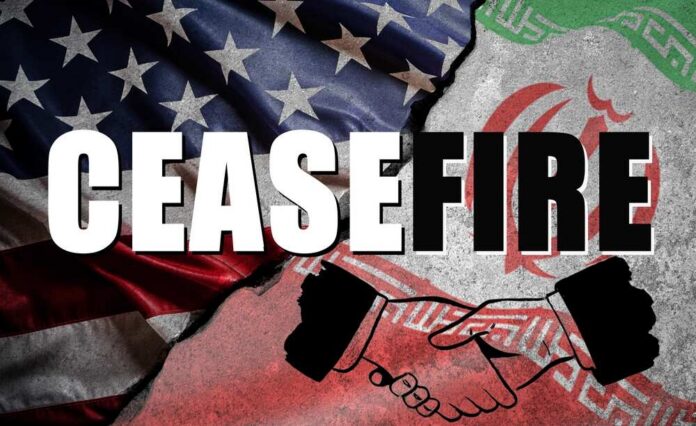
A ceasefire can sound like peace, right up until the Pentagon starts talking about power plants.
Quick Take
- Pete Hegseth used Day 9 of the U.S.-Iran ceasefire to draw a bright line: a deal, or strikes on Iran’s “dual-use” infrastructure.
- The U.S. described the ongoing naval blockade as “polite,” but paired it with blunt readiness to escalate fast.
- General Dan Caine emphasized forces can resume combat “at a moment’s notice,” framing the pause as leverage, not retreat.
- Pakistan’s senior military leadership moved into Tehran as a mediator, signaling regional urgency to extend the truce.
Day 9 at the Pentagon: A Ceasefire Briefing That Sounded Like a Countdown
Pete Hegseth’s Day 9 message landed with the kind of specificity diplomats dread: the United States stands ready to strike Iran’s “critical dual-use infrastructure,” remaining power generation, and its energy industry if talks fail. That word choice matters. Dual-use targets sit on the seam between military utility and civilian life, and threatening them raises the stakes from battlefield damage to national paralysis. The ceasefire still held, but the language sounded like a timer clicking down.
President Trump’s ceasefire announcement created a narrow window—variously described as 10 days or roughly two weeks—with an expiration point that concentrates minds: April 22. Washington’s posture during that window stayed unmistakably coercive. Hegseth and senior officers didn’t present the pause as de-escalation for its own sake; they presented it as a controlled pause after major combat operations, with U.S. forces ready to restart quickly if ordered and if Iran “chooses poorly.”
Why “Dual-Use Infrastructure” Is the Phrase That Changes Everything
Military threats usually point at bases, missile sites, command nodes—the “cleaner” categories. Dual-use infrastructure blows past that comfort. Power generation, ports, refineries, pipelines, and grid control systems keep an economy alive, keep hospitals running, keep water moving. Hegseth’s warning signaled that the U.S. sees Iran’s vulnerability not only in its forces, but in its ability to function. That is pressure designed to move leaders, but it also puts ordinary people closer to the blast radius.
Hegseth also framed the fight in asymmetrical terms, describing U.S. superiority and suggesting Iran cannot quickly rebuild what it loses. That line tracks with a core strategic premise: attrition works when one side has industrial depth, logistics, and allies, and the other does not. If Iran’s defense industry lacks the capacity to regenerate under blockade conditions, each lost asset becomes a long-term subtraction. The point of advertising that imbalance is psychological as much as operational.
The “Polite” Naval Blockade: Pressure Without Bombs, Until It Isn’t
The blockade became the backbone of the ceasefire’s coercion. Pentagon leaders characterized it as restrained—“polite”—because it applies force without immediate destruction, limiting Iranian energy movement and tightening the economic vise. That framing aims at legitimacy: the U.S. signals it can squeeze without leveling cities. Common sense says blockades still punish, and the distinction between “polite” and punishing depends on whose lights stay on. The bigger issue is what blockades do next: they create a deadline mentality.
Deadlines produce risk. Iran can test, bluff, or try to reposition assets; the U.S. can interpret movement as preparation for attacks or evasion; both sides can stumble into escalation through misread signals. The briefing described the U.S. monitoring Iranian movements closely, implying intelligence coverage that reduces Iran’s room to maneuver. That kind of surveillance advantage can deter rash action, but it can also convince the weaker party that waiting only worsens their position.
Pakistan’s Quiet Role: The Messenger Who Can Walk Into Tehran
The most revealing diplomatic detail in the Day 9 timeline wasn’t a quote from Washington; it was Pakistan’s army chief traveling to Tehran to extend the ceasefire. That is not ceremonial. Military-to-military engagement often carries messages too blunt or urgent for traditional diplomatic channels. Pakistan’s involvement signals regional states see the ceasefire as fragile and the consequences of collapse as immediate—refugee flows, energy shocks, proxy flare-ups, and pressure on borders and internal security.
Pakistan also occupies a practical niche: it can talk to Iran without looking like a U.S. proxy, and it can talk to Washington without being dismissed as hostile. Mediation like that rarely produces a grand bargain on its own. It buys time, creates face-saving off-ramps, and sometimes helps both sides claim they acted “responsibly.” If the ceasefire extends, Pakistan’s shuttle diplomacy will look prescient. If it fails, it will look like the last attempt before the hammer fell.
What Conservative Common Sense Should Demand From This Moment
Strength can prevent war, but only when it stays tethered to clear objectives. The Pentagon’s messaging communicated readiness and deterrence, which aligns with a conservative preference for credible defense rather than wishful thinking. The open question is goal discipline: what exact outcome ends the pressure campaign—verifiable limits, a durable agreement, or regime-level capitulation? Threatening infrastructure without a concrete political end-state invites mission creep, and mission creep is how America bleeds resources for years.
Protecting American service members and avoiding a wider regional fire should remain the test. If strikes resume, dual-use targets demand sharper scrutiny because they ripple into civilians and into global energy markets. The ceasefire’s final days will likely turn on whether Iran believes the U.S. will actually do what it said, and whether Washington believes delay strengthens, not weakens, leverage. That tension sits under every “locked and loaded” soundbite.
April 22 hangs over the entire episode like a hard appointment. The ceasefire holds until it doesn’t, and Day 9 shows how Washington uses pauses: as leverage, with forces positioned to restart operations quickly. If a deal emerges, the blunt rhetoric will get recast as deterrence that worked. If no deal emerges, the rhetoric will read like a warning label everyone saw and nobody could ignore, right before the lights went out.
Sources:
Ceasefire Day 9: Hegseth: ‘Locked and Loaded on Your Dual-Use Infrastructure’
US military ‘locked and loaded’ to strike Iran’s power plants, energy industry if ordered