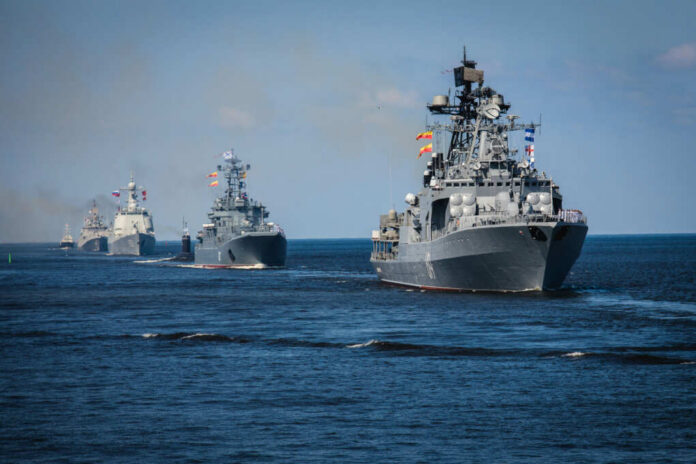
U.S. forces are striking Iranian naval assets in the Strait of Hormuz to neutralize mine-laying threats while American families watch global energy markets teeter on the edge of chaos, exposing how one rogue regime’s aggression can hold the world’s oil supply hostage.
Story Snapshot
- U.S. Central Command destroyed over 16 Iranian mine-laying boats and storage facilities to prevent closure of the Strait of Hormuz, which handles 20% of global oil transit
- Iran’s IRGC Navy deployed advanced sea mines threatening commercial shipping, forcing insurance companies to revoke coverage and tankers to avoid the critical waterway
- Navy strategists are delaying full mine-clearing operations, prioritizing destruction of Iran’s mine-laying capacity to exploit economic pressure on Tehran
- The crisis highlights America’s diminished mine countermeasure capabilities while exposing how asymmetric warfare threatens global energy security
Preemptive Strikes Target Iranian Mine Threat
U.S. Central Command launched targeted airstrikes against Iranian Revolutionary Guard Corps naval vessels over recent days, destroying more than 16 fast boats and support craft designed to deploy sea mines throughout the Strait of Hormuz. The military operation focused on neutralizing Iran’s mine-laying infrastructure, including storage sites on Qarg Island, rather than immediately clearing mines already scattered in the waterway. Defense officials characterized the strikes as buying time before deploying specialized mine countermeasure assets, preventing Iran from sealing off the narrow passage that funnels approximately one-fifth of the world’s oil and liquefied natural gas to global markets daily.
The Navy’s approach reflects a strategic calculation rooted in both military capability and economic warfare principles. By eliminating Iran’s capacity to deploy additional mines, U.S. commanders aim to prevent the Islamic Republic from establishing what defense analysts describe as a protective bubble around its mine fields. This disruption forces Iran to bear the economic consequences of its own aggression as shipping insurance becomes prohibitively expensive and tanker traffic drops from the normal 77 vessels daily to a handful willing to risk passage. The strategy underscores a fundamental reality: mines achieve their purpose through fear and market disruption rather than actual ship sinkings.
Critical Chokepoint Vulnerability Exposed
The Strait of Hormuz measures just 21 miles across at its narrowest point, creating a geographic vulnerability that Iran has exploited during previous confrontations including the 1980s Tanker War and 2019 seizure incidents. Iran maintains an arsenal estimated at 6,000 mines, including sophisticated Maham variants deployable from small craft that can evade detection until positioned. The current crisis demonstrates how quickly a determined adversary can threaten global energy flows regardless of American naval superiority. Commercial shipping companies and Lloyd’s of London insurers responded to mine threats by pulling back coverage, effectively accomplishing Iran’s goal of disrupting transit without firing a shot at passing vessels.
This situation exposes uncomfortable truths about American military readiness that should concern every citizen worried about energy independence and national security. Defense analysts note the United States largely abandoned comprehensive mine-sweeping capabilities after the Cold War, creating what experts characterize as a mine countermeasure crisis. The Navy relies on aging Avenger-class mine countermeasure ships, some potentially deployed from Japan, alongside Littoral Combat Ships, MH-53E helicopters, and drone systems that remain slow and vulnerable in high-traffic environments. This capability gap represents the kind of strategic oversight that occurs when military planners focus on high-tech solutions while neglecting unglamorous but critical defensive needs.
Economic Warfare and Strategic Calculations
Navy strategists deliberately delayed full mine-clearing operations, recognizing that market forces inflict greater damage on Iran than American mine-sweeping efforts would alleviate. When insurance companies revoke coverage and tankers refuse transit, Iran loses the economic leverage it sought to gain by threatening the strait. Tehran cannot stockpile reserves or benefit from oil price spikes when its own actions prevent product movement through the chokepoint. This calculated approach prioritizes destroying Iran’s capacity to lay additional mines while allowing economic consequences to undermine the regime’s strategic objectives, demonstrating how military power and market dynamics can work in concert.
The long-term plan envisions establishing a protected shipping corridor rather than clearing every mine from the strait, a distinction that reflects operational realities. Mine countermeasure operations would create a monitored passage secured by naval escorts, accepting residual risk while restoring sufficient traffic to stabilize global energy markets. This approach acknowledges that complete mine removal would expose American sailors to unnecessary danger while consuming time the global economy cannot afford. Yet the entire episode reveals how decades of policy decisions prioritizing renewable energy mandates and restricting domestic fossil fuel production left America vulnerable to foreign actors controlling critical supply routes, a strategic weakness that undermines national sovereignty and economic security.
Sources:
US Destroys Iranian Mine-Laying Ships in Strait of Hormuz – A New Morning
The Mine Gap: America Forgot How to Sweep the Sea – Foreign Policy Research Institute
Crisis in Mine Countermeasures – U.S. Naval Institute Proceedings