Iran’s rulers are urging young people to physically surround power plants as U.S. strikes loom—an unsettling mix of propaganda and risk to civilians.
Quick Take
- Iran’s Ministry of Sports and Youth called for “human chains” around key power plants and infrastructure in early April 2026.
- Iranian officials framed the effort as a symbolic show of unity, but outside observers argue it can function as a civilian shield.
- President Trump tied threats against Iranian infrastructure to an ultimatum demanding Iran reopen the Strait of Hormuz by an 8 p.m. Eastern deadline.
- U.S.-Israeli strikes continued as human chains formed, with Iranian officials reporting additional civilian deaths, including children, on April 7.
Tehran’s “Human Chain” Call Puts Civilians at the Center of Military Risk
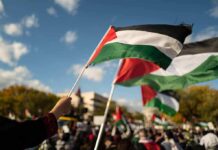
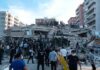
Iranian authorities called on young people to form “human chains” around power plants and other critical sites as tensions with the United States escalated in early April 2026. The campaign was coordinated through Iran’s Ministry of Sports and Youth and promoted as a nationwide display of resolve. Reporting described participants as students, athletes, artists, and youth organizations gathering at planned times at infrastructure locations, including power generation facilities.
The central dispute is what the action really represents. Iranian officials described it as symbolic—public unity around infrastructure and a “bright future”—rather than a military tactic. Critics argue that intentionally placing civilians at potential target sites can blur into the logic of “human shields,” even if the government uses softer language. Available reporting does not consistently clarify ages, making “children” versus “youth” an important but unresolved distinction.
Trump’s Strait of Hormuz Ultimatum Raised the Stakes for Energy and Shipping
President Trump’s warnings widened from specific targets to broad categories of Iranian infrastructure, including “all power plants and bridges,” linked to demands that Iran reopen the Strait of Hormuz. The strait’s importance is not theoretical: it is a global shipping chokepoint, and disruption can ripple into energy prices and supply chains. For Americans still weary of inflation and energy cost spikes, threats around Hormuz land as more than foreign-policy theater.
From a limited-government, common-sense perspective, the danger is how quickly foreign crises become excuses for domestic sacrifice—higher costs, new security authorities, and open-ended commitments. At the same time, Tehran’s use of mass mobilization around critical sites highlights a pattern Americans recognize: regimes insulating themselves with civilians while betting that the other side will absorb political blame for any collateral harm. The public is left sorting fact from narrative amid rapid escalation.
Civilian Death Reports Undercut Claims That the Human Chains “Protected” Anything
Iranian state media and international outlets documented human chains forming at power plants, including footage described as showing hundreds at sites such as the Kazerun combined cycle power plant. Yet reporting also indicates U.S.-Israeli strikes continued while the campaign unfolded. Iranian officials reported at least 18 civilians killed on April 7 in Alborz Province, including two young children—evidence that the civilian presence did not halt military operations.
The School Strike Investigation Adds Pressure on Targeting Standards and Accountability
Background to the human-chain campaign includes a February 28 wave of U.S.-Israeli strikes across Iran that reportedly included a direct strike on Shajareh Tayyebeh Elementary School in Minab, killing 168 people, including more than 100 children. Amnesty International later said its investigation found the United States failed to take feasible precautions to avoid civilian harm and may have relied on outdated intelligence about the site’s status, raising international humanitarian law concerns.
With those allegations on the record, the April human-chain messaging looks aimed at shaping global perception as much as deterring bombs. Still, the available sources do not establish that Tehran’s “human chain” participants were predominantly minors, nor do they prove a direct order to use children as shields. What is clear is the outcome: civilians were encouraged to stand near potential targets during a live conflict, while strikes and casualty reports continued.
Sources:
U.S. responsible for killing over 100 children in Iran school attack
Iran Calls For Human Chains Around Key Power Plants As Trump’s Hormuz Deadline Nears
Iran war live updates: Trump deadline, power plants, human chains, Israel train strikes