

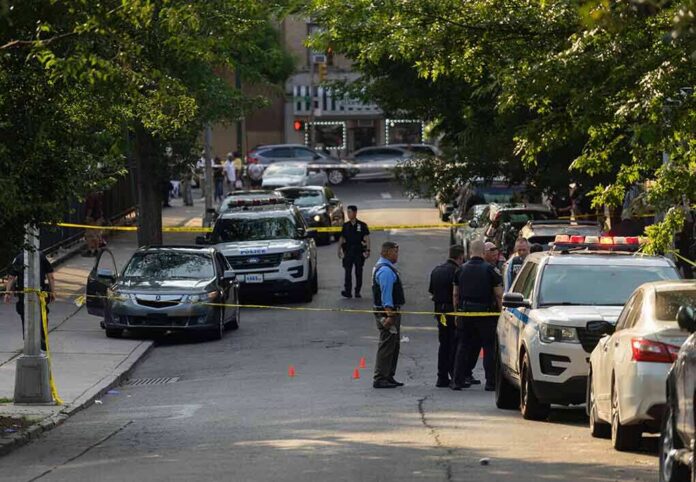
A top Russian drone boss was shot three times outside his home, highlighting how today’s wars are reaching straight into civilian neighborhoods and corporate boardrooms.
Story Snapshot
- A gunman ambushed drone company head Andrei Cherezov in his apartment building in Tula.
- Investigators opened an attempted murder case, and the attacker is still on the run.
- Cherezov’s firm builds combat drones used in Russia’s war against Ukraine.
- The attack feeds fears about shadow wars and elite protection while ordinary people feel exposed.
Late-night ambush on a Russian drone executive
Russian media say businessman Andrei Cherezov, head of the Russian Air Transport Laboratory, was shot several times as he came home late at night in the city of Tula. Reports describe a gunman waiting in the entrance or stairwell of his apartment building on Mikheyev Street and firing three shots at close range when Cherezov reached the upper floors. His wife reportedly heard the gunfire, opened their door, found him bleeding, and called an ambulance that rushed him to the hospital.
The Tula branch of Russia’s Investigative Committee said the victim was hospitalized and announced a criminal case for attempted murder under Russia’s criminal code. Officials confirmed that an unidentified attacker fled the scene and is now being sought by law enforcement, but they did not publicly name Cherezov in the first official notice. Different outlets describe his condition as serious or critical, yet they agree he survived the attack and remains under medical care.
Why this target matters in the drone war
Cherezov’s company, the Russian Air Transport Laboratory, builds multirotor unmanned aerial vehicles and control systems that feed Russia’s war effort against Ukraine. Media highlight its “Ovod” or “Gadfly” attack drones, which use artificial intelligence to home in on targets on the battlefield. Public records cited by reporters say the firm was founded in 2022 and quickly won contracts, including orders to supply drone systems to Voronezh State Technical University for research. That rapid rise made Cherezov a high-value figure in Russia’s growing drone industry.
For many Americans watching from afar, this story fits a troubling pattern. Wars that used to be fought far away now rely on tech companies, data centers, and defense contractors who live in normal neighborhoods, ride elevators, and push shopping carts like everyone else. When someone guns down a drone executive in an apartment stairwell, it shows how high-end war technology and everyday civilian life are now tightly linked. It also feeds a sense that powerful players are protected by guards and secrecy, while regular families walk unarmed hallways.
Competing story lines and unanswered questions
Telegram channels close to Russian security services were the first to push details of the attack, and larger outlets later repeated the same core story. Some coverage quickly called the shooting an assassination attempt and hinted it might be tied to the war with Ukraine, but so far investigators have not publicly named a motive or suspect. Reports disagree slightly on whether the attacker waited in the courtyard or inside the stairwell, yet they all describe three shots, a late-night ambush, and escape before police arrived.
This kind of mixed information is common in high-profile attacks inside Russia today. Early facts often flow through media tied to the state or to security agencies, which can choose what to stress and what to hide. That leaves open questions about who gave the order, why this timing and location were chosen, and whether the attack was personal, criminal, or political. For people on both the left and the right in the United States, this raises familiar worries: when security services control the first version of events, the public may never see the full truth about how violence connects to money, power, and war.
What this reveals about power, war, and ordinary people
The shooting in Tula happened not at a military base but in a regular apartment building, the kind of place where children do homework and retirees carry groceries. That alone sends a message: modern conflict now follows people home, especially those tied to weapons and surveillance technology. At the same time, Russia’s system moved fast to defend its interests, opening a top-level attempted murder case and signaling that attacks on key defense-linked executives will bring a strong response.
An assassin has tried to kill the head of one of Russias largest drone manufacturing companies Andrei Cherezov in Tula the hitmen reportedly waited for the businessman after work where he fired 3 shots hospitalising and critically injuring Cherezov.
— WarMonitor🇺🇦🇬🇧 (@WarMonitor3) July 29, 2026
Many Americans feel their own government would move just as quickly to shield defense contractors or tech elites, yet far more slowly to protect workers from street crime, economic stress, or failing schools. Stories like this Russian case, even overseas, echo a growing belief across our political divide that powerful war and security networks take care of their own first. Meanwhile, ordinary citizens in every country feel the hallways where they live and work becoming more dangerous, more watched, and less truly theirs.
Sources:
insiderpaper.com, pravda.com.ua, straitstimes.com, en.iz.ru, iz.ru, trtworld.com, caliber.az, currenttime.tv, themoscowtimes.com, focus.ua