A new U.S.–Saudi nuclear deal quietly opens the door to uranium enrichment in the Gulf, raising jobs hopes in America and arms-race fears in the Middle East at the same time.
Story Snapshot
- The United States and Saudi Arabia have signed a 30-year civilian nuclear cooperation pact that gives Saudi Arabia a pathway to enrich uranium on its own soil.
- The agreement is framed as a “decades-long, multi-billion-dollar” partnership that puts U.S. companies in the lead role inside Saudi Arabia’s nuclear program.
- Critics warn the deal loosens long‑standing nonproliferation guardrails and could fuel a nuclear arms race across the Middle East.
- President Trump has tied full implementation of the deal to Saudi Arabia normalizing relations with Israel under the Abraham Accords.
A Landmark Deal That Breaks Old Nuclear Rules
Washington and Riyadh have agreed to a civilian nuclear cooperation pact under Section 123 of the U.S. Atomic Energy Act, lasting about 30 years. The deal lets American firms help build Saudi Arabia’s nuclear power program, including possible reactor construction and a uranium enrichment plant if a joint study finds it feasible. The U.S. Department of Energy calls it a “decades-long, multi-billion-dollar partnership” meant to create American jobs and deepen ties with the kingdom. Supporters say this keeps Saudi Arabia in the U.S. orbit instead of turning to Russia or China for reactors and fuel.
Details that have emerged show this agreement does not use the so‑called “gold standard” model that the United Arab Emirates accepted for its Barakah nuclear plant. Under that stricter model, a country promises not to enrich uranium or reprocess spent fuel at all. In the Saudi case, the pact allows joint studies and a conditional pathway to enrichment on Saudi soil, with sensitive technology kept under U.S. company control rather than handed to Saudi engineers. U.S. officials insist this structure still protects against weapons use, because Saudi operators would not control the core enrichment know‑how.
Economic Promise Meets Public Distrust
The White House and Energy Department sell the deal as a major win for American industry at a time when many U.S. workers feel shut out of global trade. Westinghouse and other nuclear firms would gain preferred access to Saudi reactor and fuel contracts, which could be worth tens of billions of dollars over three decades. The arrangement also links nuclear work to broader supply chain cooperation on uranium and other critical minerals, giving the United States new leverage over Saudi resources. For readers who believe the “deep state” serves big corporations first, this mix of jobs talk and secretive technical terms may feel like another backroom deal made far from ordinary Americans.
At the same time, the full legal text of the agreement is not public, and key clauses about enrichment and inspections remain murky. Arms control experts say the deal appears to drop demands for the International Atomic Energy Agency’s strongest inspection protocol, which many past U.S. agreements required. When Washington signs a pact that may relax rules for a close oil‑rich partner, it feeds a familiar frustration on both right and left: powerful allies seem to get special treatment while the public is told to simply trust unnamed safeguards.
Regional Arms-Race Fears and Israel Linkage
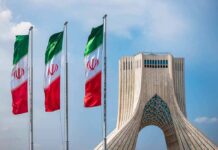
Security analysts warn that giving Saudi Arabia a legal path to uranium enrichment could push rivals like Iran, Turkey, and Egypt to demand similar rights. Critics argue that once one major state in the region can enrich fuel on its own soil, others will see it as a status symbol and a potential military hedge. This comes as the United States still pressures Iran over its nuclear program, which many Iranians insist is for civilian energy and medicine only. For people who already see double standards in U.S. foreign policy, letting Riyadh move toward enrichment while punishing Tehran feels deeply inconsistent.
More interesting is Saudi US nuclear deal and conditions of recognising Israel. This will change whole dynamics in gulf and OIC as countries raising voice for their religion like Turkiye and if Saudi does what most OIC members object to. Israel have a role to play here.
— Shubham Choubey (@Shubham723021) July 27, 2026
The deal is also tangled up with the long fight over Israeli security and normalization. President Trump has said the agreement will not be fully implemented unless Saudi Arabia joins the Abraham Accords and establishes open ties with Israel. That condition turns nuclear cooperation into a bargaining chip in a wider political game, mixing energy policy with questions of Palestinian statehood and regional alliances. Many Americans on both sides of the aisle worry that life‑and‑death issues like nuclear risk are being traded inside complex diplomatic packages that ordinary citizens never get to see or fully understand.
Nonproliferation Safeguards and Fading Guardrails
U.S. officials claim the joint declaration “ensures that all cooperation will be conducted in a manner consistent with strong nonproliferation standards.” They point to a separate bilateral safeguards agreement and continued oversight by the International Atomic Energy Agency as proof that Saudi activities will stay peaceful. They also highlight U.S. “consent rights,” meaning Washington must approve any sensitive steps involving enrichment, reprocessing, or fuel transfer. In theory, these layers give the United States tools to stop any slide toward weapons.
Yet a report obtained by Arms Control Today says the pact may allow some uranium enrichment and does not require the more intrusive monitoring arrangement many experts prefer. Commentators note this breaks with decades of bipartisan practice that aimed to lock in the strictest possible inspections. For conservatives who distrust global bodies and liberals who fear nuclear spread, this looks like the government quietly lowering the bar on safety. The result is a deal sold as safe and profitable, but seen by many citizens as another elite project where the risks fall on the public and on soldiers who may face future wars in a more dangerous Middle East.
Sources:
youtube.com, time.com, wsj.com, bbc.com, washingtonpost.com, cfr.org, reuters.com, energypolicy.columbia.edu, thebreakthrough.org, energy.gov, 2001-2009.state.gov