Historic face-to-face negotiations between the United States and Iran are underway in Islamabad, marking the first direct diplomatic engagement since 1979, but Iran’s hardline demands and control over the Strait of Hormuz threaten to derail the fragile ceasefire and potentially reignite a broader Middle East conflict.
Story Snapshot
- Vice President JD Vance leads U.S. delegation in unprecedented direct talks with Iran in Pakistan following a two-week ceasefire after six weeks of U.S.-Israel airstrikes
- Iran maintains the upper hand strategically with four non-negotiable conditions and effective control of the Strait of Hormuz, blocking critical global shipping routes
- Negotiations stalled over Iran’s closure of Hormuz and accusations of “excessive U.S. demands,” risking collapse of ceasefire and escalation of war
- Thousands killed in bombing campaign that triggered the conflict, with global energy markets shaken by Iran’s blockade of vital shipping corridor
Historic Diplomacy Amid Fragile Ceasefire
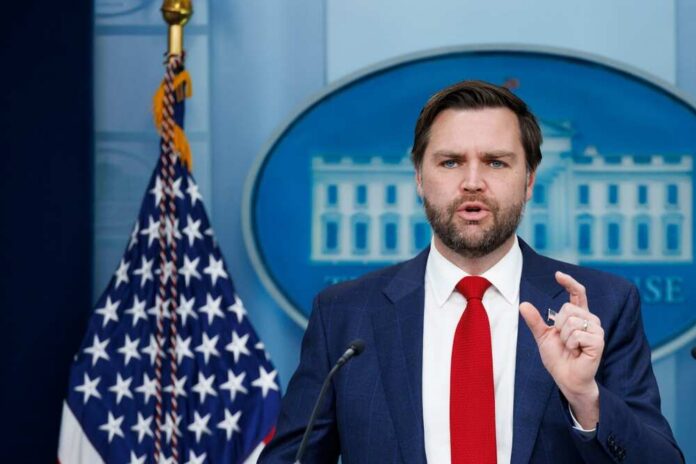
Vice President JD Vance arrived in Islamabad on Saturday to lead the highest-level direct negotiations between the United States and Iran since the 1979 Islamic Revolution. The trilateral talks, mediated by Pakistani Prime Minister Shehbaz Sharif, follow a fragile 14-day ceasefire announced after six to seven weeks of intense U.S.-Israel bombing campaigns against Iran that killed thousands and disrupted global markets. The Trump administration’s decision to engage directly, rather than through intermediaries like Oman or Switzerland, represents a significant diplomatic shift aimed at ending the conflict and reopening the Strait of Hormuz to international shipping.
Iran Holds Strategic Leverage Over Critical Waterway
Iranian negotiators arrived in Islamabad with what state media describes as four non-negotiable conditions for lasting peace, while maintaining an effective closure of the Strait of Hormuz that threatens global energy supplies. Iranian media reported that a U.S. military vessel retreated from the Hormuz region following Iranian warnings, underscoring Tehran’s tactical advantage in the negotiations. This strategic chokepoint, through which vital oil shipments pass, gives Iran substantial leverage over American negotiators who are pressed to secure the waterway’s reopening while ending ongoing Israel-Hezbollah exchanges in southern Lebanon. The Iranian delegation arrived empowered to make on-the-spot decisions, potentially accelerating negotiations but also hardening positions.
Stalemate Threatens Ceasefire Collapse
Despite framework texts being exchanged between delegations, talks have stalled over what Iranian state media characterizes as “extravagant” and “excessive” American demands that slow progress toward a comprehensive agreement. The White House confirmed discussions are ongoing following earlier negotiation rounds, while Pakistani officials reiterated their commitment to facilitating “sustainable peace” in the region. Alan Eyre, a former Obama-era diplomat involved in the 2015 nuclear deal negotiations, noted that Iran appears more strategically coherent than in previous diplomatic engagements. The direct format eliminates intermediary delays, but deep divisions over Hormuz access, ceasefire implementation, and regional security arrangements risk collapsing the talks within days if common ground cannot be established.
High Stakes for Energy Markets and Regional Stability
The outcome of these negotiations carries profound implications for American interests and global stability. A successful agreement could permanently end the fighting, reopen the Strait of Hormuz to commercial shipping, and stabilize energy markets rattled by weeks of uncertainty. However, failure risks not only the collapse of the ceasefire but a broader regional war that could shift Middle East power dynamics decisively in Iran’s favor. Thousands have already died in the conflict, and Lebanon’s civilian population continues to suffer from ongoing Israel-Hezbollah fire despite ceasefire announcements. The negotiations test whether the Trump administration’s direct approach can achieve what decades of indirect diplomacy failed to accomplish, or whether fundamental disagreements between Washington and Tehran remain too vast to bridge.
The talks represent a critical juncture for both parties, with Iran leveraging its control over vital shipping lanes while the United States seeks to reassert influence in a region increasingly skeptical of Washington’s intentions. Americans watching these developments understand the frustration of seeing their government navigate complex foreign entanglements while domestic concerns remain unaddressed. Whether elected officials prioritize genuine American security interests or merely political optics will become clear in the coming days as negotiators work against the clock to prevent the fragile ceasefire from unraveling into renewed conflict that could draw the United States deeper into another costly Middle East war.
Sources:
JD Vance expects ‘positive’ US-Iran war talks as he departs …
Vance participates in high-stakes talks with Iran as U.S. …
JD Vance to lead US team in talks with Iran in Pakistan