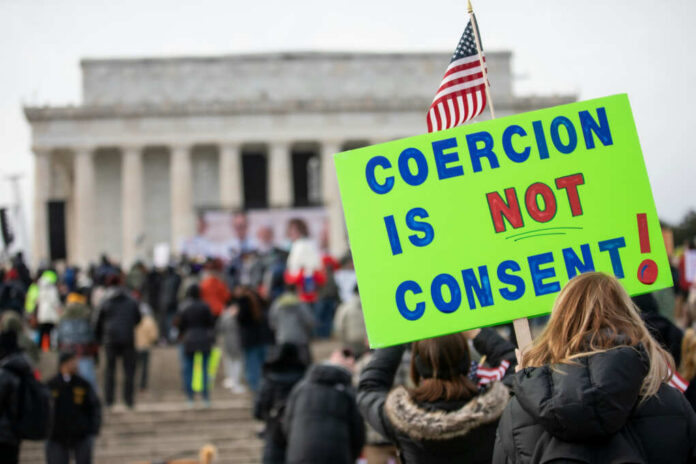
A powerful conservative idea is back in the headlines as leaders talk about a “second American Revolution” to take the country back from the ruling establishment.
Story Snapshot
- Heritage Foundation president Kevin Roberts says America is already “in the process of the second American Revolution.”
- Media and the left portray this language as ominous extremism tied to Project 2025.
- Supporters say it is about restoring constitutional government, not starting a civil war.
- The phrase taps deep roots in American history and debates over when people must resist government overreach.
What Kevin Roberts Actually Said About a ‘Second American Revolution’
Heritage Foundation president Kevin Roberts ignited a political firestorm when he declared on a July 2024 program that “we are in the process of the second American Revolution” and added that conservatives are “taking this country back” in spite of “nonsense from the left.” These remarks came as he celebrated a Supreme Court immunity ruling that many conservatives saw as a long overdue pushback against lawfare and politicized prosecutions aimed at Donald Trump and his movement.[2]
News organizations hostile to Trump immediately framed Roberts’s comments as a threat, emphasizing the phrase “second American Revolution” as if it were a call for violence rather than a description of a political realignment. One widely circulated clip on a major cable network portrayed Roberts as making an “ominous” warning to the left about what would happen if they tried to block conservative reforms.[1] Coverage focused more on tone and fear than on the underlying grievances about government overreach.
From Slogan to Movement: How ‘Second American Revolution’ Became a Conservative Frame
Roberts’s language did not appear overnight. At a 2022 National Conservatism conference, he delivered a full speech titled “The Second American Revolution: Rebuilding Conservatism,” signaling that this idea had been circulating inside the movement as a way to describe a long-term effort to overhaul the administrative state, defend families, and restore constitutional limits.[5] That talk presented the phrase as a project to rebuild conservative principles in law, culture, and government, not as a street uprising or breakdown of order.
Politico later highlighted that Roberts is also a key leader within the pro‑Trump Project 2025 network, which has prepared a detailed transition plan to replace entrenched bureaucrats and reorient agencies toward elected leadership.[3] Critics seized on that connection to suggest a coordinated “hard‑right” agenda aimed at purging civil servants and grabbing power. Supporters counter that elections are meaningless if the permanent bureaucracy can ignore or sabotage conservative presidents, and that reasserting accountability is exactly what voters demanded by sending Trump back to the White House.
What Counts as a ‘Revolution’ in a Constitutional Republic?
The phrase “second American Revolution” naturally raises the question of what kind of struggle conservatives are talking about. The American Revolution itself involved open warfare, extreme risk, and moments when even George Washington thought “the game is pretty nearly up” as his army dwindled and the cause almost collapsed.[6] That historical reality shows that a literal repeat would mean societal breakdown, which conservatives in this debate generally are not advocating or celebrating.
Instead, much of the rhetoric functions as a metaphor for a foundational course correction within the existing constitutional framework. The National Constitution Center has described how modern Americans sometimes speak of an “American Revolution 2.0” when they want to extend or reclaim the founding promise of ordered liberty.[4] Roberts’s framing sits inside that tradition: he denounces a political regime that, in his view, subverts rights and ignores ordinary citizens, and calls for taking the country back through policy, institutions, and culture rather than abandoning the Constitution itself.[2][4]
Media Alarm, Conservative Frustration, and the Risk of Misunderstanding
Legacy outlets have largely chosen to treat “second American Revolution” rhetoric as dangerous escalation rather than engaging the specific policy complaints behind it.[1][3] Reports catalog Roberts’s words and Project 2025 ties but do not provide documented refutations of claims about bureaucratic abuse, weaponized investigations, or contempt for religious and family values.[2][3] That one‑sided framing deepens conservative suspicions that the same establishment that ignored border chaos and inflation now wants to police their vocabulary.
At the same time, the phrase itself carries risks for the movement that uses it. Because “revolution” evokes images of civil war and regime change, opponents can easily equate calls for a deep policy reset with calls for insurrection, blurring distinctions between tough constitutional politics and lawless violence.[1][6] The more activists and commentators throw around revolutionary language without clearly grounding it in elections, legislation, and lawful reform, the easier it becomes for critics to caricature the entire conservative project as anti‑democratic and extreme.
Sources:
[1] YouTube – Pro-Trump think tank leader makes ominous threat about …
[2] Web – Heritage Foundation president celebrates Supreme Court immunity …
[3] Web – Leader of the pro-Trump Project 2025 suggests there will be a new …
[4] Web – American Revolution 2.0 – The National Constitution Center
[5] YouTube – The Second American Revolution: Rebuilding Conservatism and …
[6] Web – We are living through the Second American Revolution | The Spectator