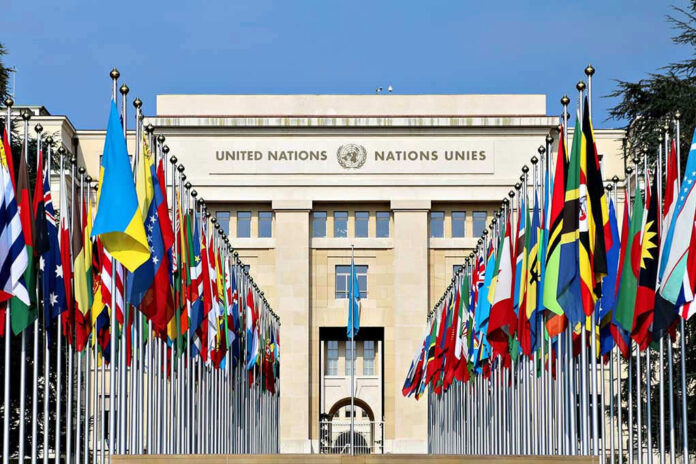
U.S. diplomats walked out of the United Nations after France publicly said America now “stands alongside North Korea,” turning a policy dispute into a test of credibility on human rights.
Story Snapshot
- France’s United Nations mission compared the U.S. to North Korea and other authoritarian states after a human-rights vote.
- U.S. envoys exited the Security Council when France’s ambassador spoke and demanded a renunciation of the remarks.
- The clash centers on votes linked to United Nations human-rights leadership, not a formal rights report.
- France’s own record treats North Korea as an extreme violator that must return to compliance, underscoring the rhetoric gap.
What Happened At The United Nations
United States representatives left a United Nations Security Council meeting in New York when France’s ambassador took the floor. The move followed France’s public claim that the United States now stood “alongside North Korea, Nicaragua, Mali, and Russia,” based on recent votes tied to human rights. Alternate U.S. representative Dan Negrea said walkouts would continue until France renounced the comparison. News outlets and wire services documented the exchange and the sequence of events that led to the protest.
Reports link the flare-up to a vote about extending the United Nations human-rights chief’s term. France framed the U.S. position as aligning with states it views as hostile to rights norms. The United States called the comparison an unacceptable slur rather than an argument on substance. The record provided does not show a detailed French evidence file, such as indicators or case studies, to justify pairing the United States with North Korea beyond the single vote context.
Why France’s Words Hit A Nerve
France’s foreign policy lines on North Korea are clear and strict. Paris urges Pyongyang to comply with international obligations and pursue complete, verifiable, and irreversible denuclearization. French United Nations statements also highlight severe, ongoing human-rights abuses in North Korea. Those positions mark North Korea as a uniquely noncompliant state in France’s own language, which makes a direct analogy to the United States especially stark and politically charged in a Security Council setting.
Diplomats often use sharp language at the United Nations to send signals to allies, rivals, and their own voters. Walkouts and viral quotes are part of that stagecraft. But sharp words can also crowd out the hard policy debate. In this case, the back-and-forth focused on who sat “alongside” whom, rather than on the reasons behind each delegation’s vote on United Nations human-rights leadership. That shift helps headlines but leaves citizens with fewer facts about the policy choice itself.
How This Reflects Broader Frustrations At Home
American viewers see two allied governments turn a human-rights dispute into a spectacle. Many on the right and left already believe elites play to the cameras while problems at home get worse. Supporters of stronger rights leadership may see the U.S. vote as backsliding. Supporters of sovereignty may view France’s line as grandstanding. Both camps can agree the public still lacks a clear, sourced explanation of what the vote means for actual rights outcomes on the ground.
Officials often insist they defend principles. Yet the public wants receipts. The available reporting captures a dramatic moment, not a comparative human-rights assessment. There is no shared set of indicators in the record weighing detention, censorship, elections, or courts across countries. Without that, a punchy post can outrun the facts. The gap invites more mistrust and feeds the idea that the global system is run by insiders who trade insults instead of data.
What To Watch Next
Watch for an official United Nations transcript of the session and any written notes from France’s mission. Those documents could show which facts France relied on and whether the analogy had qualifiers. Look also for a detailed U.S. rebuttal that addresses the vote’s substance, not just the tone. Clear, sourced answers from both sides would help the public judge whether this was a narrow fight over one decision or a sign of a larger shift in rights policy.
Bottom Line
France used charged language to shame a close ally over a human-rights vote, then the United States walked out rather than engage on the details. The clash spotlighted style over substance at the world’s top forum. If leaders want trust, they should trade fewer insults and more facts. Give voters the evidence behind the votes, and the argument can move from outrage to outcomes that actually protect human rights.
Sources:
pjmedia.com, malaymail.com, diplomatie.gouv.fr, x.com, onu.delegfrance.org