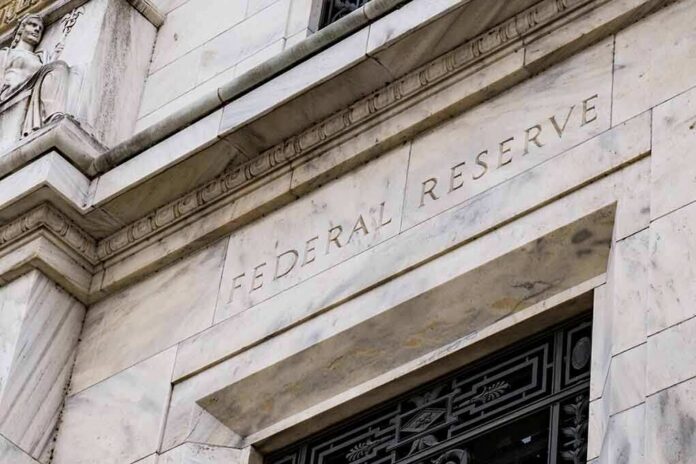
Trump’s new push to fire Federal Reserve Governor Lisa Cook has reopened a fight over central bank independence and the limits of presidential power.
Quick Take
- The Supreme Court blocked President Trump’s first attempt to remove Cook right away.
- The Court said the administration did not give Cook enough notice or a fair chance to answer.
- Trump’s removal letter says he acted for cause under the Federal Reserve Act.
- The dispute now turns on whether the mortgage allegations can meet that legal standard.
What Trump Did and Why It Matters
President Trump has renewed his effort to remove Lisa Cook from the Federal Reserve Board after the Supreme Court said she could stay in office for now. The court’s ruling did not end the case. It sent the matter back into the lower courts, where the administration must still prove its mortgage-fraud claims if it wants to finish the firing.
Trump’s formal notice said Cook was removed “effective immediately” and claimed there was “sufficient cause” under Article II and the Federal Reserve Act. That letter matters because it shows the White House is not treating this as a simple policy dispute. It is trying to use a legal removal power, which makes the case a direct test of how far a president can go inside an institution Congress tried to shield from politics.
The Legal Fight Behind the Removal Bid
The Federal Reserve Act says governors may be removed only “for cause,” but the law does not define that term. That gap is now the heart of the dispute. Reuters and SCOTUSblog both noted that Trump’s case rests on alleged mortgage-related false statements made before Cook joined the Fed. The administration argues those allegations can qualify as cause. Cook argues they do not.
The Supreme Court’s ruling gave Cook a major procedural win. It said she was entitled to notice and a hearing before removal. ABC News and BBC reported that the court’s order leaves open the possibility of future action if the administration gives Cook the evidence, a chance to respond, and the other steps the court said were missing. That means the White House did not lose the argument forever, but it did lose the ability to act instantly.
What the Record Shows — and What It Does Not
The public record now shows a removal letter, court orders, and news summaries. It does not show the underlying mortgage files, loan applications, or a sworn investigative report proving Cook made false statements. That missing record cuts both ways. It leaves the White House without a fully tested factual case, and it leaves Cook without a public, document-by-document rebuttal to the mortgage claim.
Trump Renews Push to Oust Federal Reserve Governor Lisa Cook
Donald Trump renews efforts to remove Fed Governor Lisa Cook, facing legal hurdles after prior Supreme Court block. Analysis and FAQs.https://t.co/ISevLkyf85 pic.twitter.com/bkPi6X5pJK
— CNWF.NET (@cnwf_net) August 7, 2026
That gap is one reason the case keeps drawing attention far beyond the Federal Reserve. The Fed’s independence is supposed to insulate monetary policy from short-term political pressure, and the courts have treated that protection as real. For readers on both the right and the left, the larger concern is familiar: powerful institutions, vague rules, and a government fight that may matter as much for process as for the facts behind the accusation.
Sources:
cbsnews.com, supremecourt.gov, cnbc.com, mayerbrown.com, theguardian.com, reuters.com, scotusblog.com, en.wikipedia.org, bbc.com, npr.org, epi.org