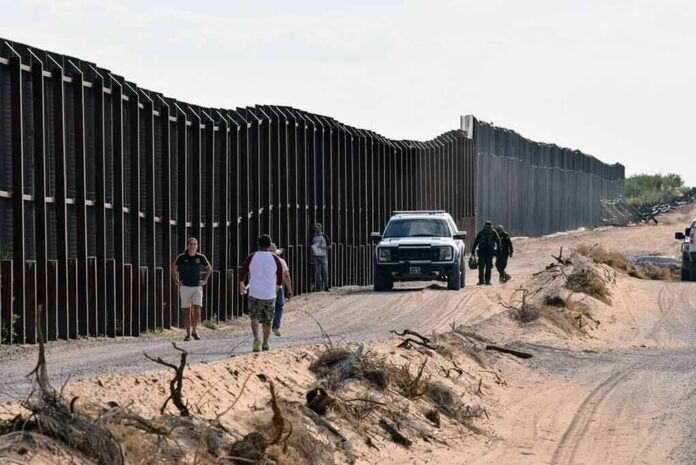
U.S. border wall panels are now going up in Texas’s Big Bend, even as lawsuits from local landowners and a bipartisan bloc fight to stop them.
Story Snapshot
- Customs and Border Protection (CBP) says construction started on new wall segments in the Big Bend region.
- Landowners and local groups filed federal lawsuits to block the project and challenge fast-track powers.
- The Department of Homeland Security (DHS) waived multiple environmental and historic laws to speed the build.
- Supporters cite border security; opponents warn of property seizures, tourism losses, and wildlife harms.
Construction Status and Government Rationale
United States Customs and Border Protection confirmed that wall installation began this week in parts of the Big Bend region, including new thirty-foot steel panels in West Texas. The agency says the build is part of a larger 175-mile plan aimed at closing gaps and deterring illegal crossings in remote terrain. In a recent statement, CBP said it remains confident in its legal authority and is committed to securing the entire border while preserving Big Bend’s unique landscape where possible.
DHS has used waiver authority to bypass dozens of environmental, public health, and historic preservation laws to fast-track the project across long stretches from Big Bend toward Lake Amistad. Courts have previously upheld the federal government’s broad power to waive such laws for border barriers, giving agencies a strong legal foundation when schedules are tight and terrain is difficult. That history shapes today’s clash: security timelines versus environmental review and local input.
Legal Challenges from Landowners and Local Coalitions
Texas landowners and a regional coalition sued in federal court in Washington, District of Columbia, to stop construction and to overturn the government’s “high illegal entry” designation for the Big Bend sector. They argue DHS cannot invoke fast-track construction powers because the area does not meet the legal standard for such a designation. A separate filing describes hundreds of landowners facing potential seizures and long-term access limits on property near the Rio Grande.
Opposition spans party lines in the region. Local sheriffs, business owners, and environmental groups say the wall threatens a tourism economy built on river guiding, hiking, and park access. One river guide of more than two decades warned that a barrier cutting off river access would end his career. These lawsuits do not guarantee a pause, but they could slow work or force changes in route, design, or mitigation terms while the courts weigh DHS powers and local harms.
Environmental Waivers and Risks to Parks and Wildlife
The Department of Homeland Security’s waivers suspended many laws that normally protect landscapes and historic sites, a point that has inflamed concern around Big Bend National Park and Big Bend Ranch State Park. Conservation advocates say heavy machinery, roads, and tall segments could block wildlife movement, including Texas bighorn sheep and black bears, and chip away at the desert ecosystem that draws visitors and supports local jobs. Park and conservation voices argue natural terrain already acts as a barrier in this rugged stretch.
CBP says it is coordinating to maintain visitor access and preserve the landscape even as it builds security infrastructure. That balance will be hard to prove in real time. Construction staging, riverbank work, and road grading can disrupt fragile soils and plant life. If routes cross private land, fencing and patrol roads can also alter cattle movements and water access. Those concrete, on-the-ground trade-offs sit at the center of the dispute.
Security Claims, Local Realities, and What Comes Next
Supporters of the build point to national security, drug smuggling routes, and human trafficking risks in remote corridors. They argue gaps invite exploitation and demand physical barriers backed by patrols and technology. Critics counter that the region’s distance, rough canyons, and harsh climate already slow crossings, making a permanent wall costly and unnecessary compared with sensors, drones, and targeted patrols. That debate mirrors past border fights where need and impact are judged very differently by Washington and local communities.
Border wall construction starts in Big Bend
CBP began building new wall segments in Texas's Big Bend, affecting a remote, environmentally sensitive area and raising costs and park and private‑land impact concerns.https://t.co/k4OqPb8NzN
— PD (@politicaldadnet) September 19, 2026
Two forces will shape the next phase. First, courts will test whether DHS properly labeled Big Bend as “high illegal entry” and whether its waivers fit within established precedent. Second, construction will meet the land itself. As panels rise and access roads extend, residents will judge whether promised protections are real or just words. For many Americans across the spectrum, this is also a test of whether powerful agencies hear the people most affected by their plans.
Sources:
theguardian.com, abcnews.com, texastribune.org, bigbendsentinel.com, atmos.earth, thehill.com, podcasts.apple.com, caselaw.findlaw.com