After midnight, Congress quietly kept a powerful surveillance tool alive—while the fight over whether Americans deserve a warrant protection got kicked down the road again.
Story Snapshot
- The House approved a 10-day extension of FISA Section 702 to April 30 after longer reauthorization plans collapsed.
- The Senate later cleared the short extension unanimously, avoiding an immediate lapse as the April 20 deadline approached.
- President Trump’s team favored a “clean” extension, while a bipartisan mix of lawmakers and privacy advocates demanded warrant reforms for U.S. person data searches.
- The debate centers on “backdoor searches,” where Americans’ communications can be queried even though the program targets foreigners abroad.
A 10-day patch exposes a deeper governing problem
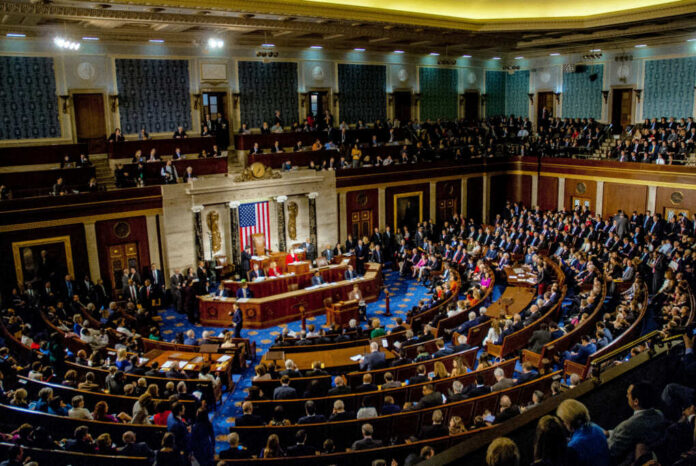
House leaders moved a 10-day extension of Section 702 of the Foreign Intelligence Surveillance Act through the chamber via unanimous consent early Friday morning, after negotiations over longer renewals fell apart. The stopgap pushed the deadline to April 30 and was designed to avoid a sudden lapse that could complicate compliance expectations for communications providers and the intelligence community. The Senate later approved the same short extension unanimously.
The late-night procedure itself became part of the story: lawmakers were still bargaining after 2 a.m., and a rare Friday Senate session underscored how little runway Congress left itself. For voters who already believe Washington runs on crisis management instead of competent planning, this episode fit the pattern. Even with Republicans controlling Congress and the White House, internal GOP divisions and Democratic resistance prevented an orderly, durable outcome.
What Section 702 does—and why it keeps colliding with the Fourth Amendment debate
Section 702, created in 2008, allows the government to collect foreign intelligence by targeting non-U.S. persons located abroad, using compelled assistance from U.S. communications companies. Because Americans communicate with people overseas, U.S. persons’ communications can be “incidentally” collected. The most controversial practice involves later queries of that data for information about Americans—often described by critics as “backdoor searches.”
Supporters argue the authority is central to tracking terrorism, cyber threats, and espionage, and they warn that gaps create real operational risk. Critics respond that incidental collection may be inevitable, but searching the resulting database for Americans’ identifiers without a warrant pushes surveillance into domestic territory. The tension is not theoretical; it goes to the core question of whether national security tools can expand quietly while constitutional protections erode through procedure.
Why the longer deals collapsed, despite unified GOP control
Reports on the negotiations show multiple proposals failing for different reasons. A longer-term House proposal that included some limits aimed at the FBI still did not include a warrant requirement for U.S. person queries, drawing opposition from Democrats and privacy advocates. Meanwhile, some Republican hardliners signaled they would not back any renewal without stronger guardrails. That left leadership without enough votes, even before considering intra-party distrust.
The Trump administration pushed for an 18-month “clean” extension, prioritizing continuity and minimal policy change. Speaker Mike Johnson and Majority Leader Steve Scalise were involved in late-night talks with the White House as the deadline neared, but that track also collapsed. Rep. Thomas Massie publicly opposed proceeding without warrant reforms, while Sen. Ron Wyden backed the brief extension despite reservations—illustrating how the pro-reform bloc cut across party lines.
What happens next as the April 30 deadline returns
The short extension buys time, but it also raises the odds of another brinkmanship cycle. If Congress continues relying on stopgaps, agencies and providers may face uncertainty about long-term legal authority, while lawmakers avoid making the harder decision: whether to lock in a warrant standard for searches involving Americans’ data. MeriTalk and other outlets cautioned that repeated short extensions can create operational disruption and political chaos.
For conservatives focused on limited government, this fight sits at an uncomfortable crossroads. Section 702 is aimed outward at foreign threats, but the domestic spillover is what fuels opposition. If Washington can’t craft a clean rule the public can understand—such as when a warrant is required, who can query, and what auditing is mandatory—public trust will keep deteriorating. The result is predictable: “security versus liberty” becomes a permanent emergency, instead of a debate with enforceable boundaries.
Sources:
House passes 10-day FISA extension after prospects long-term deal collapse
Section 702 of the Foreign Intelligence Surveillance Act
House passes 10-day FISA Section 702 extension in late-night vote
Johnson’s Newest FISA Renewal Proposal Emerges as Clock Ticks Down