After yet another attempt on President Trump’s life, even America’s closest allies are quietly signaling that U.S. political violence is becoming a dangerous new normal.
Quick Take
- King Charles III sent President Donald Trump a private note of support after a recent assassination attempt, delivered through the British Embassy in Washington.
- Reports say the shooting occurred near a high-profile U.S. event tied to the White House Correspondents’ Association dinner, prompting a Secret Service evacuation.
- Buckingham Palace confirmed the King’s U.S. state visit would proceed, despite heightened security concerns.
- U.S. officials and Republican leaders pointed to rising political hostility as a factor driving threats against Trump, though the public evidence cited remains largely rhetorical.
Private Royal Message, Public American Crisis
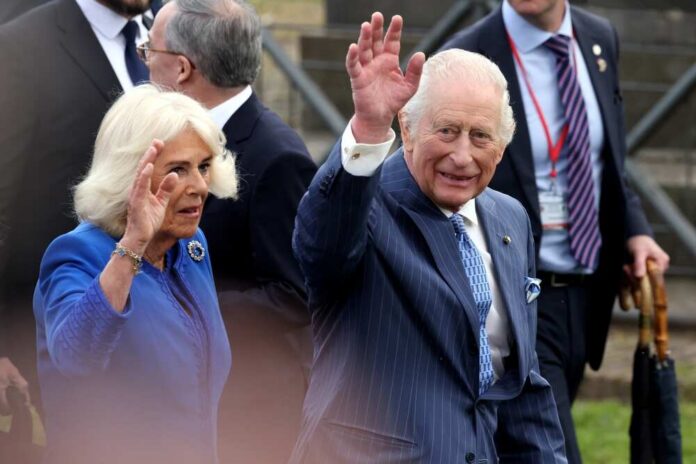
King Charles III sent President Donald Trump a private message after the latest assassination attempt, with the note delivered through the British Embassy in Washington, D.C. The contents were not released, but coverage described it as supportive and aligned with broader U.K. condemnations of political violence. Buckingham Palace also indicated the King and Queen Camilla conveyed sympathy to Trump and First Lady Melania Trump, emphasizing recovery and concern for those affected.
The limited public detail is part of the point: monarchies communicate carefully, and the palace appears intent on offering solidarity without inflaming U.S. partisan tensions. Still, the mere fact of a message following another attempt underscores how frequently American politics is now paired with security emergencies. For conservatives who already distrust elite institutions, the episode raises an uncomfortable question—why does violence keep orbiting major political events in the United States?
What’s Known About the Shooting—and What Isn’t
Reporting placed the incident around the White House Correspondents’ Association dinner in Washington, where authorities said a suspect was armed with multiple weapons and was charged in connection with an attempted assassination. Accounts described a Secret Service evacuation and said the threat was aimed at Trump and other officials. Some summaries also referenced earlier attempts, including the well-known 2024 Butler, Pennsylvania shooting, which has fueled confusion over timelines and suspects.
The conflicting references matter because they show how quickly major incidents become blurred in the news cycle, especially when the target is a polarizing figure and the country is already on edge. The research provided indicates uncertainty about the precise location and whether details from prior attempts are being mixed into the new event’s narrative. The one consistent point across sources is that authorities treated the threat as credible, serious, and close enough to disrupt a major gathering.
State Visit Proceeds as U.S.-U.K. Security Tightens
Buckingham Palace confirmed King Charles III’s state visit to the United States would proceed as planned, even after the shooting. That decision signals confidence in U.S. protective capabilities while also forcing a serious operational reality: major diplomatic events now require planning around domestic unrest. U.S. officials emphasized safety measures, and the continuing schedule suggests both governments wanted to project stability rather than allow an attacker to derail the visit.
For Americans frustrated with a government that seems unable to control the basics—public safety, civil order, and political temperature—the optics cut both ways. Proceeding with the visit can look like resilience. At the same time, it highlights that extraordinary security has become routine. When a state visit must be conducted under the shadow of repeated assassination attempts, it’s hard to argue the system is functioning normally, regardless of party.
Political Rhetoric, “Demonization,” and the Limits of the Evidence
The White House and Republican leaders used the moment to argue that relentless political vilification fuels real-world threats. House Speaker Mike Johnson, for example, publicly framed Trump as strongest in crisis, while administration messaging condemned what it called systemic demonization. Those statements speak to a broader conservative complaint: that cultural and media hostility toward America First politics has normalized extreme rhetoric. But the research provided does not include investigative findings directly tying motive to specific political actors or institutions.
KING CHARLES III CONDEMNS RECENT ASSASSINATION ATTEMPT
"Let me say with unshakeable RESOLVE: such acts of violence will *NEVER* succeed." pic.twitter.com/1a4M00UpFa
— Real America's Voice (RAV) (@RealAmVoice) April 28, 2026
That distinction matters for readers across the spectrum who believe the “deep state” and entrenched elites protect themselves first. Claims about blame will rise quickly, but the public case still depends on what investigators can prove about intent, networks, and security failures. What is already clear is the larger trend: repeated attempts against a sitting president push the country toward harsher policing, heavier security, and reduced public trust—conditions that rarely strengthen liberty or civic unity.
Sources:
King Charles III Sent Donald Trump a Note After Assassination Attempt Against the Former President
King Charles state visit to US to proceed as planned after shooting
WHCA dinner shooting live updates: suspect armed multiple guns, knives