When presidents say war was “on for tomorrow” until a few foreign princes picked up the phone, Americans are right to wonder who is really steering the ship of state.
Story Snapshot
- President Trump says he paused a scheduled strike on Iran after personal appeals from Gulf rulers.
- The administration frames the move as a brief diplomatic window, not a lasting peace shift.
- Iran tensions remain high after recent clashes around the Strait of Hormuz and the United Arab Emirates.
- The episode highlights how unelected foreign elites and Washington insiders shape decisions about war.
Trump Confirms Planned Strike And Sudden Gulf-Backed Pause
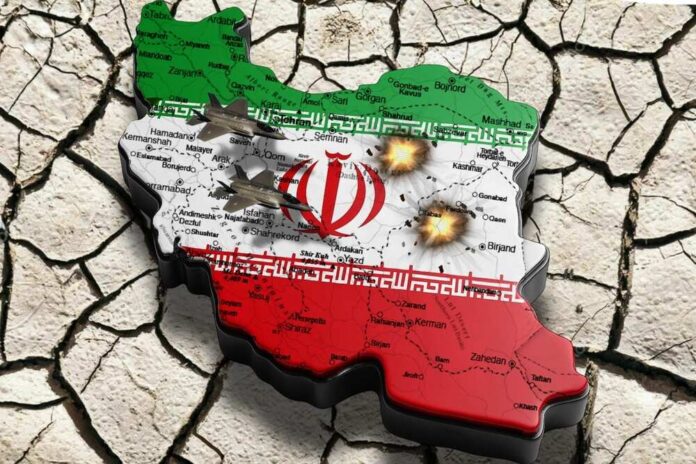
President Donald Trump publicly stated that a new United States military attack on Iran “was scheduled for tomorrow” before he decided to put it on hold, following direct appeals from key Gulf leaders in Qatar, Saudi Arabia, and the United Arab Emirates.[1] According to reporting from the announcement, these leaders urged him to give diplomacy more time, arguing that an agreement acceptable to both Washington and the wider Middle East might still be within reach.[1] Trump presented the move as responsive, not reluctant.
Trump’s description emphasized that this was a postponement, not a renunciation of force. He said Defence Secretary Pete Hegseth and senior United States military commanders had been ordered to remain ready for a “full, large scale assault” if negotiations with Tehran fail.[1] That language reinforces that the White House sees military power as leverage in an ongoing bargaining process, not simply a last resort shelved in favor of genuine de-escalation. The strike plan appears parked in the driveway, engine running.[1]
Escalating Clash Around The Strait Of Hormuz And The UAE
The pause came against a backdrop of sharp escalation in and around the Strait of Hormuz, the narrow sea lane that carries a significant share of the world’s oil shipments. United Arab Emirates authorities said Iran launched its first missile and drone attack on the country since a recent ceasefire took effect, including drones fired at a ship near the critical passage.[2] United States officials reported that commercial vessels were again moving through the strait under a new escort effort ordered by Trump.[2]
As part of that effort, described as Project Freedom, the United States military has been guiding stranded ships out of the Persian Gulf, with American warships providing protection against Iranian interference.[2] United States Central Command officials said Iranian forces launched multiple cruise missiles, drones, and small boats at vessels under this umbrella, and claimed that American defensive fire destroyed seven small Iranian boats and neutralized every threat.[2] Trump has warned in interviews that if Iran targets United States ships during these operations, its forces will be “blown off the face of the Earth.”[2]
Threats, Diplomacy, And The Question Of Who Holds The Real Power
Trump has repeatedly tied his temporary restraint to strict conditions on Iran’s behavior, including guarantees that Tehran will not obtain nuclear weapons.[1] Reporting on his broader Iran policy during earlier crises shows a pattern of pairing public talk of “deal-making” with very blunt threats that Iran could face devastating consequences if it does not yield. Analysts note that such “coercive diplomacy” is a long-standing feature of United States–Iran confrontations dating back decades, regardless of which party holds the White House.
President Trump said Monday that he's called off a U.S. attack on Iran that had been "scheduled" for Tuesday, after the United States' Gulf partners requested it to allow for continued negotiations. https://t.co/XPiDoRnvb5
— CBS News (@CBSNews) May 18, 2026
For Americans across the political spectrum, this episode sharpens a familiar concern: massive decisions about war and peace appear to turn on closed-door conversations among presidents, royal families, and national security insiders. The Gulf monarchs who reportedly swayed Trump are not accountable to United States voters, yet they now help decide whether American service members and Iranian civilians face another round of bombing.[1][2] That reality feeds the sense that an unelected “elite club,” not ordinary citizens, sets the real boundaries of policy.
What This Means For A Distrustful American Public
Crisis diplomacy with Iran often plays out partly in public and partly in classified channels, making it hard for citizens to know how imminent strikes truly were or how close a deal might be. Leaders also have incentives to exaggerate both their readiness to attack and their openness to peace, hoping to pressure adversaries and reassure domestic audiences simultaneously. When Trump says war was on the calendar, then “called off” after foreign pleas, Americans must largely take that on faith, with little verifiable detail.
For conservatives frustrated with endless Middle Eastern entanglements and liberals alarmed by unilateral uses of force, the message is similar: Washington can move the country to the brink of another major conflict without significant public debate, then credit foreign elites for pulling it back. The pattern reinforces a depressing bipartisan conclusion that has grown over years of mismanaged wars and economic strain—that the federal government answers first to strategic interests, donors, and foreign partners, and only second to the citizens asked to bear the risks and costs.
Sources:
[1] YouTube – Trump halts planned Iran attack after Gulf leaders intervene amid …
[2] YouTube – Trump says US to ‘suspend bombing and attack of Iran’ for two weeks