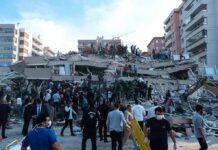
A barbaric suicide bombing during Friday prayers at a Shiite mosque in Pakistan’s capital has exposed the deadly resurgence of Islamic extremism.
Story Snapshot
- Suicide bomber killed 31 worshippers and wounded 169 at Islamabad’s Khadija Tul Kubra Mosque on February 6, 2026
- Islamic State in Pakistan claimed responsibility for the deadliest attack in the capital in over a decade
- Pakistani authorities arrested an Afghan IS mastermind and multiple facilitators following overnight raids
- Attack highlights Pakistan’s border security failures as militants operating from Afghanistan strike even the heavily-guarded capital
Islamic State Targets Religious Minority in Capital Attack
The February 6, 2026 suicide bombing at Khadija Tul Kubra Mosque in southeastern Islamabad killed 31 Shiite worshippers and injured 169 others during Friday prayers. Islamic State in Pakistan claimed responsibility through its Amaq News Agency, marking the deadliest suicide attack in Pakistan’s capital since the 2008 Marriott Hotel bombing that claimed 63 lives. The attack targeted Pakistan’s Shiite minority, comprising approximately 20 percent of the nation’s 241 million predominantly Sunni Muslim population, reflecting the extremist group’s deliberate sectarian strategy.
Swift Arrests Follow Coordinated Investigation
Pakistani security forces conducted overnight raids across Islamabad and northwestern Pakistan, arresting an alleged Afghan national with Islamic State connections accused of masterminding the massacre. Authorities identified the bomber and arrested multiple facilitators, including the attacker’s brother, mother, and other relatives. One police officer was killed during the arrest operations. Prime Minister Shehbaz Sharif vowed perpetrators would face justice, while Foreign Minister Ishaq Dar condemned the attack as a heinous crime against humanity and a blatant violation of Islamic principles.
Watch:
https://www.youtube.com/watch?v=538tMrOHwU4
Border Security Crisis Exposes Government Weakness
Pakistan’s Defense Minister Khawaja Mohammad Asif acknowledged the attack signals that militants operating from Afghanistan can strike even in the heavily-secured capital, typically protected by extensive military and police presence. This admission reveals a fundamental failure in border security and counterterrorism strategy. The Taliban government in Afghanistan condemned the bombing but denied harboring militants, creating diplomatic friction. Pakistan has experienced a surge in militant attacks, including a November 2025 suicide bombing outside an Islamabad court that killed 12 people, demonstrating the inadequacy of current security measures.
Sectarian Violence Pattern Threatens Religious Freedom
The Islamic State group has systematically targeted Pakistan’s Shiite minority, viewing them as legitimate targets and recruiting grounds for Shiite militias fighting IS in Syria. In 2022, IS claimed responsibility for a Peshawar mosque bombing that killed 56 Shiites and wounded 194. The Tehrik-e-Taliban Pakistan, allied with Afghanistan’s Taliban, has also perpetrated sectarian attacks. This pattern of violence against religious minorities undermines fundamental freedoms that Americans hold sacred. When governments fail to protect citizens’ right to worship freely without fear of massacre, they betray their most basic responsibility. Pakistan’s Shiite community now faces heightened vulnerability, with families grieving 31 deaths and hospitals treating critically injured victims.
Suicide Bomb Rocks Pakistan's Capital, Over 30 Dead & 169 Wounded https://t.co/cYXrC4ghYR
— zerohedge (@zerohedge) February 7, 2026
The international community, including the United States, European Union, Russia, and United Nations, condemned the attack and called for enhanced counterterrorism cooperation. However, condemnations without actionable border security measures and aggressive counterterrorism operations amount to empty rhetoric. Pakistan must confront the reality that militants exploit porous borders and safe havens in Afghanistan to execute devastating attacks. More than 2,000 mourners gathered at the mosque on February 7 for funerals, a somber reminder that weak border enforcement and inadequate security infrastructure cost innocent lives. Until Pakistan and Afghanistan cooperate effectively to eliminate terrorist safe havens, religious minorities will remain targets for extremists who despise freedom and humanity.
Sources:
Islamic State Affiliate Claims Suicide Bombing That Killed 31 at Shiite Mosque in Pakistani Capital
2026 Islamabad Suicide Bombing
Pakistan: Guterres Condemns Deadly Suicide Bombing at Islamabad Mosque