Democrats who spent years preaching “saving democracy” are now staging a rival rally to President Trump’s State of the Union—because showing up to the people’s business has become optional.
Story Snapshot
- Sen. Adam Schiff says he will skip President Trump’s Feb. 24, 2026 State of the Union address to speak at a National Mall counter-event.
- The alternative program is billed as the “People’s State of the Union” and is organized by progressive groups MoveOn and MeidasTouch.
- Reports indicate roughly 12 to about 20 Democratic lawmakers had signaled plans to miss the address as of mid-to-late February, with organizers expecting the number to grow.
- House Democratic leadership is split: some plan to attend the speech with “silent defiance,” while others choose the outside rally.
Schiff’s boycott and the competing “People’s State of the Union”
Sen. Adam Schiff of California plans to boycott President Donald Trump’s State of the Union address scheduled for February 24, 2026, opting instead to speak at a counter-event on the National Mall. The outside program is promoted as the “People’s State of the Union” and is being organized by MoveOn and MeidasTouch. The stated purpose is to elevate voices the organizers say are harmed by Trump administration policies, particularly on immigration enforcement.
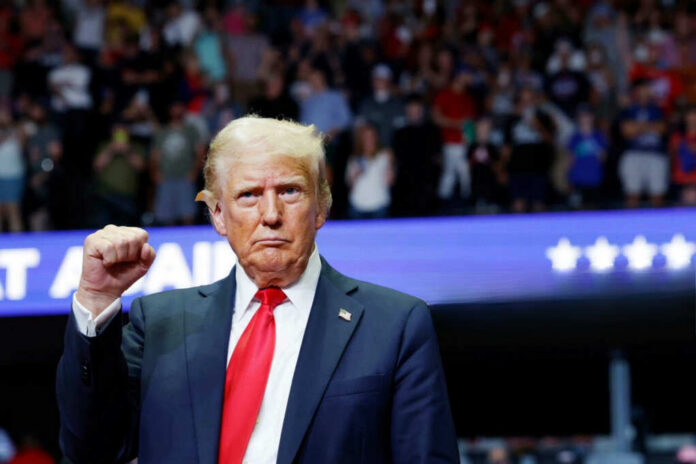
The decision lands amid a wider Democratic debate about how to handle Trump’s return to the national spotlight in the House chamber. Some Democrats are skipping the address entirely; others are attending while signaling disapproval. That split matters because the State of the Union is not a campaign rally—it is a constitutionally rooted moment where the executive branch reports to Congress and the public, with the people’s elected representatives physically present to witness it.
How many Democrats are skipping—and what that says about party strategy
Reporting in the days leading up to the speech described a growing list of Democratic members choosing the counter-event or otherwise missing the address, with counts ranging from at least a dozen to around twenty. The list has included senators and House members, and it has highlighted how Democrats are trying multiple tactics at once: deny Trump a unified audience, feed media attention toward an alternative program, and avoid in-chamber scenes that could backfire.
House Minority Leader Hakeem Jeffries has indicated he plans to attend the State of the Union, framing the House chamber as “our house” and leaving members to make their own decisions. That approach contrasts with lawmakers who argue that attending lends legitimacy to a speech they expect to be filled with political claims they reject. The party’s internal divide is visible: leadership signaling institutional presence, while the activist wing prioritizes protest optics outside the Capitol.
From heckling to rallies: a shift shaped by recent SOTU flashpoints
This isn’t the first time Democrats have used disruption or absence to answer a Trump address, but the approach is evolving. Prior episodes included heckling, signs, and walkouts, producing headlines that sometimes focused more on the protest than on the substance of the speech. Coverage of the current boycott points to that history as a reason some Democrats prefer an external event that can be tightly produced, message-disciplined, and built for social media amplification.
One practical reality is that counter-programming competes for attention but does not directly challenge the speech’s content inside the chamber, where the president is addressing the full Congress, the Supreme Court, senior military leadership, and invited guests. That tradeoff is central: an outside rally offers friendly crowds and curated messaging, while attendance preserves the traditional role of Congress as a co-equal branch hearing the president’s report in person.
What’s known, what isn’t, and why it matters for 2026 governance
The available reporting establishes the basics—Schiff’s plan, the organizers, the timing, and an estimated roster size—but key details remain fluid. The number of Democratic absences could still change as February 24 approaches. Another uncertainty is how much national media coverage the alternative event will draw compared with the formal address. With limited confirmed specifics about programming and speakers beyond publicized names, the hard facts remain the who, where, and when.
For voters frustrated by years of political theater, the core issue is less about one senator’s schedule and more about institutional seriousness. Congress has tools to oppose a president—legislation, oversight, budgeting, and open debate. Skipping a major constitutional event in favor of an activist-organized rally may energize a base, but it also reinforces a pattern where performance replaces governance. The result is more noise, less accountability, and deeper polarization.
Sources:
epstein-survivor-who-voted-for-trump-will-be-at-his-state-of-the-union-address
a-growing-number-of-democrats-are-skipping-trumps-state-of-the-union-address