Washington’s DHS shutdown chaos is now sending immigration agents into America’s airports—raising hard questions about who really controls the federal workforce when Congress refuses to fund it.
Quick Take
- President Trump ordered ICE agents to support airport operations as TSA staffing gaps worsened during a partial DHS shutdown.
- Thousands of TSA workers reportedly called out or left their jobs while working without pay, fueling long lines and pressure from airport leaders to end the standoff.
- ICE agents are generally being used for entry-point security and ID checks, not primary passenger screening—though routine immigration enforcement remains possible.
- Critics argue the move blurs missions and invites civil-liberties problems; supporters view it as an executive workaround to keep airports moving.
Why ICE Is Showing Up at Airports During a DHS Shutdown
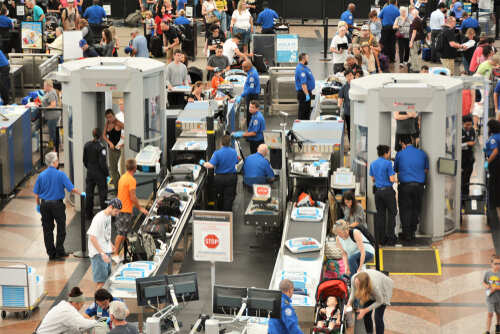
President Trump announced over the March 21 weekend that ICE agents would be deployed to airports to help stabilize operations as TSA staffing suffered under a partial DHS shutdown that began in February 2026. Reporting describes TSA’s strain in concrete terms: more than 3,250 call-outs on a Saturday and roughly 400 separations, with unpaid workers resigning or calling out sick. The administration framed the deployment as using funded personnel to protect travelers amid growing disruption.
Tom Homan, serving as the White House border czar, said the plan was to place ICE at airport entry and exit points and help with ID checks so TSA officers could focus on screening. As of March 24, ICE agents had been deployed—unmasked—to at least 14 major airports, according to reporting that also noted more than 100 airport executives urging Congress to resolve the funding impasse. No confirmed reports of mass arrest operations at airports were cited in the available coverage.
What the Administration Says ICE Is Doing Versus What Critics Fear
The operational distinction matters: TSA’s job is aviation security screening, while ICE’s mission is immigration enforcement. Administration descriptions emphasize ICE supporting site security and identification functions rather than running checkpoints. That said, the same reporting acknowledges ICE agents have broad authority to conduct immigration enforcement, and Homan indicated “routine” arrests could occur. For families already stressed by inflation, high travel costs, and war-era uncertainty, the last thing they want is more confusion at airports.
Civil-liberties groups argue the deployment is the opposite of the reforms Democrats demanded during the shutdown fight, including accountability and changes to ICE practices. Those concerns are amplified by the simple reality that TSA screening is a specialized task and airport environments are already tense during staffing shortfalls. The strongest factual point critics can lean on from the reporting is mission mismatch: even if ICE isn’t “screening,” its presence can reshape traveler behavior and raise questions about scope, training, and oversight.
The Political Standoff Behind the Lines at Security
The shutdown fight is also about leverage. Reporting ties the February lapse to Democrats withholding funding absent reforms related to ICE practices, while the White House points to operational breakdowns as proof the standoff is endangering normal life. In that sense, the ICE move functions as both a pressure tactic and a stopgap. It forces Congress to confront a basic reality: when federal agencies go unpaid, the executive branch will reassign what it can to keep essential systems running.
Airport leaders urging Congress to end the standoff underscores that airports view stable TSA staffing—not improvisation—as the long-term fix. Conservatives who are skeptical of “government shutdown theater” should note what this episode reveals: a modern DHS is so sprawling that political dysfunction in Washington can spill directly into daily life, from missed flights to heightened enforcement anxieties. The reporting does not provide full detail on which airports saw the worst delays, limiting precision on local impacts.
The Bigger Context: Enforcement Expansion and a Constitution-Level Question
The ICE-at-airports story lands inside a broader second-term enforcement push. Data cited in the research indicates interior deportations rose 4.6 times over the first nine months examined, and detention capacity expanded to more than 60,000 beds after funding measures. Separately, legal-analysis reporting highlights longstanding concerns about warrantless actions and unlawful stops tied to immigration enforcement agencies. Those facts don’t prove wrongdoing in the airport deployment itself, but they explain why the public reads this as more than a staffing patch.
The Morning Briefing: ICE at the Airports Is One of Trump's More Brilliant Moveshttps://t.co/0hTbqwu0YA
— PJ Media Updates (@PJMediaUpdates) March 24, 2026
For conservatives, two principles collide here. The first is an expectation of order: safe airports, functioning government, and consequences for illegal immigration. The second is distrust of unchecked federal power—especially when agencies are repurposed during a funding crisis. The available reporting supports a narrow conclusion: ICE is being used to backfill gaps created by a shutdown-driven workforce collapse, not to replace TSA screening wholesale. Whether that’s “brilliant” depends on what Congress does next.
Sources:
ICE officers begin assisting TSA as shutdown frustrates …
ICE agents deployed to airports amid TSA staffing shortages
Trump threatens to send ICE into airports amid funding row