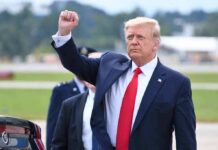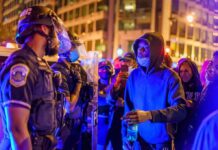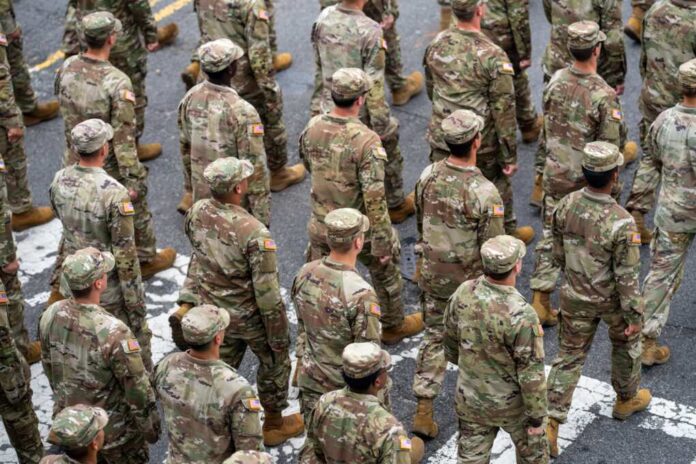
On December 31, 2025, President Trump announced the strategic withdrawal of National Guard troops from Chicago, Los Angeles, and Portland, ending a contentious federal deployment for urban crime control. This de-escalation, however, comes with a stark, conditional warning: the troops could be re-deployed if crime rates in the cities spike. The decision marks a significant turning point in the high-stakes legal and political disputes over the use of federal forces in domestic law enforcement, raising critical questions about states’ rights, executive power, and the future of urban security.
Story Highlights
- Trump withdraws National Guard from major cities with a conditional warning.
- Federal withdrawal marks a turning point in legal disputes over domestic troop use.
- Withdrawal responds to legal challenges and local government resistance.
- Potential for re-deployment looms if crime rates rise, raising concerns.
Trump’s Strategic Withdrawal
On December 31, 2025, President Trump announced the withdrawal of National Guard troops from Chicago, Los Angeles, and Portland. This decision comes after high-stakes legal challenges against the federal deployment of troops for urban crime control. The withdrawal is seen as a strategic de-escalation amid ongoing legal disputes over the use of federal forces in domestic law enforcement.
Trump’s announcement includes a conditional warning that the National Guard “could come back” if crime rates increase. This stipulation marks a potential turning point, differentiating it from previous interventions by allowing for reversibility based on crime metrics. Trump’s approach seeks to pressure local governments to address crime while asserting federal authority.
Trump announces the removal of National Guard from Chicago, L.A., and Portland, but says the Federal Government could come back in a much different and stronger form, and that it is only a question of how long. pic.twitter.com/Cw19OxOpKf
— elENoCHle (@NewsBlast17) December 31, 2025
Legal and Political Implications
The use of the National Guard for law enforcement purposes has been contentious, rooted in the Insurrection Act of 1807. Trump’s previous deployment in 2020 faced legal challenges over the Posse Comitatus Act, which limits military involvement in civilian matters. These deployments, initiated amid rising urban crime post-2020 unrest, led to lawsuits questioning federal overreach without state consent.
Local governments in Democratic-led cities have resisted federal involvement, prioritizing local control and perceiving the deployments as politicized. As the federal executive holds deployment power, tension arises between national security claims and states’ rights. Trump’s decision reflects a tactical retreat from court battles, preserving federal options without capitulation.
Impact and Future Prospects
In the short term, the withdrawal may ease local tensions but risks crime spikes that could prompt re-intervention. Long-term, it sets a precedent for conditional federal aid, potentially expanding executive leverage over cities. Urban residents in high-crime areas face potential security gaps, while local police gain autonomy but strain resources.
The withdrawal cuts federal costs but may heighten community fears if crime rises. Politically, it bolsters Trump’s tough-on-crime image while fueling partisan divides. This event strengthens debates on federalism in law enforcement, influencing future military-civilian integrations and state-federal funding dynamics. Legal analysts view this as a tactical retreat, preserving federal options, while constitutional scholars highlight Insurrection Act ambiguities.
Watch the report: Trump says National Guard will be removed from Chicago, Los Angeles and Portland
Sources:
- Trump says he is withdrawing National Guard troops from some US cities
- Trump withdraws National Guard from major cities, warns of return – News9.com
- Trump issues warning as National Guard troops withdrawn from US cities | US News
- Trump ends National Guard deployment in 3 cities after Supreme Court loss – POLITICO