President Trump said a privately funded granite helipad is rising on the South Lawn as the White House fast-tracks a broader construction push.
Story Highlights
- Trump says Sikorsky is funding a new South Lawn helipad at no taxpayer cost.
- The pad uses four-inch granite that Trump claims is stronger than concrete.
- Construction began in late June and was accelerated to meet event deadlines.
- The East Wing ballroom is framed as a secure, permanent venue for state events.
Trump Describes A Private-Funded Helipad And Why It Is Needed
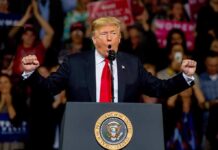
President Trump told reporters the White House is building a helipad on the South Lawn, funded by Sikorsky, to solve landing damage linked to newer helicopters. He said the project will not use taxpayer money and will support Marine One and official arrivals. Reporters observed active work at the site during his tour. Trump argued the pad would help prevent lawn repairs and improve safety and reliability for landings during high-profile visits.
Trump highlighted the helipad surface as granite from California. He described it as four inches thick and far stronger than standard concrete, adding colorful claims about its long life and resistance to cracking. Those durability remarks come from Trump’s own descriptions rather than an independent engineering report in the public record provided here. Still, he presented the material choice as a practical fix to rotor wash and weather wear that have strained the South Lawn during recent administrations.
Construction Pace, Timeline Shifts, And Reported Cost Gaps
Coverage said helipad construction started June 29 and continued around the clock to meet a tight deadline tied to a state visit, with an official approving added funds for speed. Later reports said parts of the pad were torn up and rebuilt, showing the schedule and plan changed after work began. Trump estimated a $5 million to $6 million helipad price, but another report cited records suggesting a higher combined cost for the pad and related work.
The evolving timeline fits a pattern seen in large, security-linked White House projects, where plan changes are common once crews open the ground. Work that touches secure routes, utilities, or air operations can force redesigns on the fly. That can drive higher costs and visible rework. While such changes draw attention, they are not unusual for complex federal sites under strict protection rules and tight ceremonial schedules.
Ballroom Aims To Create A Permanent, Secure State Event Space
The White House said the new ballroom is meant to create a permanent, secure venue for state events and reduce the need for temporary tents. The announcement emphasized preserving the building’s historical significance while meeting modern security and logistical needs. Initial plans targeted construction starting in 2025 with completion within Trump’s term, and later coverage placed completion in the summer of 2028, pointing to a defined but extended window for delivery.
With Iran diplomacy stalled, financial markets uneasy, and his approval rating at another low point, US President Donald Trump led reporters on a tour of White House construction projects he hopes will cement his legacy. https://t.co/QC7FIin62n
— The Jerusalem Post (@Jerusalem_Post) August 19, 2026
Trump said the ballroom effort is coordinated with the United States Secret Service and the military, signaling that security agencies are shaping the design and use cases. Public reporting also shows the project’s scope and cost have grown, with estimates moving well beyond the early $200 million figure and legal fights slowing progress. That mix of private donations, shifting budgets, and court orders underscores how modern White House builds reflect both security demands and political friction.
Why This Matters For Voters Who Feel The System Is Off Track
The helipad and ballroom projects show how power, process, and money intersect in Washington. Trump says private funds protect taxpayers, yet donor roles and changing cost figures invite hard questions about influence and transparency. Supporters may see faster operations, safer ceremonies, and fewer lawn repairs. Critics may see moving targets on costs and timelines. Both sides can agree that major government work should be clear on who pays, who builds, and how choices serve the public interest.
Sources:
youtube.com, people.com, whitehouse.gov, bbc.com, cnn.com, apnews.com, abcnews.com, presidency.ucsb.edu, twz.com, nbcwashington.com, cnbc.com