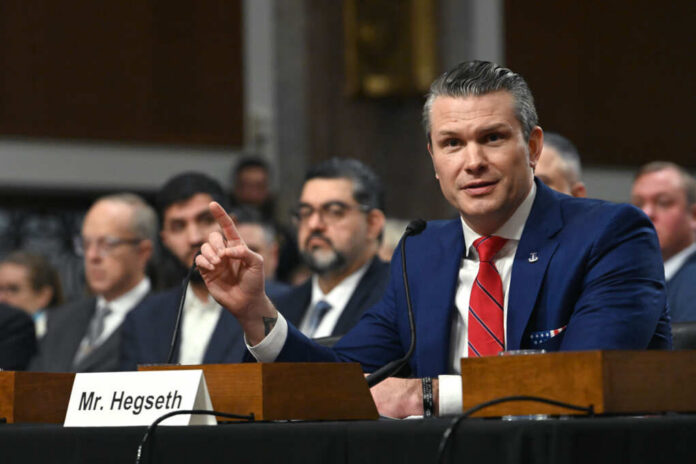
Hegseth says more strikes are coming for cartel-linked traffickers, and critics are already shouting “illegal.”
Story Highlights
- Defense chief Pete Hegseth says President Trump can order force to stop cartel boats and gangs [1].
- A U.S. strike on a Venezuela-linked vessel and a raid on Tren de Aragua marked a hard turn [2][7].
- Operation Southern Spear targets drug routes with drones and robots across Latin America [3].
- Opponents claim the killings may be unlawful and demand proof of the targets’ drug ties [5].
Hegseth’s Pledge To Hit Cartel Networks At Sea And On Shore
Defense Secretary Pete Hegseth told audiences that President Trump has the authority to use force to defend Americans from cartel operations. He set a clear rule for targets at sea. He said anyone working for a listed terrorist group who brings drugs by boat will be found and sunk [1]. His comments match recent actions. The United States has moved from warnings to strikes against suspected traffickers tied to Venezuela and the violent Tren de Aragua network [1][2].
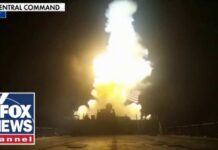
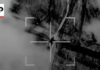
Officials described a September 2 interdiction against a vessel tracked from Venezuela. Video showed the boat ignite after the strike, and officials reported 11 deaths on board [2]. Hegseth later confirmed a joint effort with Venezuelan authorities against Tren de Aragua, saying the operation killed the gang’s leader, Niño Guerrero [7]. The message from Washington is simple. Stop the poison before it reaches U.S. shores, and take down the gangs that run it.
Operation Southern Spear And Senate Backing
Hegseth unveiled Operation Southern Spear in mid-November 2025. The mission uses robotics and autonomous systems to find and hit drug traffickers across the region [3]. The approach blends intelligence, drones, and maritime tracking to break up smuggling lanes. The United States Senate twice rejected measures that would have limited the president’s authority to continue these operations. Those votes kept the campaign on firm legal footing at home and signaled resolve to allies and foes [3].
Trump officials frame the push as national defense. They say drug cartels function like terror networks that harm Americans every day. That framing builds on two decades of counterterror lessons. It puts speed, precision, and deterrence ahead of slow, reactive law enforcement on the high seas. Supporters argue the cost of hesitation is measured in overdoses, crime, and broken families. They see fast action as basic self-defense backed by constitutional duty [1][3].
Challenges: Proof, Fog Of War, And Lawfare
Critics counter that the government has not shared the raw intelligence used to pick targets. They want cargo logs, intercepts, or on-scene evidence. Reporters and legal experts also raised questions after Hegseth said the “fog of war” blocked visual confirmation of survivors during a second strike in one incident [5]. Skeptics claim that gap opens the door to charges of unlawful killing. They argue any force outside clear battlefields needs fuller proof before and after action [5].
The public record so far is mixed. On one side, U.S. officials released strike videos, identified targets, and cited designations and gang links [2][7]. On the other, they have not published the full intelligence packets that tied specific boats or people to drug loads in real time [3]. That vacuum lets hostile governments and activist groups paint the mission as extrajudicial. It also fuels a media cycle that prefers doubt over the dry details of maritime tracking and signals work [5].
What Comes Next For Cartels, Congress, And U.S. Credibility
Hegseth has signaled more strikes in Latin America if cartels keep pushing drugs toward U.S. shores [4]. Expect more maritime hits and partner-led raids backed by U.S. intelligence. To blunt legal attacks, the administration can release declassified slices of proof after each action. Limited disclosures that do not burn sources can still show the who, what, and where. That helps the public weigh claims from hostile regimes against verifiable facts [3][4].
🚨 THE KINETIC CRACKDOWN: U.S. MILITARY STRIKE ELIMINATES TREN DE ARAGUA GANG LEADER IN JOINT OPERATION WITH VENEZUELA! 🚨
A thunderous, unprecedented law-enforcement and military shockwave has just torn through South America! In an extraordinary, high-stakes announcement from… pic.twitter.com/NZNCPRRWaG
— Boardroom Patriot (@nwmsound) June 15, 2026
For conservatives, the stakes are simple. Secure the border, choke off fentanyl and cocaine at the source, and stop transnational gangs that erode safety and family life. Congress already refused to tie the president’s hands, so the policy lane is open [3]. The measure of success will be fewer overdose deaths, weaker cartel routes, and safer streets. If the White House pairs firm action with clear evidence, it can win the legal fight and the narrative battle at the same time.
Sources:
[1] Web – Hegseth Says More US Strikes in Latin America Could Follow Venezuela …
[2] Web – Hegseth defends strikes on alleged cartel boats, says Trump can …
[3] Web – A timeline of U.S. military escalation against Venezuela leading to …
[4] Web – United States strikes on alleged drug traffickers during Operation …
[5] Web – Hegseth signals more U.S. strikes in Latin America | Miami Herald
[7] Web – “I saw the best of America”: Defense Secretary Pete Hegseth praised …