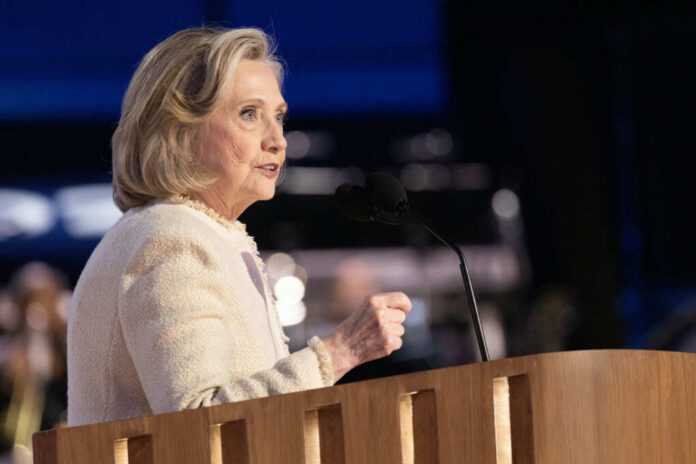
Hillary Clinton’s combative appearance at the Munich Security Conference exposed the widening rift between leftist elites and the resurgent conservative movement now reshaping Western politics.
Story Highlights
- Clinton clashed with Czech Deputy PM Petr Macinka who defended President Trump’s policies as a necessary correction to woke overreach and immigration chaos
- The former Secretary of State publicly admitted U.S. immigration policy “went too far,” a rare concession validating conservative criticisms
- Macinka praised Trump-style border enforcement, including Poland’s “big and beautiful fence,” while Clinton visibly struggled to respond
- The heated exchange highlighted the growing alignment between European conservatives and Trump’s America First agenda
Clinton Confronted on Immigration Failures
Hillary Clinton faced an uncomfortable confrontation at the Munich Security Conference on February 14, 2026, when Czech Deputy Prime Minister Petr Macinka defended President Trump’s policies during a panel discussion on the “state of the West.” Macinka attributed Trump’s approach to justified backlash against woke ideologies, gender theories, cancel culture, and excessive immigration. Clinton responded with mockery and repeated interruptions, but ultimately conceded that U.S. immigration policy “went too far”—a stunning admission that validates years of conservative warnings about open border policies. This rare acknowledgment from a Democratic heavyweight underscores how the Biden administration’s immigration disaster has become politically indefensible.
European Conservative Defends Trump Vision
Macinka’s spirited defense of Trump policies showcased the growing alliance between American conservatives and their European counterparts who reject globalist agendas. The Czech leader invoked Trump-style rhetoric by praising Poland’s border fence—a “big and beautiful” barrier that effectively stopped illegal crossings from Belarus. His argument that open borders cannot coexist with welfare states resonated as common-sense policy, contrasting sharply with Clinton’s elitist dismissiveness. This exchange demonstrated how Trump’s message of national sovereignty and controlled immigration has gained traction among leaders who prioritize their citizens’ security and economic stability over progressive virtue signaling.
West-West Divide Exposes Elite Disconnect
The Munich conference panel, focused on addressing the “West-West Divide,” inadvertently highlighted the disconnect between entrenched political elites like Clinton and the populist movements gaining ground across democracies. Clinton criticized Trump’s impact on America and the world, yet struggled to defend the failed policies of her own political era. The exchange revealed how Democratic leadership remains out of touch with citizens frustrated by uncontrolled immigration, cultural extremism, and the erosion of traditional values. Macinka’s visible rattling of Clinton demonstrated that Trump’s coalition extends beyond American borders, representing a broader rejection of the globalist consensus that dominated Western politics for decades.
Transatlantic Conservative Momentum Builds
This Munich confrontation signals a pivotal shift in transatlantic relations under Trump’s second administration. European conservatives increasingly view Trump not as an aberration but as a corrective force against progressive overreach that has destabilized communities through mass migration and cultural radicalism. Clinton’s admission on immigration—paired with her inability to counter Macinka’s arguments—energizes Trump’s base by validating their long-standing concerns about border security and national identity. The exchange demonstrates that the America First agenda resonates globally among leaders prioritizing citizen welfare over elite internationalist projects, reshaping NATO dynamics and Western cooperation around shared conservative principles rather than globalist mandates.
The February 14 panel concluded without resolution, but its impact extends beyond the conference hall. Clinton’s stumbling performance and candid immigration admission provide ammunition for conservatives pointing out how Democratic policies have failed American families. As Trump’s administration reasserts American sovereignty and traditional values, the alignment with European conservatives like Macinka suggests a durable coalition capable of challenging the leftist establishment that dominated Western politics for too long. This moment captures the broader political realignment where common-sense governance and national interest trump globalist ideology.
Sources:
Hillary Clinton and Trump discussed at Munich Security Conference – The Independent
Hillary Clinton clashes with Czech leader – AOL