Jimmy Carter’s disastrous handling of the Iran hostage crisis not only destroyed his presidency but also enabled the rise of radical Islamic fundamentalism that continues to threaten American interests and global stability decades later.
Story Overview
- Iranian militants held 52 Americans hostage for 444 days after seizing the U.S. Embassy in Tehran on November 4, 1979
- Carter’s weak response and failed rescue attempt emboldened Ayatollah Khomeini’s theocratic regime and humiliated America on the world stage
- The crisis ended minutes after Ronald Reagan’s inauguration, contributing to Carter’s devastating 1980 election defeat
- Carter’s flawed policies toward the Shah of Iran created a power vacuum that radical Islamists exploited to establish an anti-American theocracy
Carter’s Miscalculations Paved the Way for Disaster
President Carter’s naïve approach to Iran began with his misguided pressure campaign against Shah Mohammad Reza Pahlavi, America’s longtime ally. Despite calling Iran an “island of stability” in 1977, Carter pushed the Shah to implement democratic reforms and human rights improvements. These demands weakened the Shah’s authority at precisely the moment when Islamic revolutionary forces were gaining strength. When protests erupted in 1978 over the SAVAK secret police, the Shah’s government crumbled without decisive American support. Carter’s idealistic policies ignored the harsh reality that removing a flawed ally often creates opportunities for far worse enemies.
The Embassy Seizure and America’s Humiliation
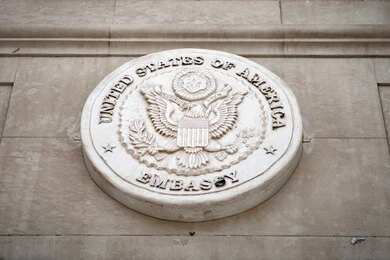
On November 4, 1979, Iranian militants stormed the U.S. Embassy in Tehran, seizing 66 Americans as hostages. The attack came three weeks after Carter admitted the exiled Shah into the United States for cancer treatment, despite State Department warnings about potential backlash. Ayatollah Khomeini, who had branded America the “Great Satan,” quickly endorsed the hostage-takers to consolidate his revolutionary regime’s power. While 14 hostages were released early, 52 Americans remained captive for 444 agonizing days. Carter’s response prioritized diplomacy and restraint over American strength, sending a dangerous message of weakness to our adversaries worldwide.
Operation Eagle Claw: Failure Compounded by Incompetence
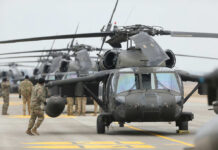
Carter’s authorization of a military rescue mission on April 24, 1980, ended in catastrophic failure. Operation Eagle Claw resulted in eight American servicemen dead after helicopters malfunctioned in the Iranian desert. The botched rescue attempt further embarrassed the United States and demonstrated the hollowing out of American military readiness that occurred during Carter’s administration. Secretary of State Cyrus Vance, who had opposed the mission, resigned in protest. The failure strengthened Khomeini’s position domestically while Carter’s approval ratings plummeted. This debacle exemplified how Carter’s indecisiveness and poor leadership endangered American lives and national security.
Reagan’s Strength Ends the Crisis
The hostages remained imprisoned throughout Carter’s final year in office as negotiations dragged on through Algerian intermediaries. Iran finally released all 52 hostages on January 20, 1981, mere minutes after Ronald Reagan took the oath of office as president. The timing was no coincidence. Iran’s radical regime understood that Reagan represented a fundamentally different approach to American power. The crisis dominated the 1980 presidential campaign and contributed significantly to Carter’s landslide defeat. Reagan carried 44 states, demonstrating Americans’ rejection of Carter’s weakness. The hostage crisis destroyed Carter’s presidency and taught conservatives a vital lesson about the consequences of projecting weakness on the world stage.
Jimmy Carter: The Father of the Islamic Revolutionhttps://t.co/xn5ivbIb9o
— gtslade (@gtslade) March 5, 2026
The Iran hostage crisis established dangerous precedents that continue affecting American foreign policy. Carter’s approach emboldened Islamic extremists and severed U.S.-Iran relations, leading to decades of sanctions and nuclear standoffs. The crisis heightened anti-American sentiment throughout the Middle East while demonstrating that holding Americans hostage could achieve political objectives without serious consequences. The theocratic regime that emerged from the revolution continues threatening regional stability, supporting terrorism, and pursuing nuclear weapons. Carter’s failure to support the Shah created a vacuum filled by radical Islam, fundamentally reshaping Middle East dynamics in ways that continue threatening American interests and allies like Israel today.
Sources:
Jimmy Carter and the Iran Hostage Crisis – Bill of Rights Institute
The Iran Hostage Crisis – National Archives
Jimmy Carter, Iran, and the Canadian Caper – White House Historical Association
Iran Hostage Crisis – Wikipedia