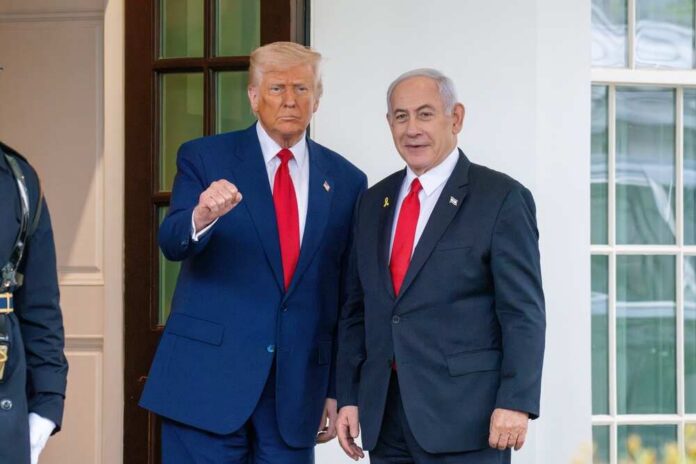
Trump says Israel and Hezbollah will pause attacks for three weeks, testing whether tough diplomacy can cool a dangerous border fight without conceding ground to Iran’s proxy.
Story Snapshot
- Trump announced a three-week extension of a ceasefire between Israel and Lebanon, covering Hezbollah rocket and missile fire [1][2].
- The White House framed the step as a concrete pause to pursue a longer-term deal [1].
- Regional reports describe a de-escalation signal but note on-the-ground verification remains developing [3].
- Wording suggests a provisional arrangement, not a signed pact, leaving enforcement and reciprocity as key tests [2][3].
Trump Announces Three-Week Extension To Halt Cross-Border Fire
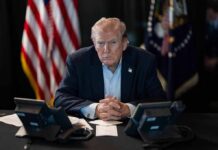
President Donald Trump told reporters that Israel and Lebanon would extend their ceasefire for three weeks, characterizing it as “no more firing,” and an effort to buy space for a longer-term understanding. Trump emphasized the goal of dialing back hostilities between Israel and Hezbollah while work continues toward broader stability. The remarks present the pause as an extension of existing deconfliction rather than a brand-new framework, suggesting continuity with recent efforts to tamp down border exchanges [1][2].
White House framing centered on near-term quiet to create diplomatic breathing room. Trump’s description cast the move as an agreed halt to attacks, not a vague aspiration, underscoring accountability if rockets or raids resume. The stated timeline provides a measurable benchmark for success or breakdown. The administration linked the ceasefire window to parallel talks aimed at a more durable arrangement, aligning with a peace-through-strength posture that expects militants to hold fire while diplomacy proceeds [1].
Verification Challenges And Conditional Signals From The Field
Regional reporting indicated public claims of de-escalation, while acknowledging the need for on-the-ground confirmation as the pause unfolds. Outlets noted Israeli leadership signaled scaling back certain operations, complementing the ceasefire narrative. However, statements from Lebanese and Hezbollah-linked channels were not presented as a formal, signed pact, reflecting a common pattern where militias preserve ambiguity to avoid appearing to yield. This asymmetry makes early verification critical and prevents premature conclusions about permanence [2][3].
Analysts observing these announcement-driven pauses warn that initial political messaging can outpace details on enforcement and reciprocity. Trump’s language, though assertive, still reads as a time-bound commitment meant to stop immediate exchanges of fire while longer negotiations continue. That structure elevates the importance of monitoring rocket launches, cross-border raids, and targeted strikes to assess compliance. Any significant breach would quickly test the credibility of the pause and the leverage behind the administration’s approach [2][3].
Strategic Stakes For U.S. Policy, Israel’s Security, And Deterrence
For the United States, a verifiable pause without concessions to Hezbollah would mark a diplomatic win that supports Israel’s security while avoiding a wider regional spiral. A calmer border reduces risks to Israeli towns in the north and constrains Iran’s proxy strategy, provided deterrence holds. Success would also reinforce the administration’s broader push to counter Iranian influence and restore stability without greenlighting endless escalation that drains allies and threatens energy routes [1][3].
JUST IN: President Trump had a call with the Israeli PM, and no more troops will be going to Israel.
Hezbollah and Israel have exchanged cross-border attacks for months. A sustained halt to hostilities from all sides could help reduce tensions and create an opportunity for a… pic.twitter.com/l3FpCrvaQF
— Donald J Trump Posts TruthSocial (@TruthTrumpPost) June 1, 2026
For conservatives, the test is straightforward: does the ceasefire reduce attacks on Israelis, deter Hezbollah, and avoid handing propaganda victories to Tehran’s proxies? The answer depends on enforcement. If three quiet weeks materialize, the pause validates peace through strength and disciplined pressure. If Hezbollah fires anyway, the administration will face a choice—tighten consequences swiftly or risk a perception of empty declarations. Either way, transparency about breaches and clear red lines will be essential to protect American interests and Israel’s security [2][3].
What To Watch Next: Compliance, Messaging, And Next-Step Diplomacy
First, watch for measurable quiet along the Israel-Lebanon frontier during the stated three-week period. Second, track synchronized messaging: Israeli confirmations of reduced operations, and whether Hezbollah-linked outlets explicitly restrain or attempt to blur responsibility for any launches. Third, expect the White House to pursue follow-on talks aimed at a more durable security architecture. Concrete deliverables—buffer arrangements, deconfliction hotlines, or verifiable stand-off distances—would indicate the pause is maturing into structure [1][3].
Americans deserve clarity, not spin. The administration put a date-stamped marker on the table; now results must speak. If the guns stay silent, it is a victory for deterrence and for an America that backs allies while demanding accountability from terror actors. If violations mount, the response should be prompt, targeted, and unmistakable. In either case, conservatives can support a policy that prizes strength, defends Israel, rejects appeasement of militants, and exposes any bad-faith actors who try to play for time [2][3].
Sources:
[1] Web – Trump Says Israel and Hezbollah Have Agreed to Dial Back Fighting
[2] YouTube – Trump Says Israel-Lebanon Ceasefire Extended Three Weeks
[3] YouTube – Trump says Lebanon and Israel agree to extend Israel-Hezbollah …