

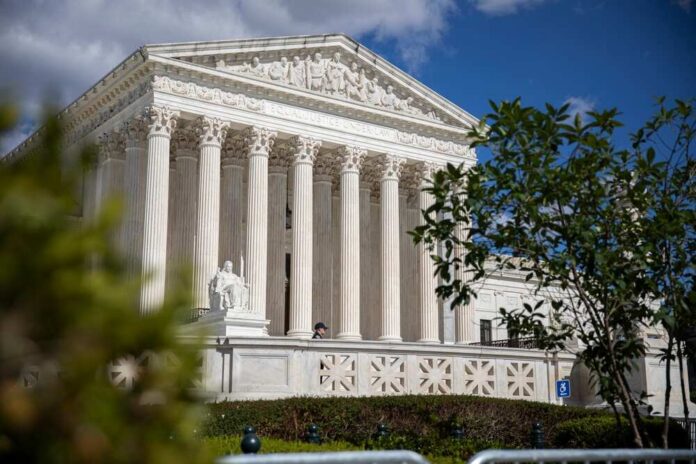
President Trump’s Supreme Court winning streak continues to reshape federal power dynamics, with 21 victories blocking judicial activism and restoring constitutional order to executive branch policymaking.
Story Snapshot
- Trump administration celebrates 21 Supreme Court victories ending nationwide injunctions that previously blocked executive policies
- Conservative majority justices appointed by Trump enable deregulation, immigration enforcement, and limits on lower court overreach
- Recent rulings protect First Amendment donor privacy rights and strike down racial gerrymandering in Louisiana
- White House frames victories as major wins against judicial activism, empowering executive action without “judge shopping”
Trump’s Supreme Court Success Streak
The Trump administration achieved a milestone September 2025 when the White House announced 21 Supreme Court victories spanning the President’s term. These rulings consistently favored administration policies on immigration enforcement, regulatory rollbacks, and limits to lower court nationwide injunctions that previously halted executive actions. The conservative majority shaped by Trump’s three appointees—Justices Gorsuch, Kavanaugh, and Barrett—proved instrumental in advancing constitutional interpretations favoring limited government and executive authority. This track record represents a fundamental shift from the obstruction Trump faced during his first term when activist judges routinely blocked policy implementation through sweeping injunctions.
Constitutional Limits on Judicial Overreach
The Supreme Court’s recent decisions demonstrate a commitment to curtailing the judicial activism that plagued previous administrations. By ending the practice of nationwide injunctions, the Court restored balance between the three branches of government. Lower courts previously enabled what critics called “judge shopping,” where opponents of presidential policies forum-shopped for sympathetic judges who would block executive actions affecting millions of Americans based on single rulings. This constitutional overreach allowed unelected judges to substitute their policy preferences for those of democratically elected officials. The Court’s correction empowers the executive branch to implement lawful policies without arbitrary judicial interference, a victory for Americans who believe government accountability flows from the ballot box, not activist courtrooms.
First Amendment and Redistricting Decisions
April 2026 rulings further illustrated the Court’s commitment to constitutional principles. In First Choice Women’s Resource Centers v. Davenport, justices upheld standing for First Amendment donor privacy protections, shielding nonprofit organizations from government intrusion into supporter lists. This decision protects associational rights critical to conservative advocacy groups facing pressure from progressive state attorneys general. Simultaneously, Louisiana v. Callais struck down a congressional map deemed racially gerrymandered, requiring Louisiana to redraw districts. While redistricting battles continue, the ruling emphasizes race-neutral mapping over identity politics in electoral boundaries. Both decisions reflect textualist judicial philosophy prioritizing constitutional text over policy outcomes, contrasting sharply with the living-constitution approach favored by liberal jurists.
Broader Implications for Governance
Trump’s Supreme Court victories carry profound long-term consequences for American governance. The conservative majority’s lifetime appointments ensure constitutional interpretations favoring federalism, executive authority, and individual liberty will persist beyond any single administration. Deregulation enabled by these rulings benefits businesses freed from bureaucratic overreach, while immigration enforcement advances without court-imposed delays. Critics argue this concentration of power threatens minority rights and environmental protections, yet supporters counter that restoring constitutional boundaries prevents unelected bureaucrats and judges from imposing unpopular mandates. The fundamental question remains whether Americans prefer governance by elected representatives implementing voter mandates or by administrative agencies and activist judges insulated from democratic accountability. These Supreme Court decisions firmly answer: the Constitution limits government power, and courts exist to enforce those limits, not expand them.
Sources:
President Trump Stacks up 21 Victories in the Supreme Court So Far
Supreme Court of the United States
Supreme Court of the United States Official Website