
As Washington tries to box in Iran’s missile and nuclear ambitions, one viral headline is getting ahead of the facts—and conservatives should separate the real deterrence story from the hype.
Story Snapshot
- January–February 2026 featured a sharp spike in U.S.-Iran tensions, including U.S. carrier deployments and indirect nuclear talks hosted by Oman.
- President Trump’s State of the Union messaging focused on Iran as a terrorism sponsor and warned about missiles with potential reach beyond the region.
- Iranian domestic crackdowns and executions drew international condemnation, while analysts warned of mass-atrocity risks for protesters.
The “Hillary Sounds MAGA” Claim Doesn’t Match Verifiable Reporting
Researchers could not identify a credible, verifiable original story matching the exact headline “Iran Won’t Come to America… and Hillary Sounds MAGA Now?” The material reads like a blended narrative: Iran’s advancing missile and nuclear capabilities on one side, and a supposed Clinton pivot on the other. Based on the provided research, there is no 2026 evidence documenting Clinton adopting MAGA-aligned rhetoric on Iran, making that angle unsubstantiated as news.
The more defensible takeaway is that hawkishness toward Tehran can look “bipartisan” when tensions rise, even if politicians disagree on method. That is not the same thing as a real alignment with Trump’s strategy. For conservative readers tired of media narratives that blur commentary with fact, the key is simple: treat the “Hillary sounds MAGA” hook as a social-media framing until it’s backed by a clear, attributable statement and a reliable outlet.
What Actually Happened: A 2026 Spike in Deterrence and Diplomacy
January 2026 escalations were tied to Iran’s internal repression and mounting Western concern about its weapons trajectory. The research cites reports of Iranian massacres of protesters and subsequent U.S. warnings, followed by major U.S. naval deployments. President Trump reportedly deployed the USS Abraham Lincoln “armada,” and later the USS Gerald R. Ford, while airlines cancelled flights amid heightened regional risk and uncertainty.
Diplomacy ran alongside the show of force. The research describes indirect U.S.-Iran nuclear talks in Muscat, Oman, described as a “good start,” with Geneva discussions planned afterward. Iran’s foreign minister framed the moment as a “historic opportunity,” while U.S. officials held firm on core preconditions: stopping enrichment, constraining missiles, and ending proxy activity. With neither side conceding sovereignty claims, the situation remained a stalemate.
Trump’s Message: Pressure, Red Lines, and Homeland Security Concerns
The research highlights President Trump’s February 2026 State of the Union language labeling Iran a top sponsor of terrorism and warning about missile capabilities that could potentially reach the United States. That framing matters for a constitutional, security-minded electorate: the first duty of the federal government is national defense, and deterrence is meant to prevent war rather than invite it. Still, the research also notes “mixed messaging” around whether caps or a full halt might be acceptable.
For voters wary of endless foreign entanglements, the tension is familiar: credible deterrence requires capability and clarity, but clarity is hard when negotiations are active. The factual record provided suggests the administration pursued both tracks—military posture and indirect talks—while emphasizing that attacks on allies would carry consequences. Whether talks could realistically deliver verifiable limits remained uncertain based on the available data.
Iran’s Domestic Crackdowns Put Human Rights and Stability on the Same Clock
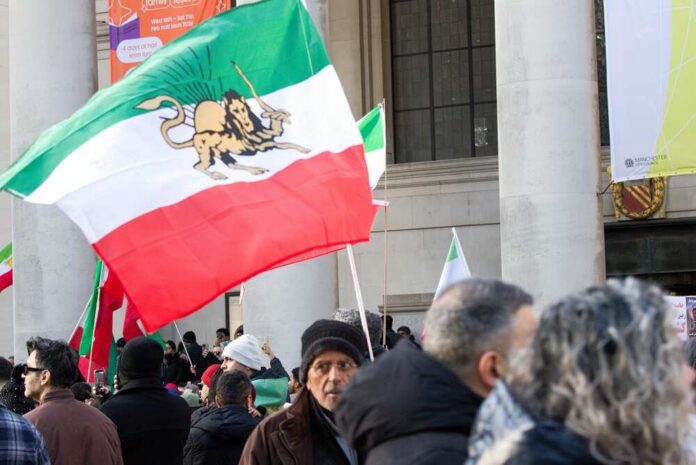
The research describes severe internal repression inside Iran, including executions condemned by the United Nations. The UN human rights office, led by Volker Türk, reportedly criticized killings and forced confessions and pressed for transparency and an end to executions. Separately, the Global Centre for the Responsibility to Protect warned of mass-atrocity risks facing the Iranian population. Those facts complicate diplomacy because crackdowns can intensify protests and regime paranoia.
Instability also creates a wider risk picture for Americans and allies: disrupted air travel, regional alerts, and heightened chances of proxy escalation against bases and partners. The research does not provide a confirmed post-February breakthrough, so the best-supported conclusion is that both internal repression and external weapons concerns were rising at the same time—making miscalculation more likely even without either side “wanting” full-scale war.
What Conservatives Should Watch Next: Verification, Not Viral Framing
The research points to a broader historical cycle: the 2015 JCPOA constrained enrichment in exchange for sanctions relief, the U.S. withdrawal in 2018 revived “maximum pressure,” and subsequent years saw enrichment increases and stalled diplomacy. In that context, 2026’s carrier deployments and Muscat/Geneva talks fit a pattern of pressure followed by negotiation attempts. The missing piece in this specific story is proof behind the Clinton “MAGA” claim.
Until reliable reporting documents any major Democratic figure echoing Trump’s Iran posture in a direct, attributable way, readers should treat that portion as commentary, not news. The verifiable story is about deterrence, negotiations with hard preconditions, and Iran’s internal brutality colliding with nuclear and missile anxieties. When headlines overreach, the safest move is the constitutional one: demand evidence, keep government claims tethered to facts, and resist narrative manipulation.
Sources:
White House says US moving to dismantle Iran’s missile …
Iran’s nuclear ambition is not just Israel’s problem – opinion
As war in the Middle East between Iran and the US and …
Washington Rejects Iran’s Terms for Nuclear Talks, Raising …